Década: 2020
A Metade do Dobro
Tomie Ohtake Institute
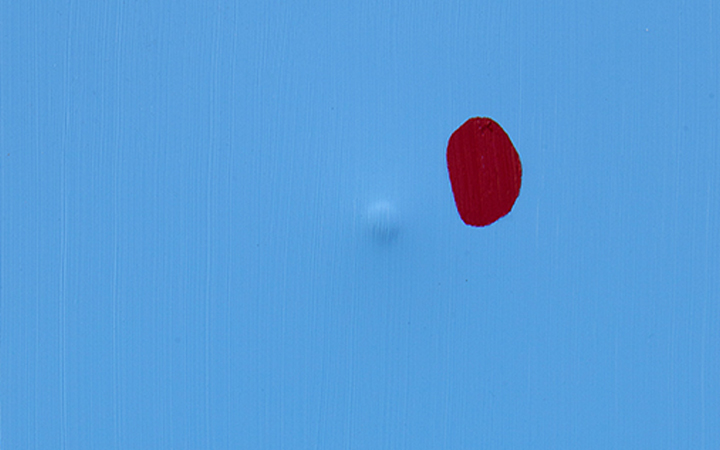
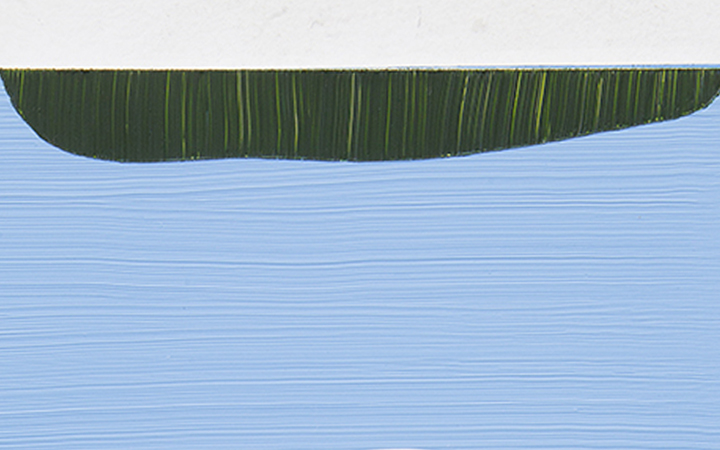
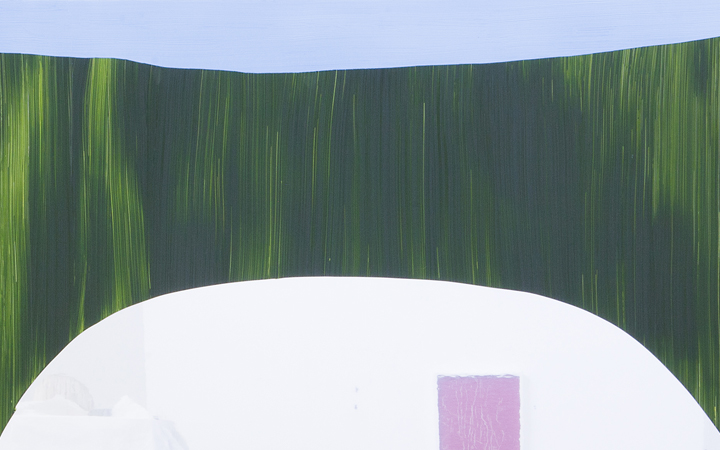
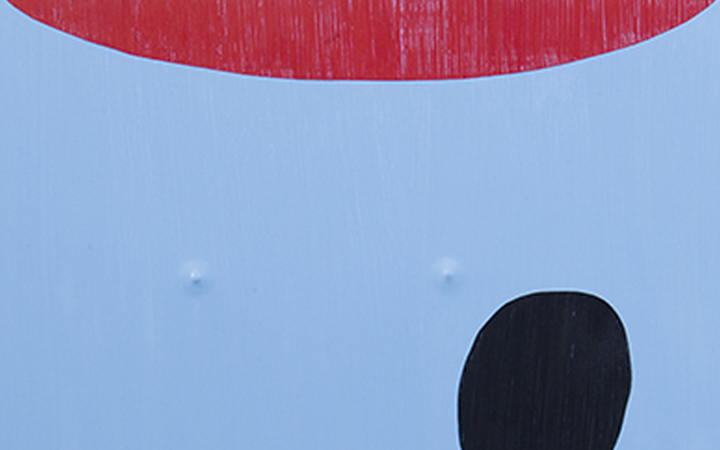
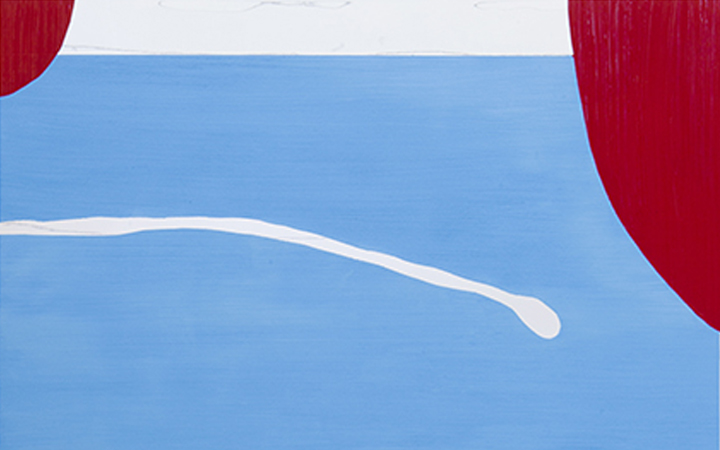
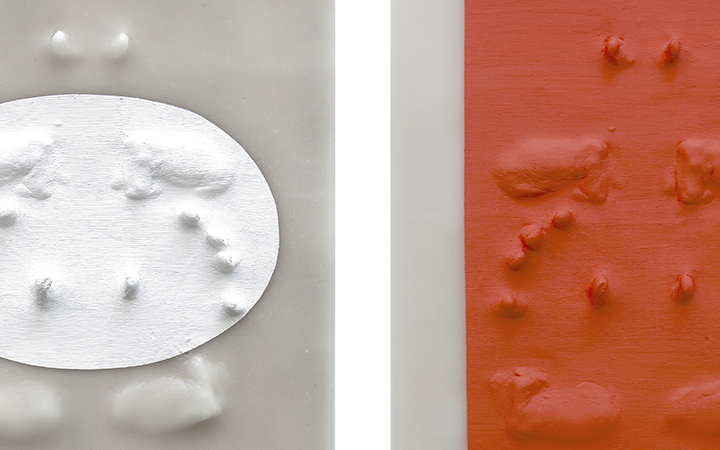
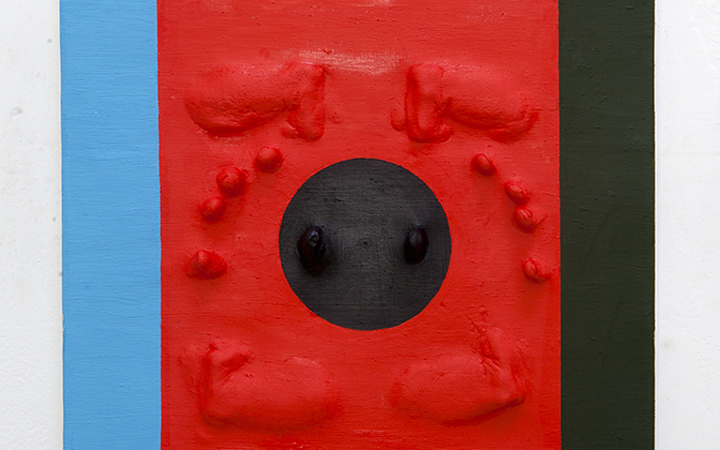
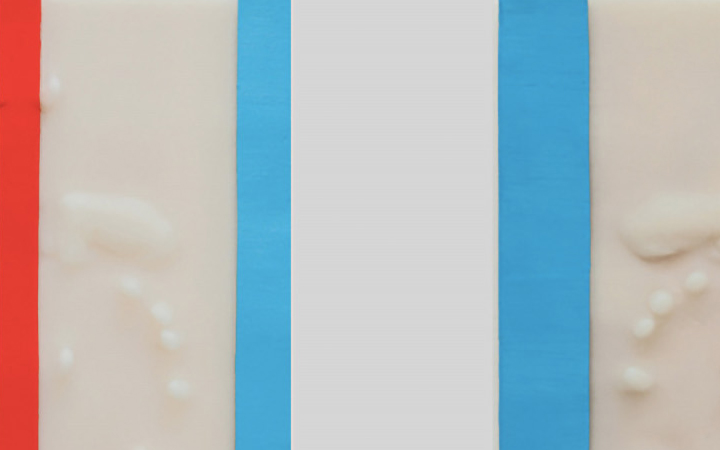
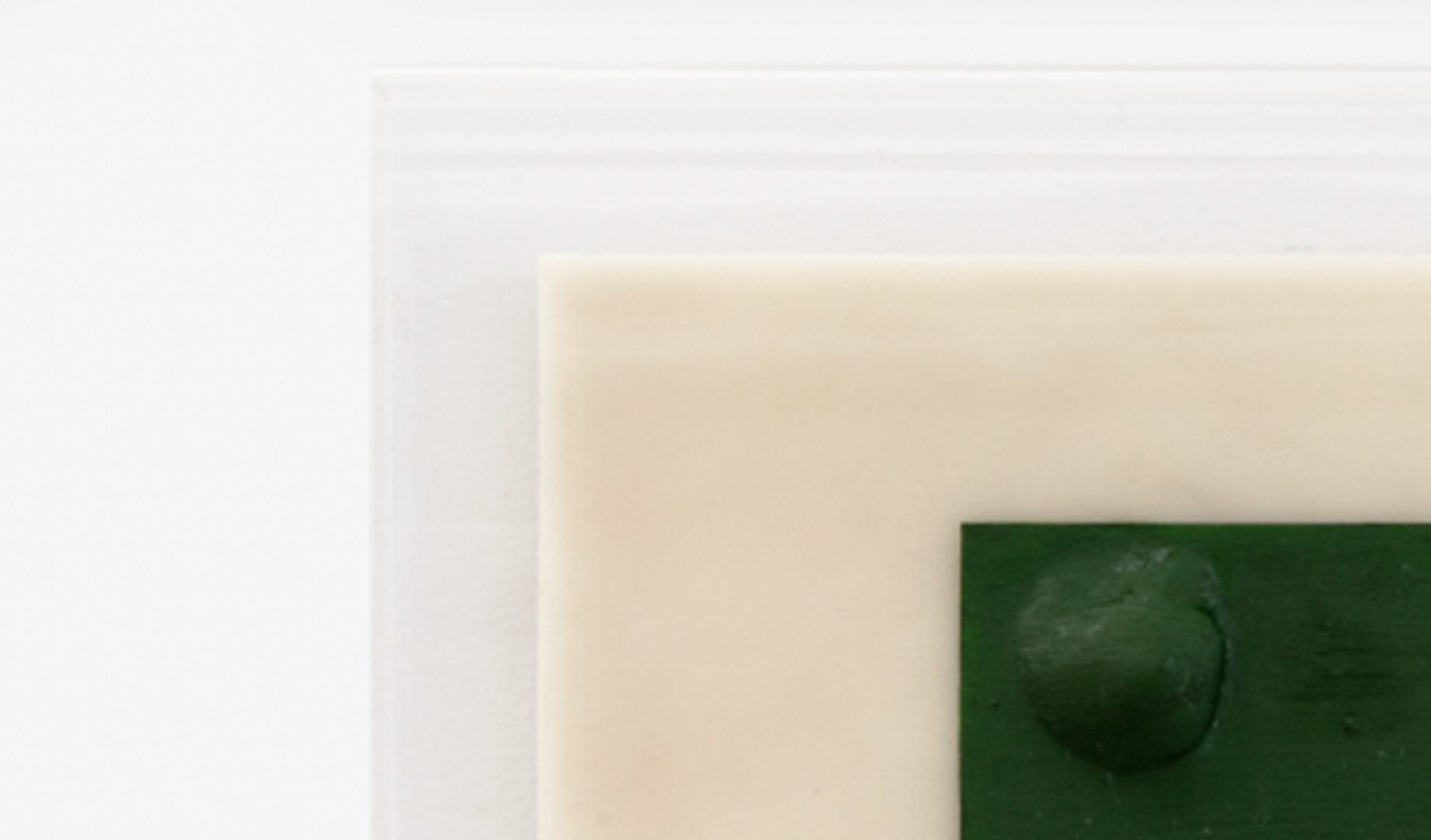
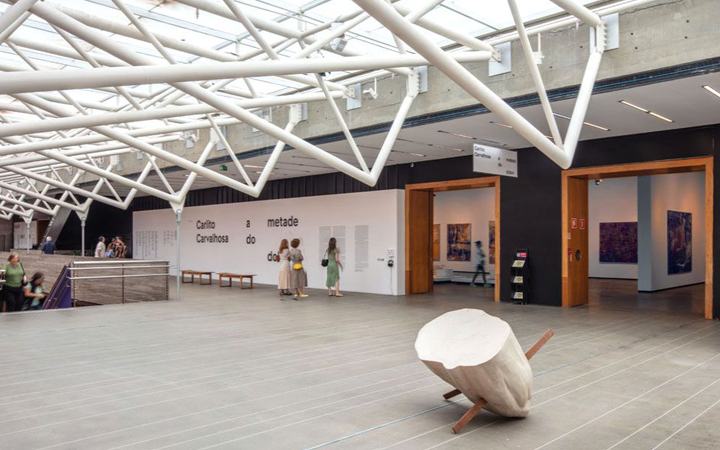
The Half of the Double is an exhibition that aims to explore the folds, reflections, and impermanences in the work of Carlito Carvalhosa (São Paulo, 1961-2021). Carvalhosa’s trajectory predominantly involved the languages of installation, painting and sculpture: in the early 1980s, he joined the Casa 7 studio, alongside Fabio Miguez, Nuno Ramos, Paulo Monteiro and Rodrigo Andrade, in which he made large-scale paintings and intense exploration of pictorial gesture. From 1986 onwards, Carvalhosa began to explore encaustic as a matter in his works. In the 1990s, he developed works in the sculptural field, using materials such as plaster, ceramics and wax, and multiplied the material repertoire of his paintings, incorporating waxes, resins and encaustics. A decade later, it was the mirrors and struck aluminum plates that began to receive his paintings, while he also began to develop installations, marked by the use of materials such as fabrics, lamps, wooden poles and sound, in works that tension the relations between space and time.
We have gathered here a wide range of his works, spanning his four decades of production, in the first retrospective dedicated to the work of Carlito Carvalhosa. The pieces are arranged in such a way as to make different moments and researches of the artist perceptible and, at the same time, create juxtapositions and fluid passages between these stages.
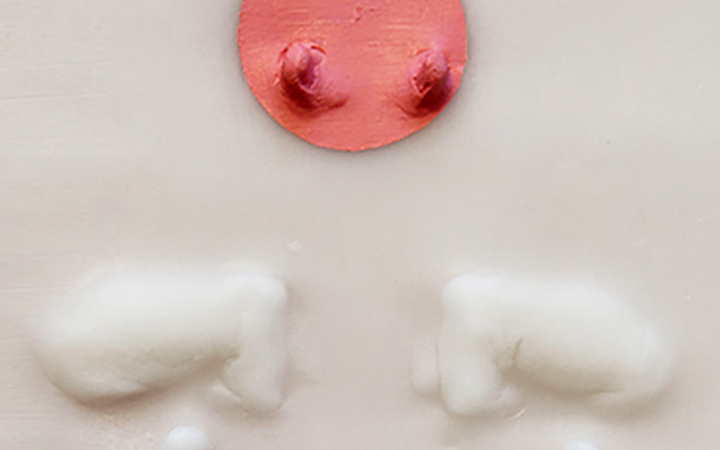
Carvalhosa made the manipulation of translucent and reflective, luminous and sound materials the fabric of his poetics. Relations of opposition and complementarity between the optical and the haptic are at the center of Carvalhosa’s poetics and guide the way in which the exhibition space is organized. The optical, related to the gaze and the light, returns to the viewer a fragmented and multiplied image. The reflexivity of some materials chosen by the artist interrupts static perception and puts us in a game of distances, in which what we see is always on the verge of dissolving. On the other hand, haptics – touch and contact with matter – are activated by the presence of dense and malleable surfaces. These surfaces bear the marks of the artist’s gesture and body, evoking an intimate encounter between the hand and the matter. Together, these aspects of the work create a tension between what is seen and what is touched, between the light it reveals and the matter it conceals.
To the visitor who walks through encounters such as that of shapeless and malleable sculptures, made of wax and resin, with more rigid and perennial pieces of plaster, here is an opportunity to wander connecting the gaze and the body to the thickness of the matter – sometimes approaching reflective surfaces that bring the image itself into the work, sometimes observing volumes in which light and shadow intertwine.
Curators
Ana Roman
Lucia K. Stumpf
Luis Pérez-Oramas
A natureza das coisas
SESC Pompeia
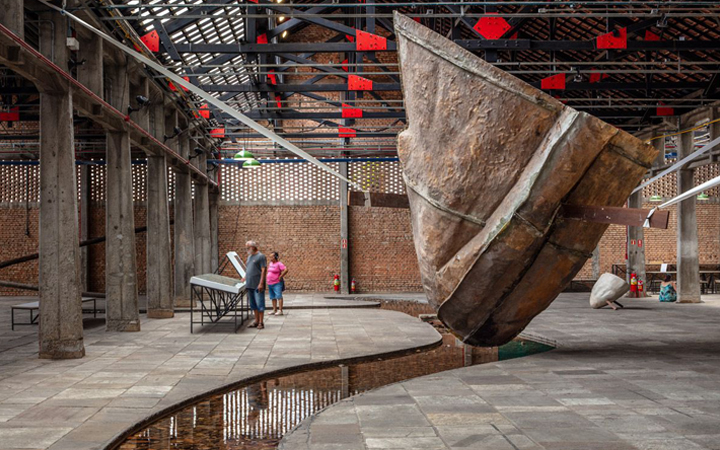
Carlito Carvalhosa, always present. The exhibition The Nature of Things – Carlito Carvalhosa presents to the public, for the first time, a set of installations by the artist, who died in 2021, gathered in one place. The works were assembled according to the original projects, proposing dialogues with the architecture of SESC Pompéia, designed by Lina Bo Bardi. An encounter desired by Carvalhosa who, like Bo Bardi, sought to transform “spaces into places”.
Carlito Carvalhosa was fascinated by forms in a state of becoming, by matters that do not accept definitive conclusion, intermediate, incipient instances, so that the opposition between origin and completion, birth and decay, is neutralized, collapsing every possible hierarchy between them. His three-dimensional and installation works tend, for the most part, to manifest themselves as ‘soft’ or ‘penetrable’ works of monumental dimensions, which, in addition to the great visual impact and an inherent mental activation, enable a performative bodily fruition. These are works that invite the public to become the subject of the creative act, through an experience that relates materials, space and time, simultaneously.
Poles that float, fabrics that erase the place, displaced landscapes, lights that materialize. These installations were conceived as experimental works in situ, ephemeral. But it is not possible to stop thinking of them disembodied of what they could have been to become, themselves, recipients of the space that contains them. Such is the surprising effect of Carvalhosa’s installations: that they do not accommodate the space as much as they ‘invent’ it. It is the tension against the space where they are placed that characterizes them, that is, it is in the impulse to become continents of that space that lies their prodigious phenomenological effect of spatial invention.
The exhibition The Nature of Things – Carlito Carvalhosa celebrates the artist’s gesture and shares with the public moments of his creation process. The intangible is consubstantiated and things change place and function in Carlito Carvalhosa’s space-time, which is always present.
Carlito Carvalhosa – The Nature of Things
SESC Pompéia, October 2024 – February 2025
Curated by Daniel Rangel and Luis Péres-Oramas
Adjunct Curator Lúcia K. Stumpf
A Natureza das Coisas
A Metade do Dobro
Rio: A Medida da Terra

O Desejo de uma Cidade: 1904-2024
Ausente manifesto
Utopias e distopias
Coleção Sartori
Arte é bom
Aberto 01
Sensory Poetics: Collecting Abstraction
Linhas do espaço tempo
Carlito Carvalhosa: Matter as Image
Em branco

Ausente manifesto
Festival desenho vivo
Uma obra que deixa o mundo maior e mais belo
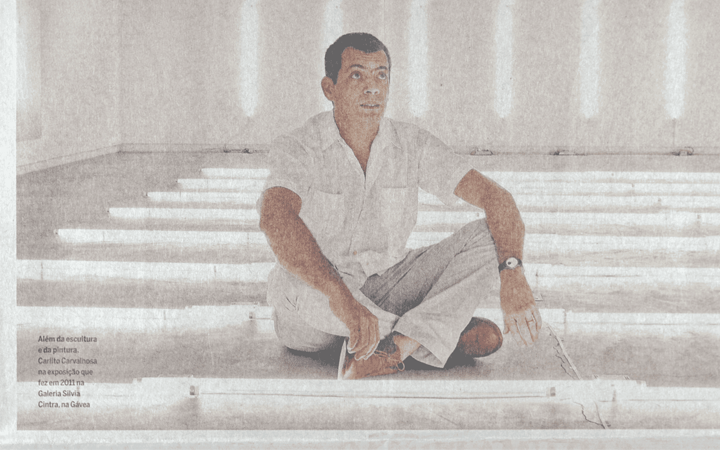
Vetor
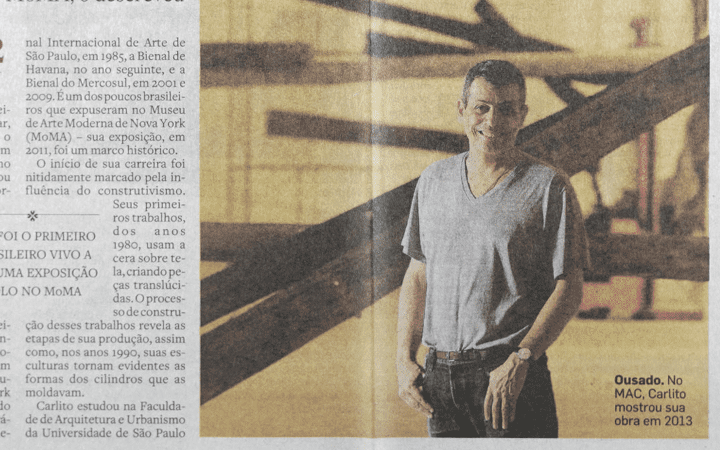
Leveza e violência
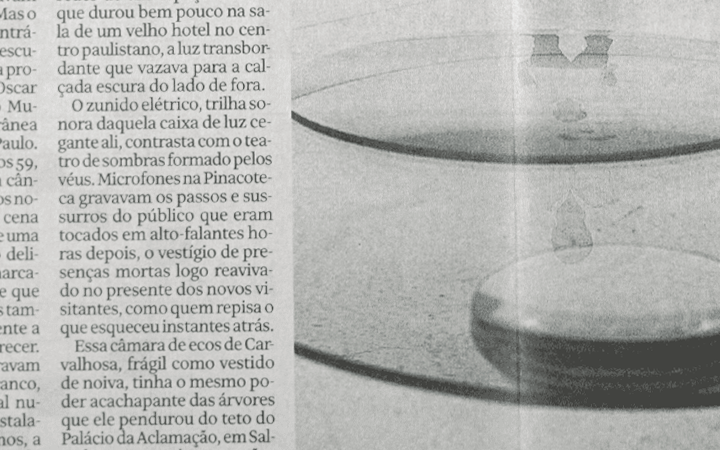
Linhas do espaço-tempo
Originally published in the catalog of Carlito Carvalhosa’s exhibition at Instituto Ling,, Porto Alegre, RS, Brazil in 2022.
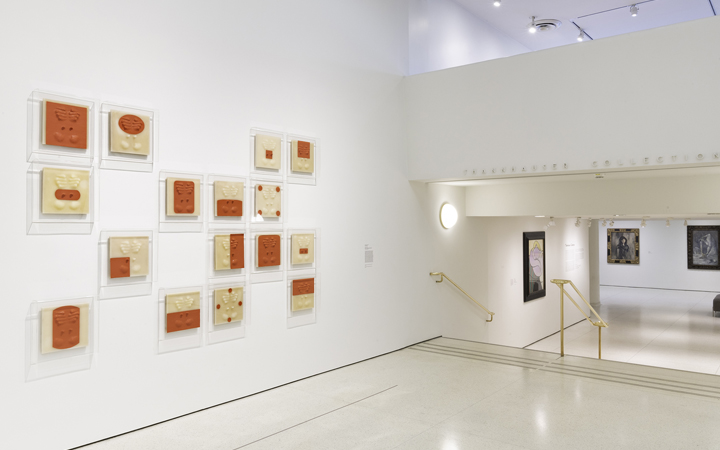
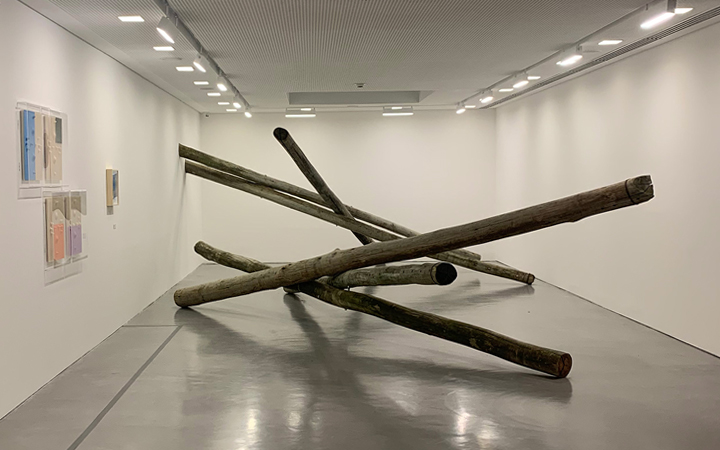
“Space Time Lines” brings together chronological fragments of Carlito Carvalhosa’s artistic trajectory. Paintings, sculptures, and installations that represent more than thirty-five years of work marked by elaborate plastic, historical, mental, and sensitive connections. This is the first Brazilian exhibition of Carvalhosa’s works since the artist left us in May 2021—the main reason for the retrospective and prospective approach. Structured by symbolic pieces from distinct phases, the exhibition presents a compact selection that demonstrates the coherence of his research. This includes records of his creation process, thoughts and memories that marked his trajectory, and a never-beforeseen site-specific installation with wooden lamp posts, drawn in one of his notebooks for an imagined space architecturally similar to the gallery of Instituto Ling. An idea from the past conceived for the future, carried out in the present.
Thinking, reflecting, and observing through traces, scribbles, drawings, notes, writings, and findings—mostly kept in pocket notebooks —was a common practice in Carvalhosa’s daily life. A typical process for researchers, but in his case connected to an effusively curious and naturally disciplined personality. He was thirsty for knowledge. He learned with the same generosity that he taught, resorting to his privileged sensitivity and background to establish deep exchanges with different environments—a practice marked by conscious (dis)connections with the historicity of art, predominantly related to a constant search for materials and supports to use as means of expression. As Paulo Herkenhoff put it, “if Carvalhosa’s memory is built with his sensorial apparatus, the unfolding of his production has an eye on the history of art.” 1
But Carvalhosa did not follow a straight and linear path. He preferred the circular paths between spaces and times, media and materials, whiteness and colors, the erudite and the popular, science and religions. His works are “solid but empty, opaque but translucent, abstract but suggestive of animal faces; the game between opposites never stops,” 2 as Alberto Tassinari observed. He approximated differences without having to bring the parts together, keeping them in an in-between space, like empty parentheses, which Mammi placed “in an undefined territory between nothingness and anecdote, unimportant singularity and hollow generality.” 3 This artistic attitude reminds me of the retard proposed by Marcel Duchamp, a concept that Octavio Paz attributed to the fact that the Frenchman had become “a painter of ideas,”4 who evoked extra-visual reflections in his spectators. Just like the French artist, Carvalhosa sought to activate the mental and sensitive field with his works, often by appropriating and displacing elements of the world, bringing them to the exhibition space, and subtracting the functionality of these objects. Another similarity between Carvalhosa and Duchamp can be seen in the active use of words in the titles of their works or exhibitions. Space TimeLines respects this poetic process, assimilating the options found during the curatorial process through an historical, mental, and, above all, sensitive look.
The oldest work presented here, a painting from 1985, was part of Grande Tela at the 18th São Paulo International Biennial curated by Sheila Leirner. At that time, the artists from the collective studio Casa 7 —which, besides Carlito Carvalhosa, included Fábio Miguez, Nuno Ramos, Paulo Monteiro, and Rodrigo Andrade—were revisiting and revising the use of painting as a medium. According to Mammi, “Casa 7 represented the Brazilian participation in neo-expressionist poetics, which were already dominant in Europe for some years.”5
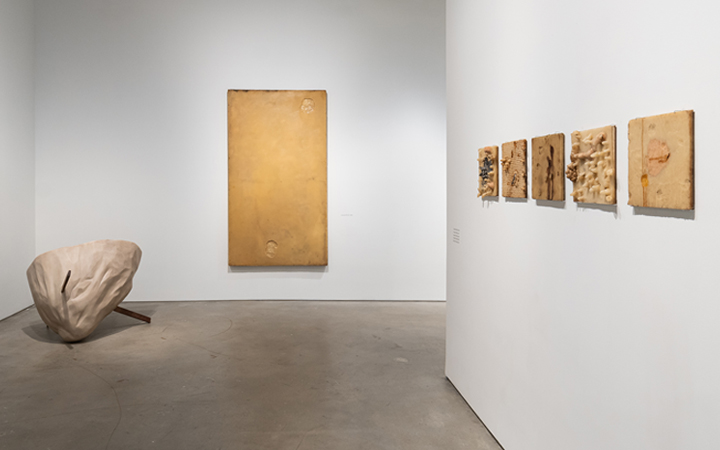
In the series Dedinhos, started during an artistic residence in Cologne, Germany, between 1991 and 1992, Carvalhosa resumed the use of wax as a pictorial material—something he had already experimented with from 1986 to 1988. He based his compositions on the color of the material itself, exploring the oscillations between transparency and opacity that are inherent to the encaustic technique, resulting in “a chromatic annihilation that generates a changing spectrum of luminous variations.”6 The three-dimensionality, which was subtle in previous works, became the main theme of these wax works.
In 1995, Carvalhosa created the first sculptural works outside the vertical support by experimenting with the lost-wax technique. The following year, when he created his first public installation for the Arte/Cidade project, he started working with porcelain sculptures. According to Rodrigo Naves, these works had “an undeniable organic aspect”7 despite the rigidity of the material and were situated in the dialectic in-between that characterized the artist’s work, since “what seemed to be alive takes on the appearance of an industrialized product”8 with the reflection caused by the incidence of light. Opposites attracted Carvalhosa, who often explored the relationships between transparency, opacity, and reflectivity, creating some kind of “trialectics” that would come to characterize his production.
In 1999, the artist presented his first site-specific exhibitions, creating large works in plaster, a product that is opaque by nature. The sculptural mass was often perforated, presenting something solid and heavy as simultaneously transparent and transposable—an experience he developed over nearly a decade, gradually advancing in scale and execution complexity.
For a site-specific show in 2008, Carvalhosa used mirrors, which he had already been using as a support for his paintings since the series Espelhos Graxos started in 2003. As Paulo Venâncio Filho put it, “it is reasonable that the mirror comes after the plaster, of which it is the opposite.”9 Reflectivity became a ubiquitous attribute in his two-dimensional works, from mirrors to aluminum and carbon steel sheets. According to Venâncio, in these works the artist “sought to emphasize […] how much is offered to the eye and how little is required from seeing.”10 Different experiences, in which he used acrylic paint, spray and grease to cover and reveal structures and leaks from the ‘paintings’. Mammi preferred to use the term ‘pictures’, emphasizing that “sometimes it is difficult to call them paintings” because “what is questioned is the very existence of the support as a neutral base.”11
In these pieces, we can see an intention to hide existing reflections with experimental or traditional pigments, which work as skins or stains that hide the whole to reveal details of drawings. For Tassinari, “in both sculptures and paintings, the excess exists because of what is smaller, not what is larger. They are points of support that fight against the total disaster.”12 This is even more evident in his site-specific works.
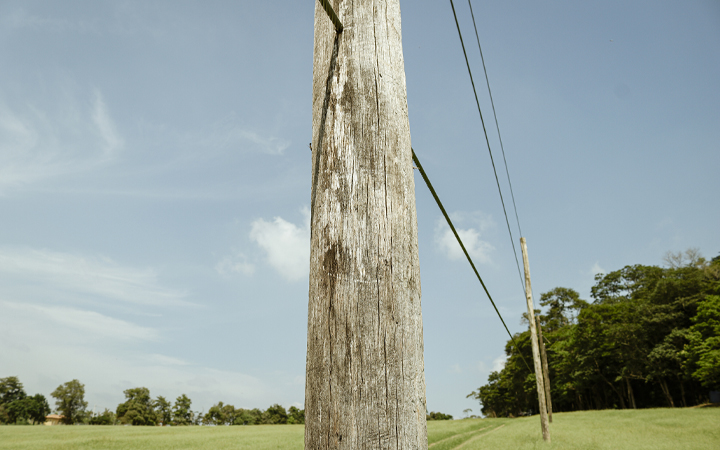
After the plasters and mirrors, Carvalhosa started creating spaces wrapped in translucent fabrics, which, according to Ivo Mesquita, were intended to “cover, erase to reveal or make you see.”13. They erased and revealed, allowing different perceptions of the places where they were installed, sometimes including sounds. Then came the fluorescent lamps, creating luminous lines and visual glare, sometimes mixed with fabrics and other elements, such as furniture and mirror frames, sometimes alone, used as a sculptural resource. Finally, there were the lamp posts, suspended or supported tripods which defied physics and engineering, disrupting the flow in galleries and museums . Everything together and apart at the same time. An amalgam of disparate elements that met through the artist’s gesture, creating an almost eternal dialogue, just like his work, just like himself.
1 Herkenhoff, Paulo. Já estava assim quando cheguei in Nice to meet you: Carlito Carvalhosa. São Paulo: Cosac Naify, 2011.
2 Tassinari, Alberto. Ceras Perdidas in Carlito Carvalhosa. São Paulo: Cosac Naify, 2000.
3 Mammi, Lorenzo. Carlito Carvalhosa. São Paulo: Cosac Naify, 2000.
4 Paz, Octavio. Marcel Duchamp ou o castelo de pureza. São Paulo: Editora Perspectiva, 1990.
5 CASA 7. In: ENCICLOPÉDIA Itaú Cultural de Arte e Cultura Brasileira. São Paulo: Itaú Cultural, 2022. Available on: http://enciclopedia.itaucultural.org. br/grupo434O27/casa-7. Access on: May 3 rd, 2022. Encyclopedia Entry. ISBN: 978-85-7979-O6O-7
6 Mammi, Lorenzo. Carlito Carvalhosa. São Paulo: Cosac Naify, 2000.
7 Naves, Rodrigo. Óleo sobre Água in Carlito Carvalhosa. São Paulo: Cosac Naify, 2000.
8 Ibid.
9 Venancio Filho, Paulo. Espelhos Graxos in Nice to meet you: Carlito Carvalhosa. São Paulo: Cosac Naify, 2011.
10 Ibid.
11 Mammi, Lorenzo. Carlito Carvalhosa. São Paulo: Cosac Naify, 2000
12 Tassinari, Alberto. Ceras Perdidas in Carlito Carvalhosa. São Paulo: Cosac & Naify, 2000.13 Mesquita, Ivo. A soma dos dias in Nice to meet you: Carlito Carvalhosa. São Paulo: Cosac & Naify, 2011.
Luis Pérez-Oramas
Carlito Carvalhosa (1961–2021) lived most of his life in Rio de Janeiro, where he embraced the radical legacy of Brazilian artists who preceded him. He brought their achievements to new, unprecedented dimensions in terms of concept, form, and scale.
Neo Concretism’s Theory of the Non Object, Oiticica’s Fundamental Bases for the Definition of the Parangolé, Clark’s Phantasmatic of the Body, Antonio Manuel’s Body/Work have been milestones of aesthetic newness leading to experiences of artistic exhaustion, both historically and formally, with implications preceding current manifestations such as Relational Aesthetics and Post-subjective Performative Art. The radicality of some of these propositions carried a weight for the generations that followed them often translating into a conclusive no-way out in terms of art practice. For instance, Hélio Oiticica’s or Lygia Clark’s late works, ephemeral and anti-monumental, clearly stepped on territories that transcended the conventional frames of art, towards the extended fields of the beyond-art: therapy or social practice, quasi- cinema and anti-art.
The entire repertoire of Carlito Carvalhosa’s oeuvre responded to this historical challenge, from his inception as a painter embedded in the deep sources of the formless and his acute sense of what is there in reality for art to his striking performative installations using fabric, neon, wood, wax, mirrors, and sound. Within the countless possibilities oft hese materials, Carvalhosa addressed the sculptural quality of draperies and creases, painting as volume and mass, and even in some landmark installations the presence of sound as opaqueness and density. Carvalhosa’s work stands out for his consistent understanding of a generative dimension of matter and materiality in visual arts. For him, matter is image and images always emerge from the opaque field of materiality as forces expanding through opaqueness and transparency, reflection, and blindness, as marks in the density of reality that one needs to experience time and again, as things that were there before we were.