Década: 2000

A Soma dos dias
Roteiro para visitação
Melhor assim
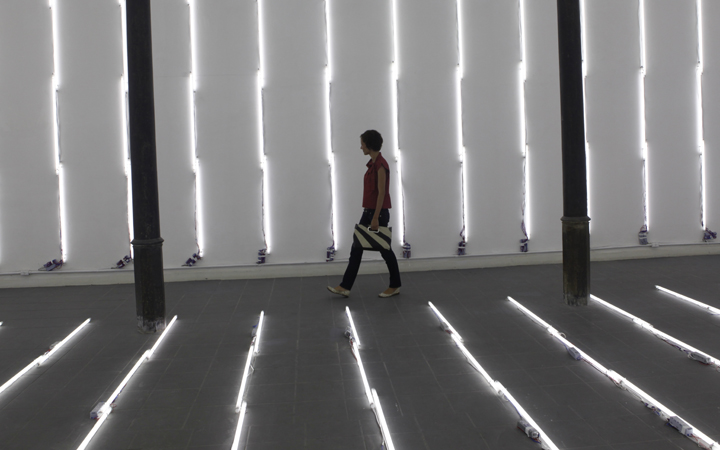
Projeto rádio 4’33
Você tem razão
Através da luz
Olhares cruzados
Arte pela Amazônia: arte e atitude
Poética da percepção
Entre o plano e o espaço
MAM 60
N múltiplos, 2008

Meus olhos
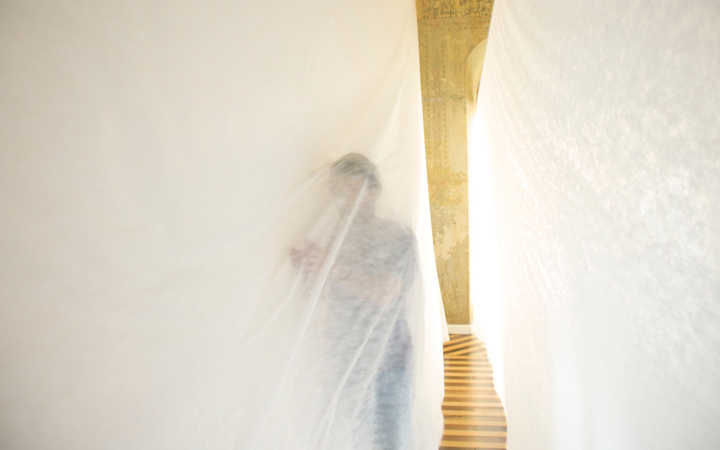
Estou lá
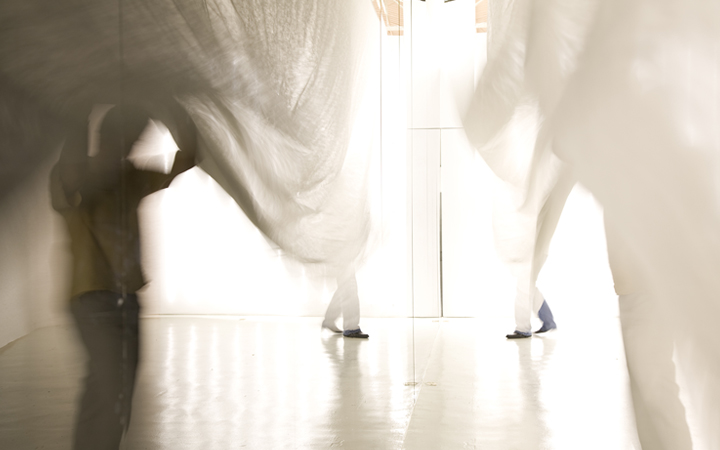
Faz parte, Galeria Millan
Faz parte, Raquel Arnaud
Apagador
Corredor, Projeto Parede
80/90: modernos, pós-modernos
Itaú contemporâneo: arte no Brasil 1981-2006
Poder e afetividade
Da visualidade ao conceito
Olhar seletivo
Transparências
Fora da casinha
Paralela
MAM [na] OCA
![MAM [na] OCA](https://acervocarlitocarvalhosa.com.br/wp-content/uploads/2025/02/CARLITO_CINZA-1.jpg)
Já estava assim quando eu cheguei
N múltiplos, 2005
Piscinas
100 anos da Pinacoteca: a formação de um acervo
Coletiva de acervo
Impermanência e transitoriedade
Razão e sensibilidade
A Imagem do som
Galeria Silvia Cintra
Favor não tocar
Casa 7
Arquivo Geral da Cidade do Rio de Janeiro
2ª Bienal do Desenho Contemporâneo Brasileiro
Sem chance
Arte contemporânea no acervo municipal
Onde está você, geração 80?
Casa, uma poética do espaço na arte brasileira
Galeria Gesto Gráfico
MAC USP 40 anos: interfaces contemporâneas
Heterodoxia: Edição São Paulo
2080
Projeto Brazilian Art
Arco 2003
Espelhos Graxos
FAU Rua Maranhão
Oca
Ópera aberta: celebração

Mapa do agora: arte brasileira recente na coleção João Sattamini
Genius Loci: o espírito do lugar
12 esculturas
Caminhos do contemporâneo
Diálogo, antagonismo e replicação na coleção Sattamini

A Imagem do Som
Mostra do redescobrimento Brazil + 500 anos
Côte à Côte
Casa da Imagem
Espelho cego: seleções de uma coleção contemporânea
3ª Bienal do Mercosu
Untitled
Sum Of Days
Untitled
Untitled
Untitled
Untitled
Untitled
Untitled
Untitled
Untitled
Untitled
Untitled
Untitled
Untitled
Untitled
Untitled
Untitled
Untitled
Untitled
Música das esferas
Uma singular visita ao Palácio
Peças que pregam peças
A soma dos dias
Roteiro para visitação
Convite Faz Parte
Apagador
Meus olhos
Fora da Casinha
MariAntonia
Impermanência e Transitoriedade
Espelhos Graxos
A Soma dos dias
Você tem razão
Meus olhos
Quem vê pensa
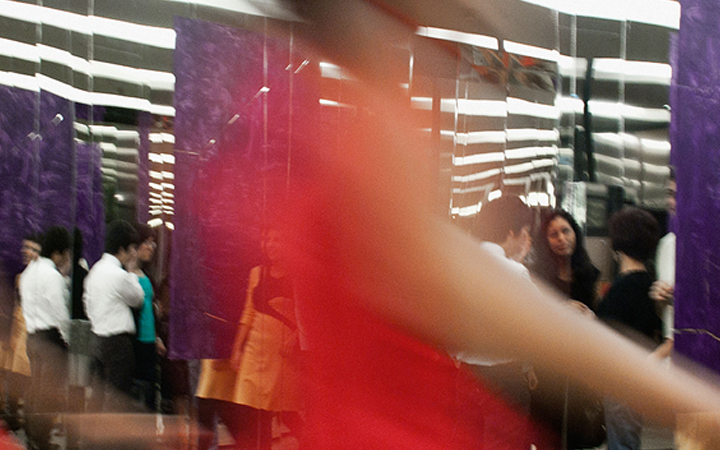
Faz parte
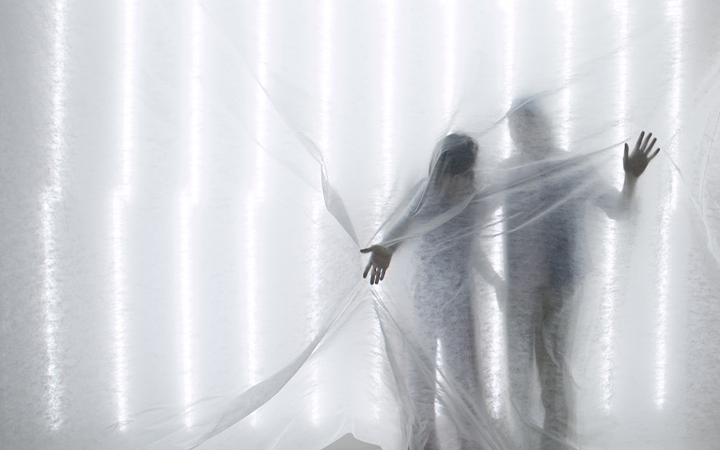
Apagador
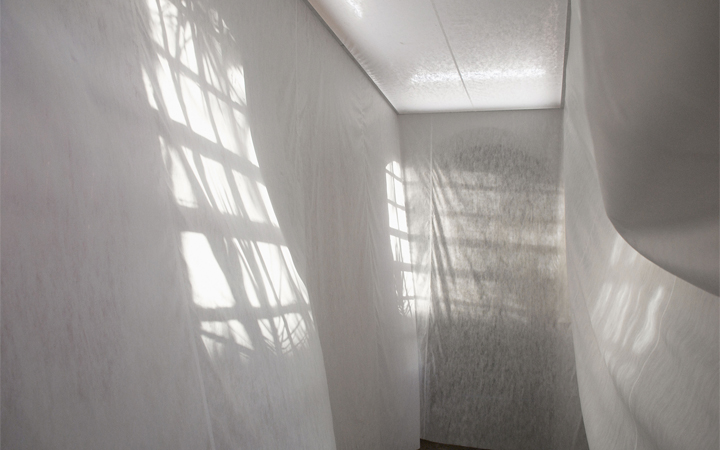
Estou Lá
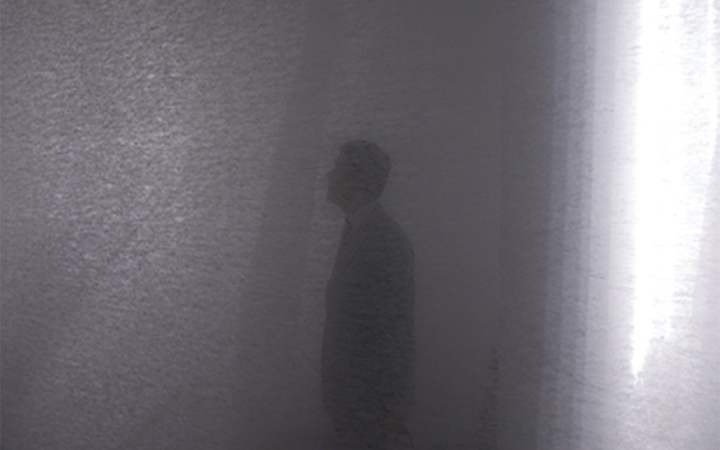
Favor não tocar
Sem chance
Surda
Gibraltar
Você tem razão no experim
Lente 17
Projeto Soma dos Dias Caixa
Teste Unhão
Faz Parte 1
Apagador 1
Flor e Espinho
Espelho
Paralela
Já estava assim quando eu cheguei
Maria Antonia 1
S Carlos 02
Bordeaux 04
Peça Pinacoteca
Aclamação Octógono MAM SP
Octógona Bienal SP Inhotim
N. York Você tem razão
Iberê Museu do Vale Maria Antônia
Lente Maluco Beleza
Rua Alice Pedra Sabão
Alice
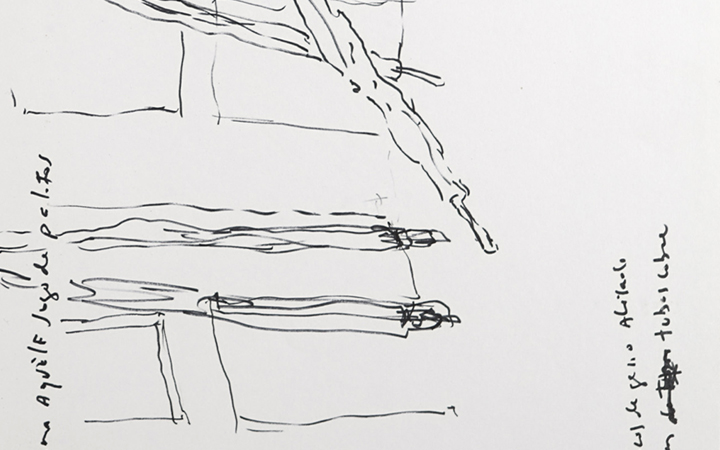
Rua Alice
Carlito Carvalhosa
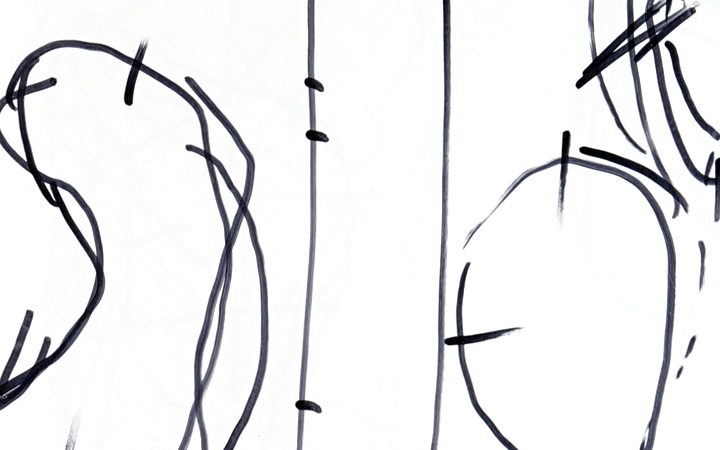
A soma dos dias
In Christian tradition, Lent is a period of preparation for the annual celebration of Christ’s resurrection at Easter. It is a time the believer must devote to prayer, penitence and charity. Among other rites and practices, church statuary is veiled during Lent in order to encourage the faithful to focus exclusively on their own thoughts and actions, standing before God without the support and mediation provided by the saints and symbols throughout the rest of the liturgical year. In other words, during Lent, iconography—representation—is erased as a test of faith. It is interesting to note that, seeing the saints all veiled, erased from the temple pedestals, one has the opportunity to be alone, face to face with their own reality, body and soul; human, without mediators.
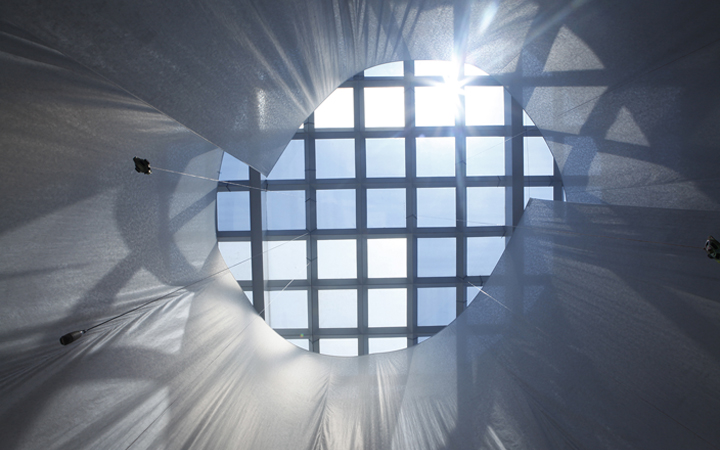
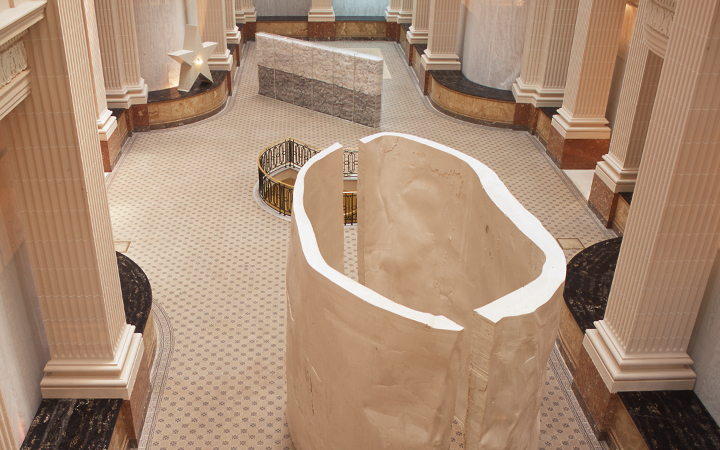
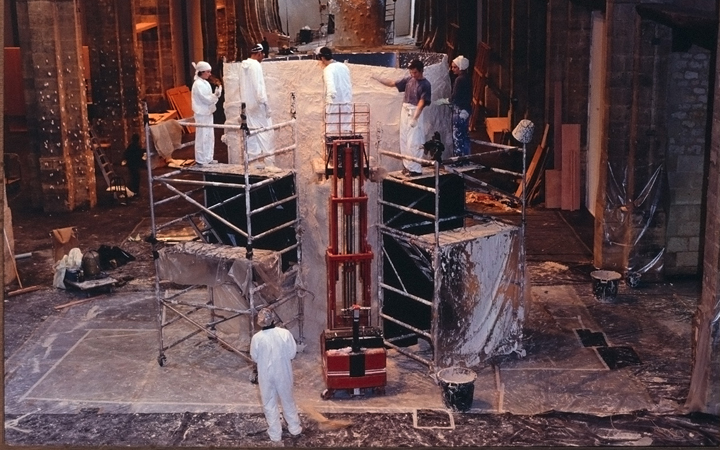
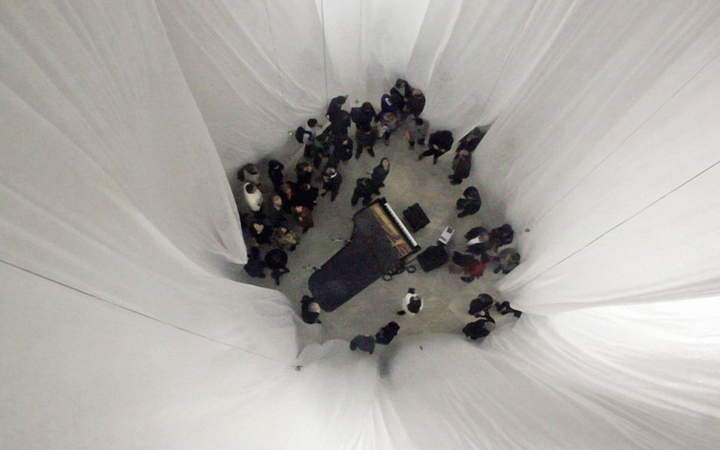
The installation by the São Paulo artist Carlito Carvalhosa “A soma dos dias”
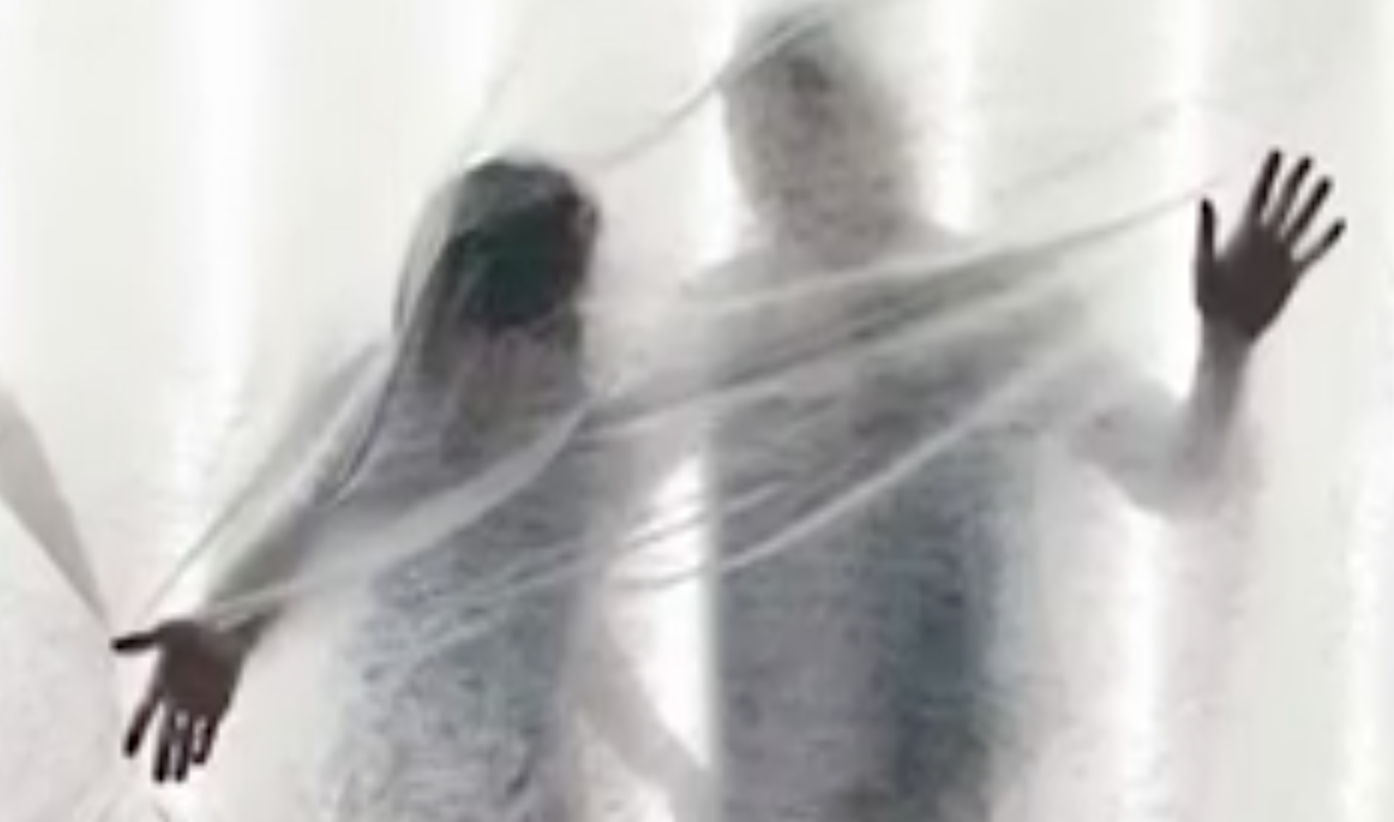
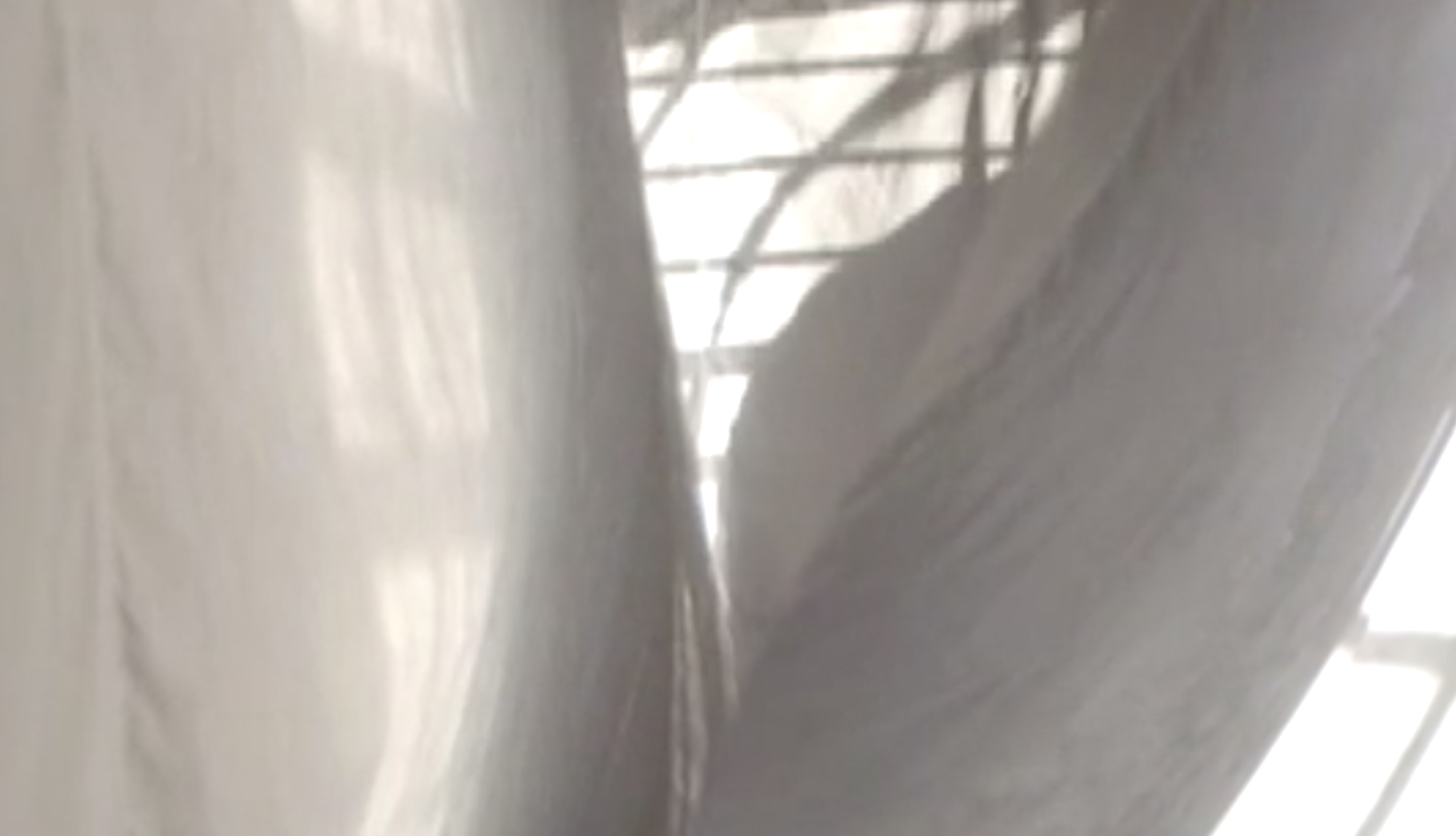
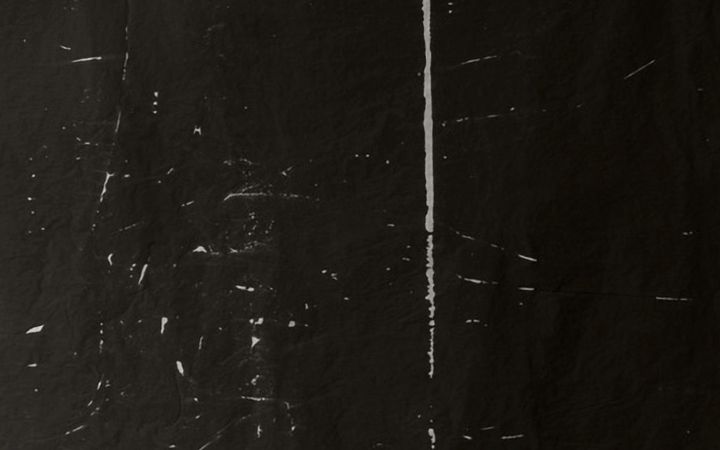
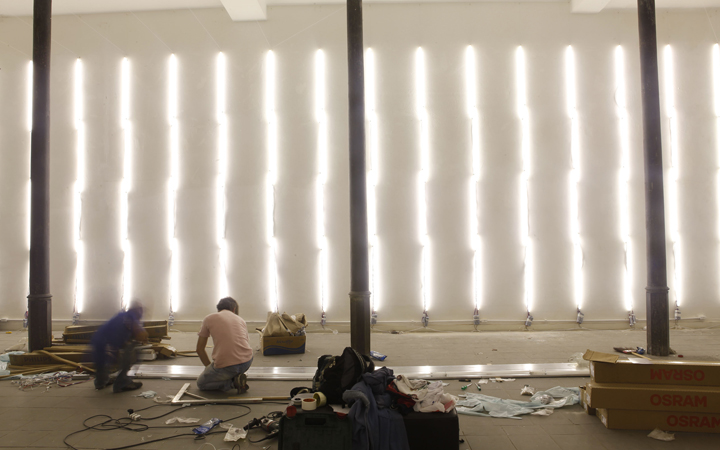
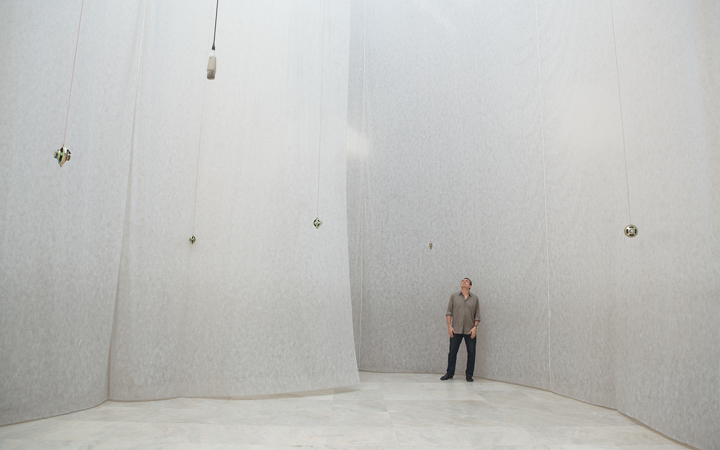
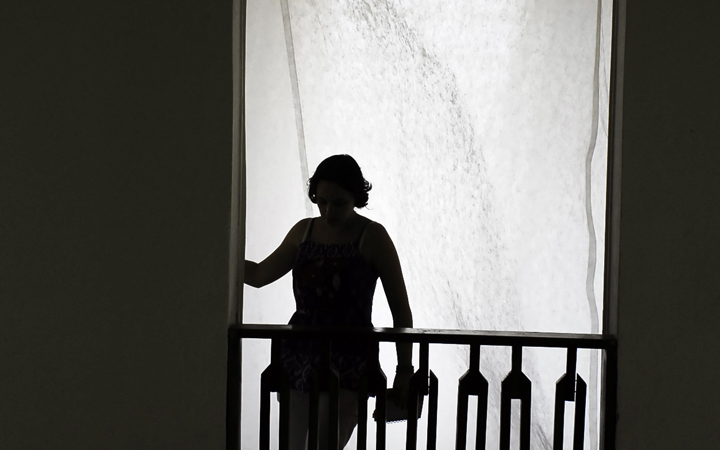
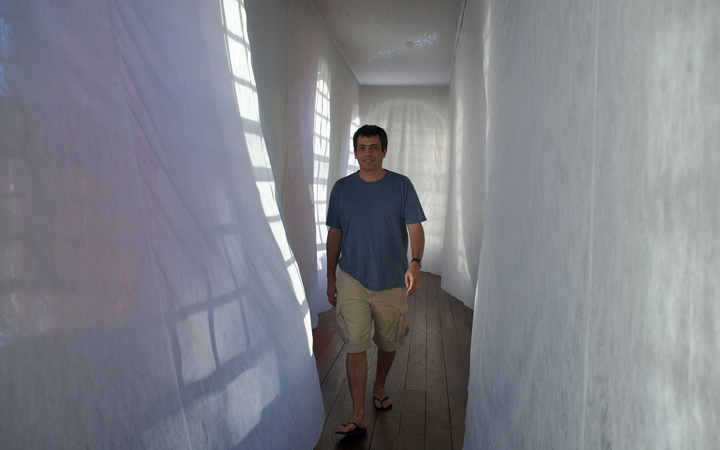
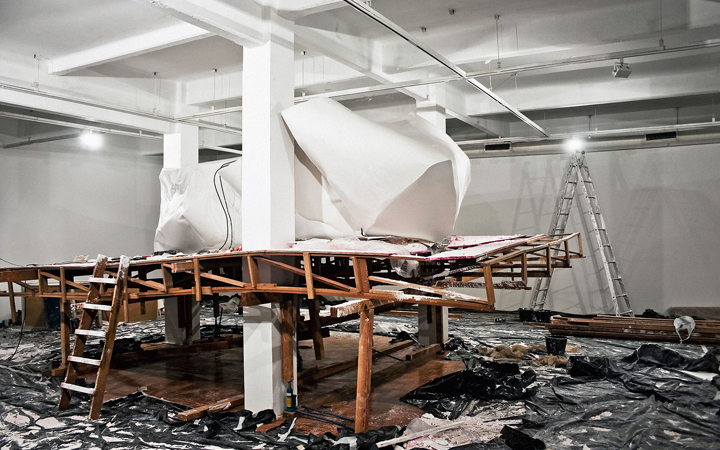
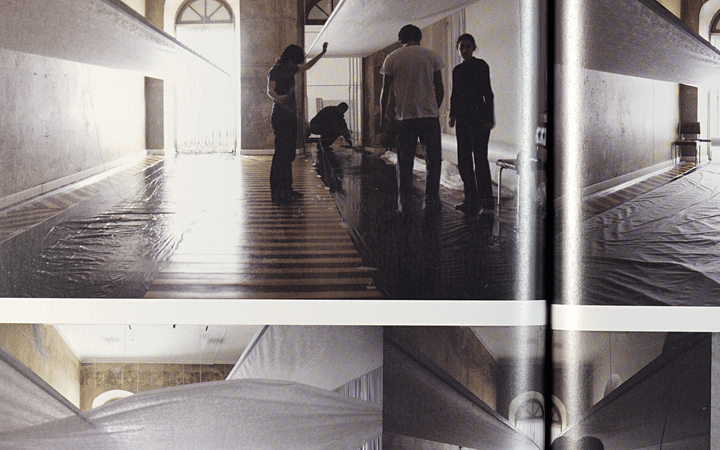
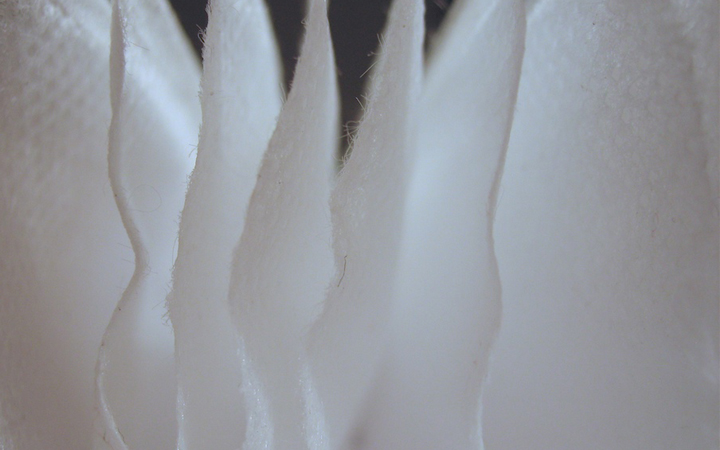
(“The Sum of Days”) resorts to this same idea or principle, proposing to cover and erase in order to reveal or have seen. A tall and voluminous fabric construction veils and hides the architecture at the Octógono Gallery, making it disappear and, as such, interrupting the customary flow and perception of the institution’s interior.The rigid geometry is countered by a labyrinth of curves and floating, diaphanous walls, susceptible to the slightest breeze and movement. Inside this other space, the gallery disappears, making way for a world of silhouettes and shadows that move to a discreet but persistent soundtrack that is somehow familiar. The asymmetric play of lamps on the walls underscores the broken parity of the original venue, creating distinct zones of light and shade and conferring a cinematic quality upon this new architecture.
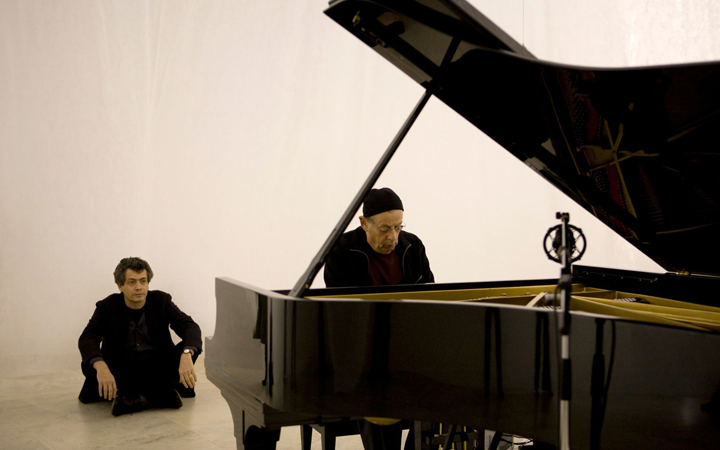
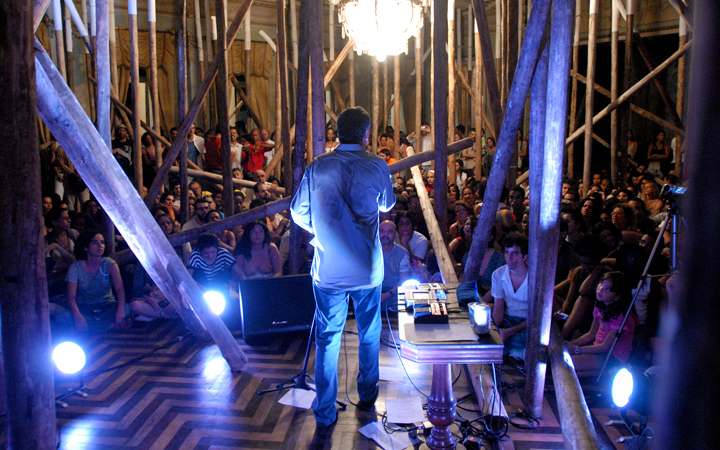
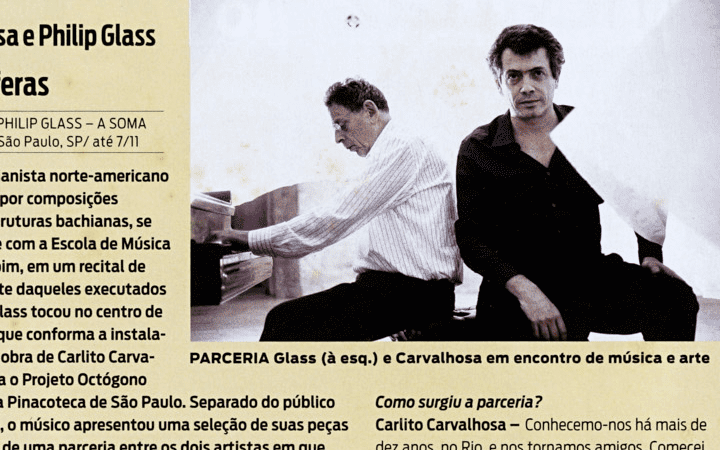
The soundtrack created by Philip Glass, using several of his own compositions, underpins the time the work sets for the gallery interior. It repeats in perpetual motion an incessant, labyrinthine time, over which incidental sounds are recorded each day—conversations, footsteps, movements—captured by microphones and played back instantly through speakers. Each day a new track is laid over and incorporates that of the previous day. This accumulation, this sum of days, constitutes the experiential memory of the work’s passage through the institution. It produces a happening and, simultaneously, records and stores its own presence, its history.
Roteiro para visitação
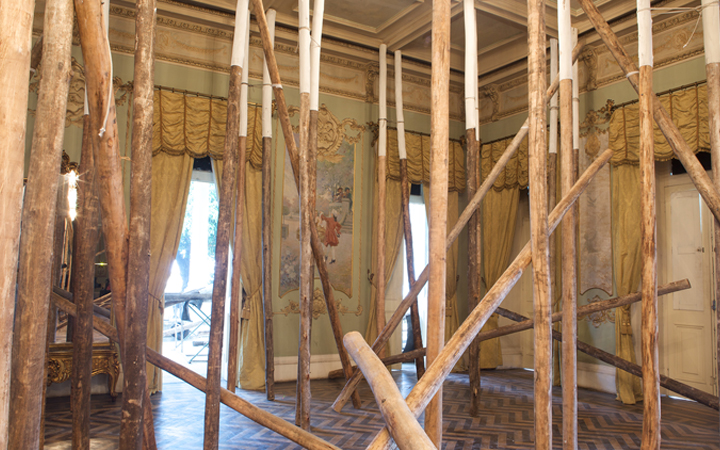
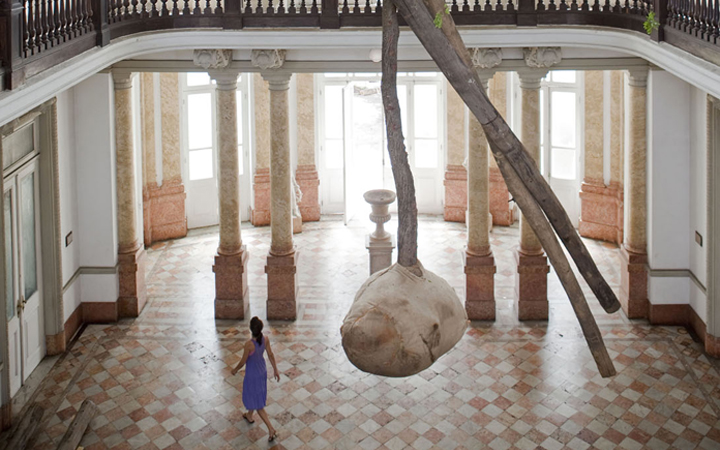
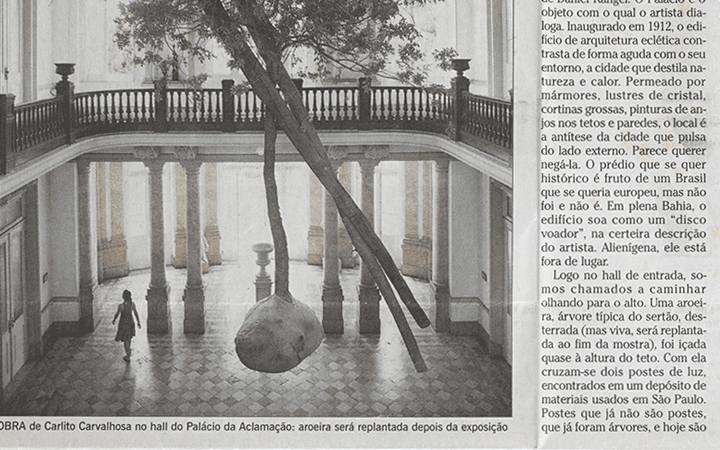
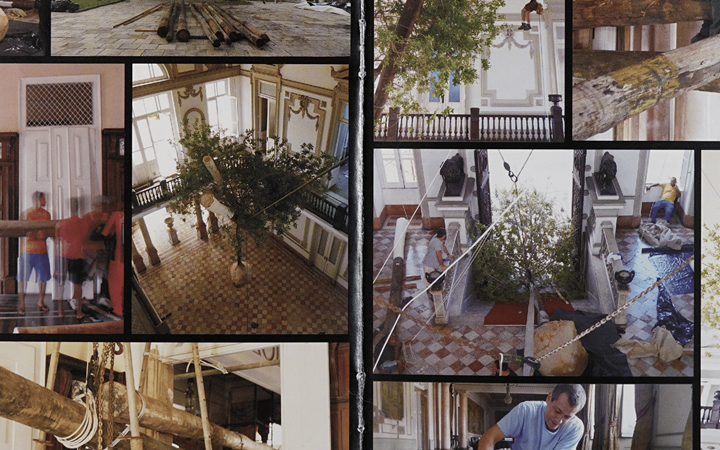
Palácio da Aclamação, the former Governor’s Palace in the center of Salvador, is one of many eclectic Italian style buildings that spread around the world at the turn of the twentieth century. These buldings are emblematic of the arrival of the bourgeoisie to power; a time of globalization, which we tend to forget, a time of domination of European culture, puritanism, wealth, extreme poverty, hypocrisy, imperialism, and timeless certainty which preceded the horror of the Great War.
After the governors left the building, in the late 1960s, it decayed in a most enchanting way, like all things in Salvador; as the State Guesthouse, the building received Queen Elizabeth II as well as indiscriminately hosting events such as debutantes’ balls honoring politicians daughters, the beautiful and the ugly. Though turned into a museum it was never used as such and gradually became one of the cities’ mysteries.
The interior, (full of frescoes depicting Tuscany or the south of France, floral motifs, and so on) is perfectly at peace, provided one doesn’t open the windows. Doing so brings in the powerful tropical light, smell, and humidity that tells us everything is OK, but for what’s outside.
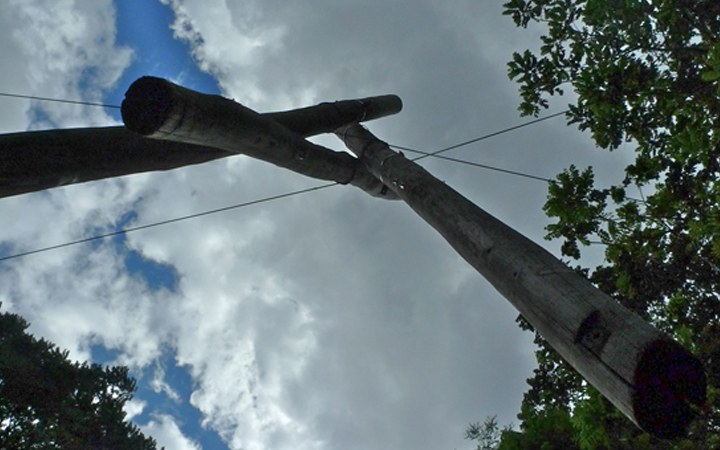
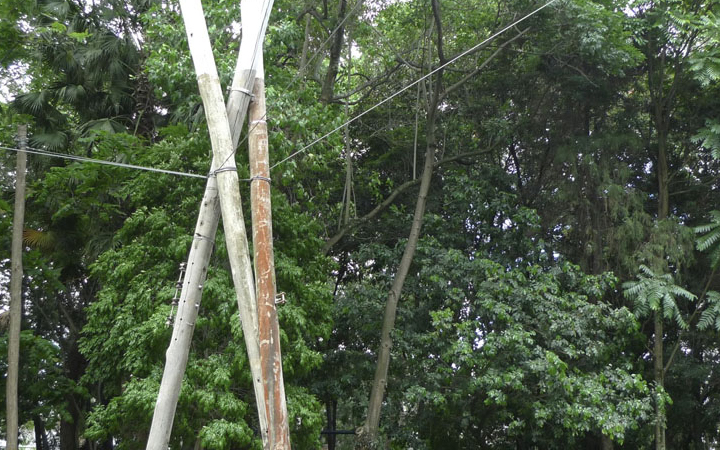
“Roteiro para Visitação,” which translates as “visiting itinerary,” brings this exterior into the building; an invasion of what might have been there in the past, or could come to be in the future. A living aroeira—a tree with strong symbolic and religious connotation; old, used, and discarded wooden lamp posts, unused construction beams; manifestations of the different phases of wood and of the names we give things as we take or dismiss them as our property.
You may walk around. You should, for things will come and go like old acquaintances that we name, use, and throw away.
Salvador, February 201
Meus olhos e o Apagador
This text has not been translated into English
Um diálogo, 04 e 05 de novembro de 2008
This text has not been translated into English
La Galerie des Glaces ou As Sete Faces Do Sr. Lao
This text has not been translated into English
Faz parte
Originally published in Folha de S. Paulo, Ilustrada, September 2008
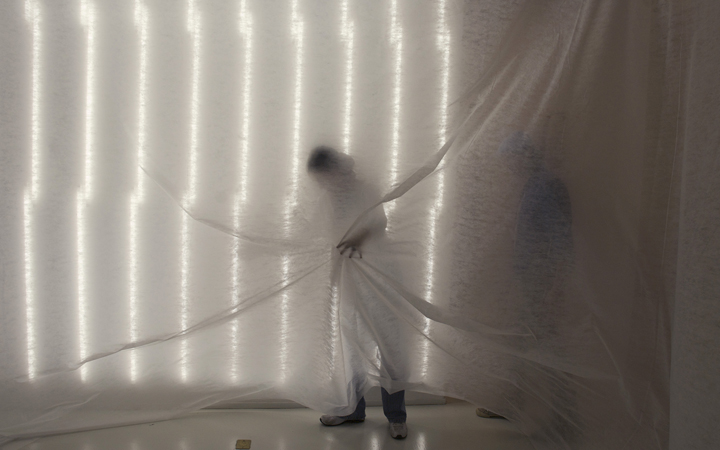
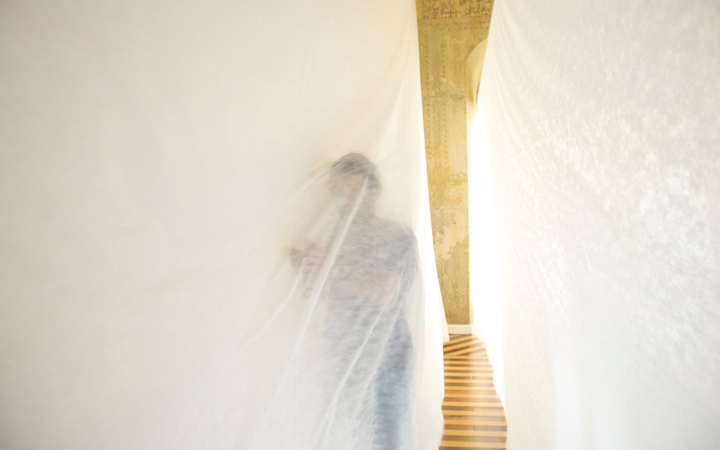
It is always important to know the what. But, in art the how tends to be even more so. But anywhere, the least you need to start with are the where and the when. The thing is, Carlito Carvalhosa’s Faz Parte [1] is made with very little and puts all that is basic – and even what is not – under an un-decidable regime of alternacy and complementarity. The work is presently on display at the Gabinete de Arte Raquel Arnaud. For a time it was also on show at the Galeria Millan, in a form very similar to that at the Gabinete: in both cases, working with a duplication of the galleries’ white cubes, in doorless, almost entirely hollow spaces outlined by thin, translucent fabric, with the aid of a cold light and occasionally crossed by a casual sort of background noise that does not seem to come from there. A sound in passing.
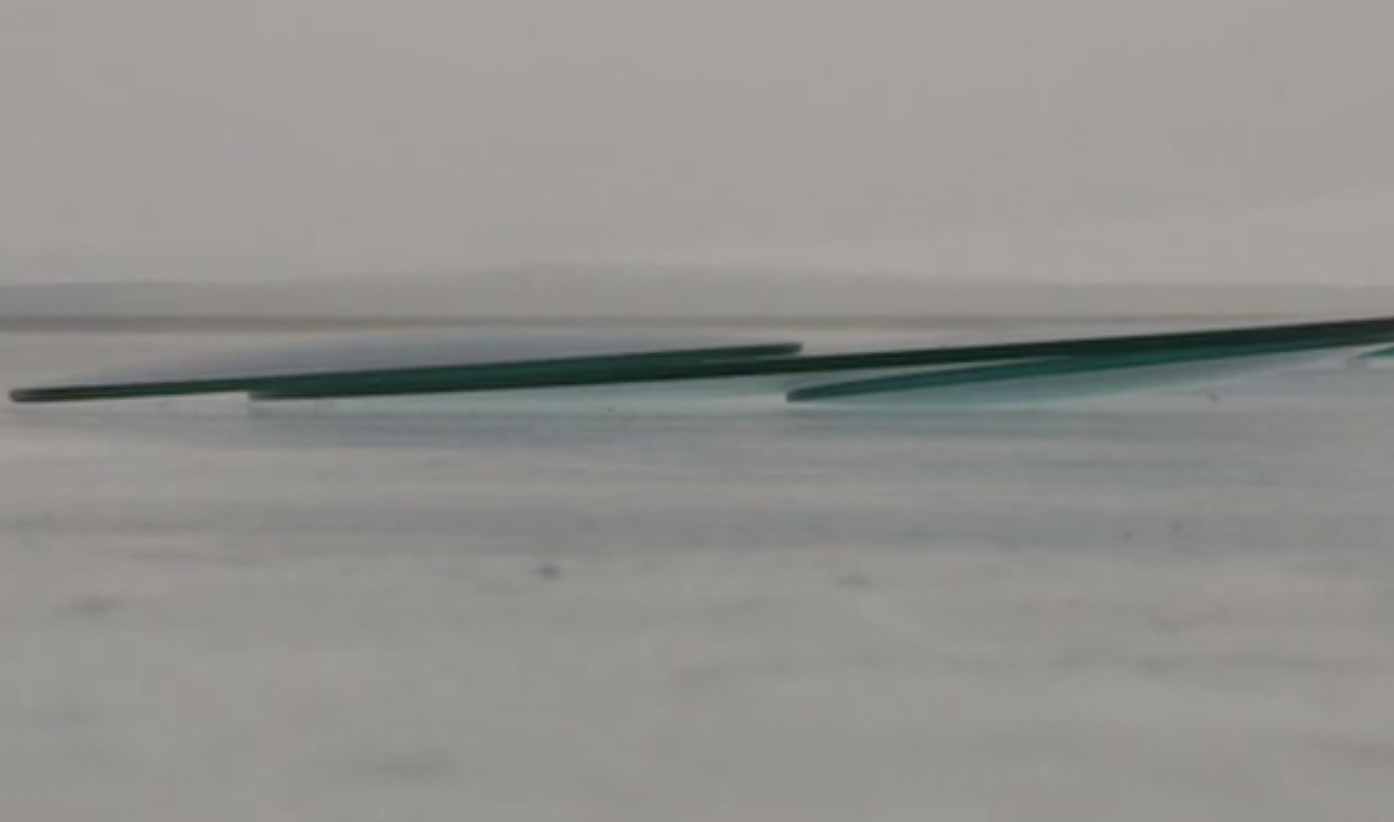
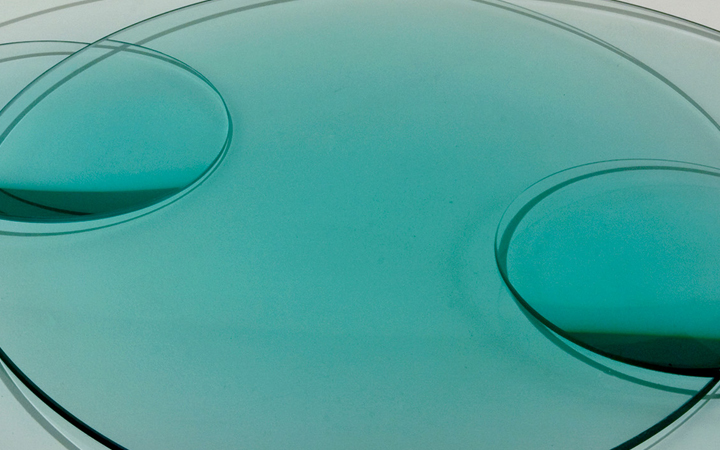
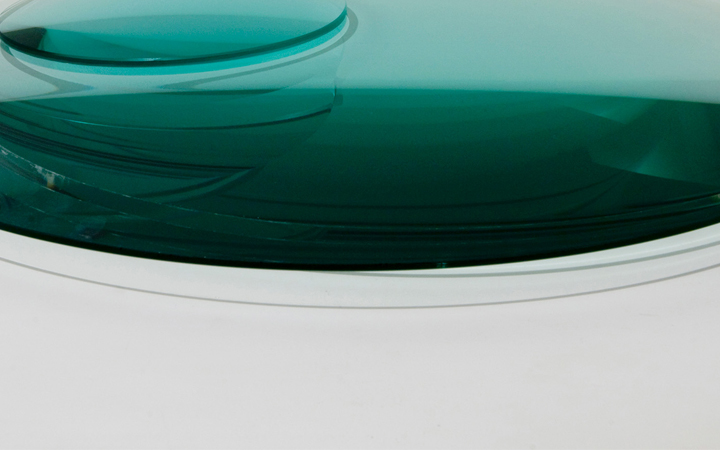
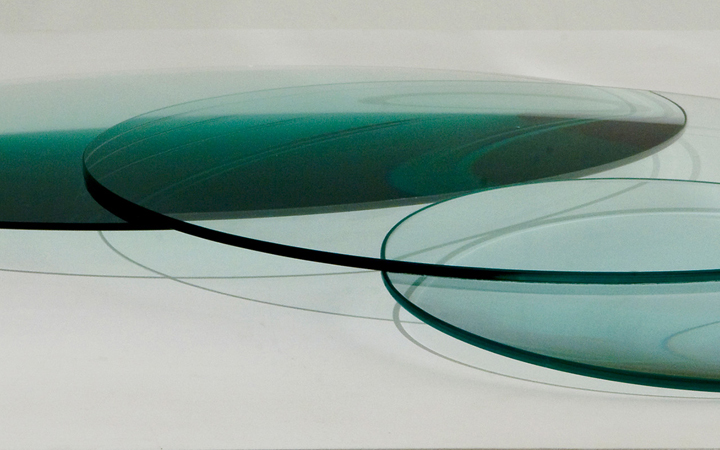
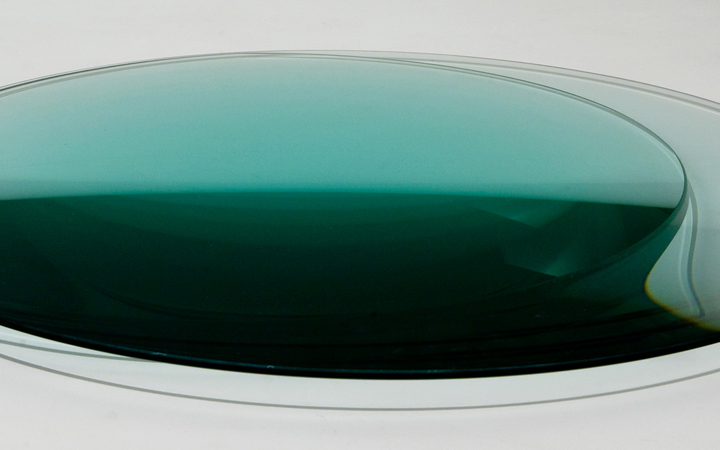
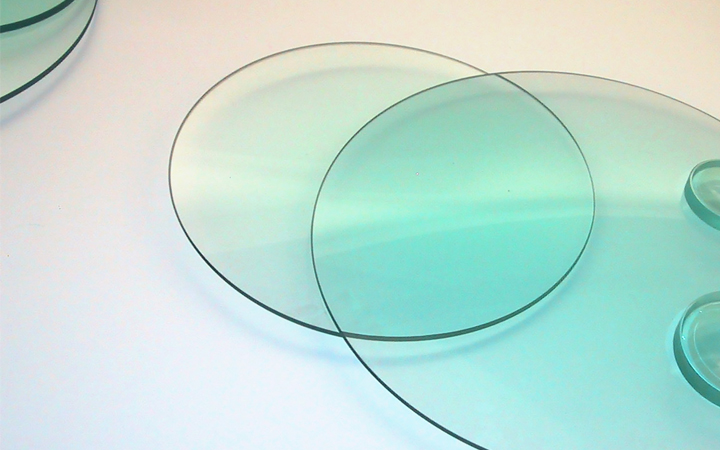
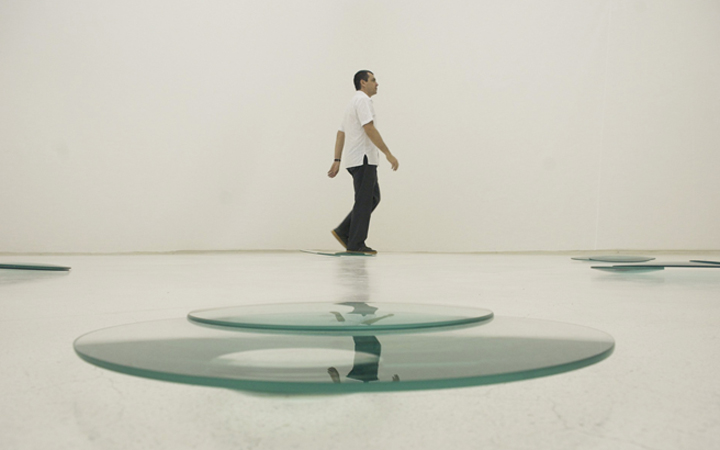
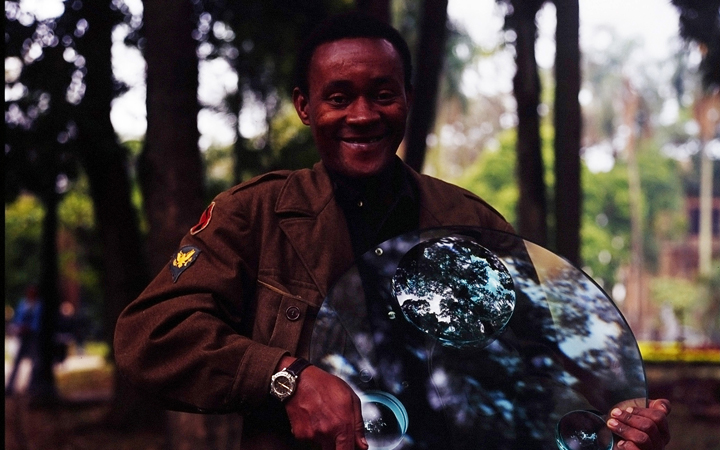
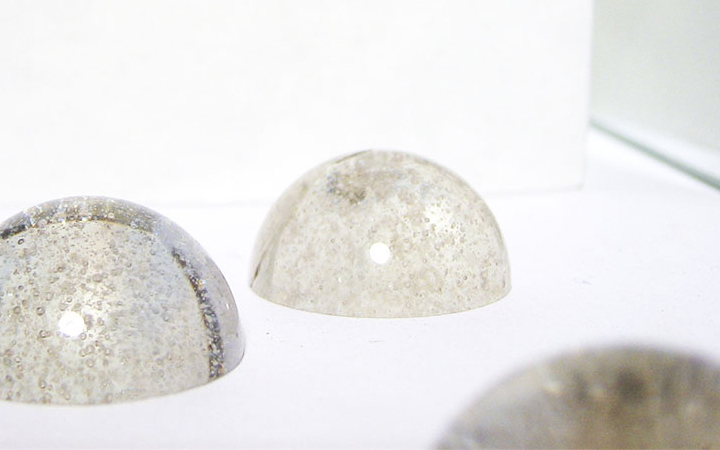
But the differences soon arise, referring one to the other. At Galeria Millan, the light comes from above, in three conjugated spaces, not all of which are empty: one of them contains some round plates of glass, like huge lenses, piled up on the floor. At Gabinete de Arte, the lenses are set on a table and low base, and they stand outside the space circumscribed by the drapery, which is now a single area, with two sources of light, one at the front and the other at the back of this room-within-a-room. Along the other two sides, behind the fabric, the gallery walls are clad with mirrors, one clear and the other darkened. Walking through the narrow corridor which remains between the white fabric and the bare wall of the first gallery, and the fabric and mirror-lined walls in the other, affords perceptibly different sensations, as does lifting up the drapery and slipping inside the fabric rooms of either venue. Further more, the sounds in one gallery are recorded in the other by an open microphone after closing hours and played back at the other on the following day in the first gallery, and vice-versa, in a sort of gap of time and space.
However, the differences are impurities of the white. Not so many as to cancel the relationship of participation between the two venues. It is as if, upon entering the place, where not much happens, all we were only offered a shoddy “this is this”. Yet if there is (or there was, never mind) a near-twin of this space out there somewhere, we are also given a “this is that”. Lingering awhile longer there, the experience of an embodied AND/OR may begin to flourish. And it might be many things, except peaceful. Differences arise because there is little in each part, so little that each now, each here, each this, each that is a lot – no matter in which gallery it happens to be. “Faz parte” [“It happens”], the mal-resigned grumble of everyday life, now comes to include “fazer a parte” [“make the part”], create the piece as a whole, here and now, considering the lenses and visible wires as leftovers that, after all, are also part, reminding us that there is another part there and then. This hardly seems strange in the scheduled mis-encounter that has long characterized Carlito’s work. Nor does that way of life growingly immersed in the volatility of presence, in which we are sometimes capable of ressucitating that cortazarian [2] feeling of not being fully there, and of making of the slightest sign an event.
Nada faz parte ou Duas vezes vazio
I’ve seen it.
Faz parte moved me. As soon as I left, I sent Carlito a message sharing my joy from the Fradique Coutinho sidewalk. A text message, full of typos and disconnected thoughts. I think it was because of this SMS that he asked me for a talk, saying he wanted the impact without intermediation. Raw, like when I came out, still swooning, raw like: look, this is marvelous, thanks. He asked me to recount that moment, without any critical or historical constraints.
ROOMS
What I saw when I entered the two galleries were rectangular rooms made of white translucent fabric. I entered spaces with clearly defined dimensions and limits, solid spaces with right angles and corners. These rooms were not wombs, nor were they ships or airplanes, they were rooms.
SKY MOBILES
The sway of the sheets lent the rooms mobility, bringing to mind the term sky mobile. Not mobiles in the sky, but slivers of sky in motion. Standing there, inside, I watched a room glide, like you’d watch Calder’s mobiles or Fred Astaire’s feet. Except the mobile-room is not made of parts that balance in movement, but rather of a single piece, which is what is so intriguing about the way it composes and discomposes, and the way it is one but never whole. It is part of a whole whose size and nature cannot be divined. Maybe that’s why it struck me as a mobile of—rather than in—the sky.
It is not that the draft in the gallery makes these rooms form and un-form. In fact, what forms and un-forms is the air itself.
DRAFT
The draft bellies the sheets and makes right, pleatless angles dance, which is strange, because the fabric is not a curtain and it does not hang on a window. A rectangle of sheets, with no pleats, no folds, no drift, but which allows itself to pleat, a pleated wall-skirt, a languid structure.
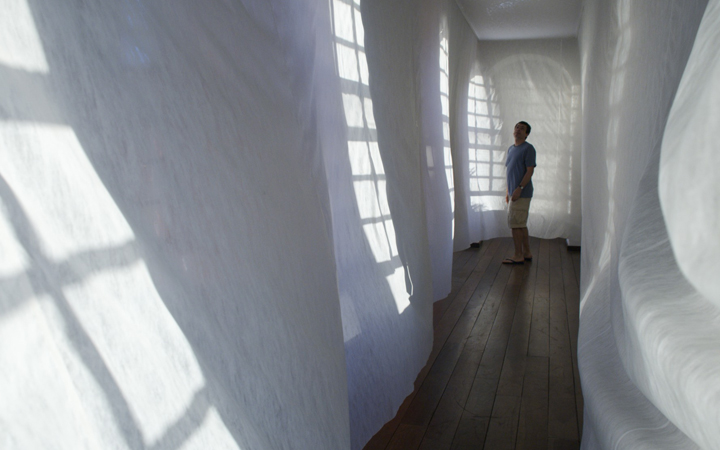
I walk the narrow corridor between the wall and the fabric, and the breeze created by my movements opens the way, delicately swelling the space between wall and sheet. I toy with it, moving my arm to make the sheet accompany the dance without touching my skin. I displace the air, and its existence between myself and things becomes clearer than ever before, the initial surprise becoming almost an awareness of a second skin inter-facing between myself and the world. I think of the Jews crossing a parted Red Sea. I imagine the firm ground flanked by walls of water, shored only by Divine will. Here in São Paulo, the sheet withdraws before my wind, clearing my way, ushering me somewhere sheet after sheet. If I feel like it, should I stop, the air will flow back and the sheet will engulf me.
SEA
Then I thought, why sky and not sea? I mean, sway is the sensation you get on boats. But I opted for sky because I didn’t sway, I was still me and on firm ground, the whole time. Nothing inside drives me out of myself; these rooms make no impositions. Nothing dampens intelligence or sensation, except for the wonder and the lack of answers proper to art. If I feel cold, solitude, or if I fly in these rooms, it is I who does it; the rooms of Faz Parte give me these possibilities; they do not drag me out of myself.
NOTHING
Nothing is a relevant element of the room. There is nothing more I can say about that, other than that it exists and is important to them.
DUAL, SCENE AND SCENERY
When I walk down a road and see an empty space between two buildings where a house once stood, I get the feeling that I cannot recall what that house was like, because it is lost to me, no longer present even in memory. So I promise to pay more attention to the houses and buildings on the São Paulo streets I walk each day, but I know I won’t do it, the sensation of death gives no respite. I will keep on losing, always.
I recall the scene from a film in which a man in a gray suit, bouquet in hand, enters an actress’s dressing room and sees her silhouette behind a dressing screen, followed by part of a pale, beautiful arm as it deposits an item of underwear over the rim.
In these rooms, the sheeting obstructs our view of naked walls.
The outside space is cramped, the inside ample. When seen from the outside, the sheets protect the void. When seen from the inside, they recall the drapery of a theater before curtain-call. There is a world behind them, a world of things, or perhaps a movie about to shine across some hidden screen.
Inside and outside there is draft, lightness, light and movement. The white fabric that separates inside from outside is translucent, preventing the gaze from piercing it. It is claustrophobic both within and without: outside is a narrow passage and we don’t know where it leads; inside there are no windows, no contents, just an angular continuum, with no breaches or doors.
The sound reinforces this sense of duplicity, the glue that binds the void and scene of which the environment is made. It is a room, but not that room. The sound belongs to the street, not that street at that time. The street and the rooms that were there before the exhibition continue to exist. In fact, nothing here is virtual, the two sounds and rooms overlap—the existence of one interfering in our perception of the existence of the other.
It is not a question of image or representation. The fabric does not simulate a wall; it is a wall that hides another bare wall.
The walls and ceiling reconstruct the place, but from the inside out. There is no trickery or illusion, though it might seem that way. Here there is something that is not.
The Invention of Morel, a novel by the Argentinian Adolfo Bioy Casares (1914-1999), tells the story of a fugitive who goes into hiding on a desert island, where there’s an abandoned house with a swimming pool full of putrid water and undergrowth invading the rooms. There is a woman that every afternoon walks through the flower bed, without even noticing the flowers, and sits pensively on a rock on top of the hill. There she is, every afternoon, pensive and lovely up on the hill. There is also a group of friends fooling around by the swimming pool, now filled with crystal clear water. The fugitive is afraid to show himself, but he fixes up a flower garden near the rock on the hill. Again, the woman walks over the flowers and sits on the rock. In the end, the fugitive discovers that the woman and the youths playing in the clean pool are reproductions of happy days lived in the past. One of the men has found a way to immortalize himself with his friends. Depending on the tides, a mechanism is triggered that allows times past to replay over the undergrowth and abandonment of the present.
The Faz Parte exhibition works a similar overlapping of existences that strike the viewer as if they were different times and even different spaces, somehow unfolding in the same place, at the same time. Even though the sound is a recording of past events, by being played back it becomes sound again, mixed over the present sound coming from the present street. In other words, the rooms and sounds both exist and are reproductions, they duplicate, modify and reinforce what we already know: the sound of the street, the space of the rooms. The walls, like white screens awaiting a movie, are the walls of a gallery with no pictures.
Apagador ou Azul com branco dá cinza
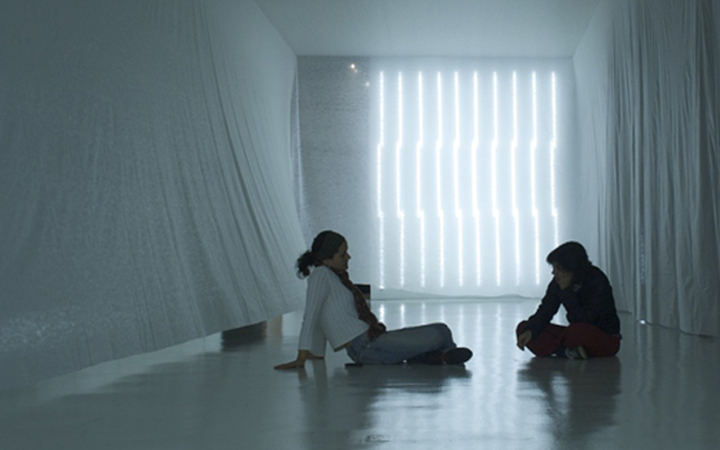
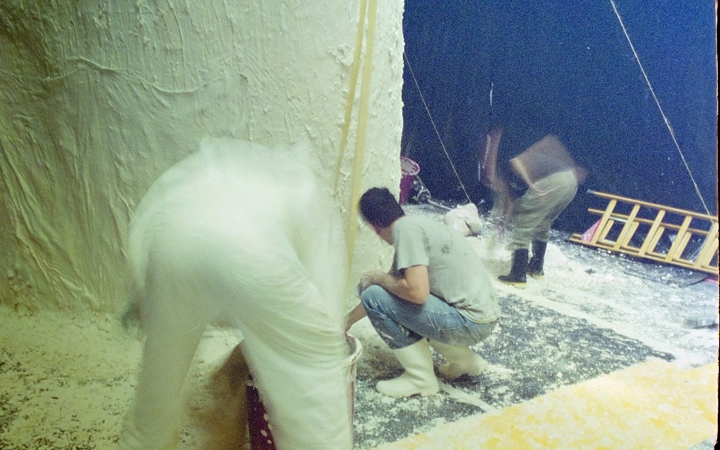
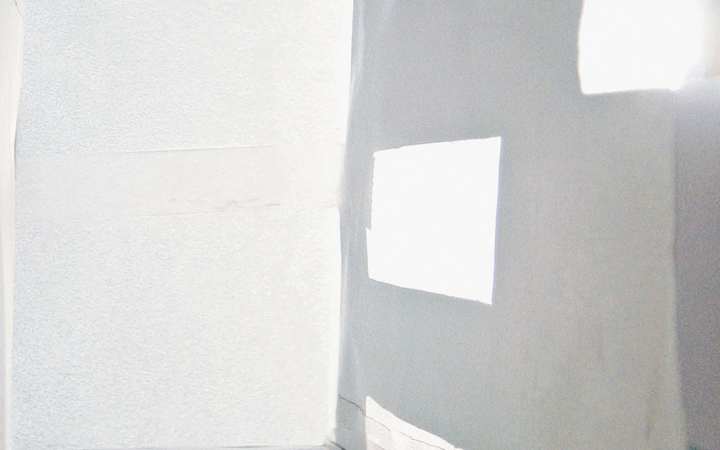
Apagador (Eraser) is a suggestion of sculpture. It does not fill the internal space with a solid gesture that impedes our entrance, but with volumes made from white sheets draped from the ceiling. These sheets of fabric flap gently in the breeze and give way with the slightest brush. They are shafts of light, or at least lit columns, empty on the inside.
The hollows of Apagador quickly drive us to the horror vacuii and to its opposite, fear of the excessively full. There is no way of knowing whether Carvalhosa erased or subtracted the internal volume of the place, if that volume simply ceased to exist as if it had never been there, or if it was torn out, leaving scars and agony. As such, we don’t know if we are suffering or not. The draft in the room cannot sweep away the premonition of some misplaced weight and solidity. It makes a coffin for air. A coffin of air.
Somewhere out there in the world there must be someplace where white is the color or mourning, but that place is not here. Here the visitor hurries to fill the vacuum with all manner of spirituality.
When the incidental noises of the work cease, the sheets stop flapping in the breeze and the sound of footfalls recede, we can see that there is no silence in this place. There is always some background noise, a horizon of sound. It is the noise you get in films between a snatch of dialogue and some soundtrack. Between a rumbling sky and labored breathing, there’s the voice of the film spool, the whisper of something being seen, the friction between film and projector.
We are left none the wiser as to the source and meaning of this sound until we hear the rumble of a plane flying overhead. We realize that what we are hearing is actually a recording of noise that filled that same room at some time in the past. Someone tells us that it is a recording made every night and played throughout the following day. All of a sudden, that noise sounds romantic, like the memory of a lover’s moans. Yet it remains a disquieting sensation. It is as if a curtain has fallen between us and the day. This extemporal night cannot impose its darkness. Simply put, the day becomes gray and sullied with sound.
White noise contains all possible frequencies. It has no place for anything else. Its dreams and desires remain trapped within you. White noise contains all frequencies. It returns to the body what the void has stolen from it.
On erasures and their beginning—our eyes before an explosion, the instant at which the white and black fuse.
The Greeks painted their sculptures with black hair and red mouths.
We leave our plaster white.
Robert Rauschenberg erased a drawing by Willem de Kooning and presented the result as a work of his own. De Kooning was none too pleased.
In 1966 Robert Morris wrote a three-part essay entitled Notes on
Sculpture 1-3, in which he speculated on the idea of Gestalt in sculpture, a sculpture whose parts are so tightly joined that perception cannot separate them and whose scale stands between the monumental and a size measured to the body.
Cy Twombly, a well-known painter, is also a sculptor.
He only works with whitewashed wood.
The Beatles’ White Album
João’s white record
Branco from the Titãs
The white teeth of a smiling Louis Armstrong
The white of Friday
The white on white of Malevich’s cross or of Alberto Pitta’s cloth panels
The white keys on a piano
The blanks I draw
The white women who gave themselves to me
The pale whitey
The white that is invisible to itself
White-collar white
The white man—forever in charge
The white of their eyes—fire at will
The clouds
Casper the Friendly Ghost
Let the whites work it out among themselves.
Apagador
This text has not been translated into English.
Corredor
This text has not been translated into English
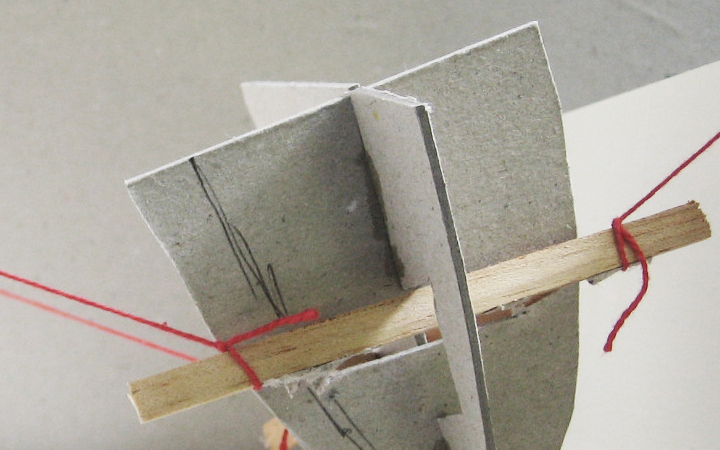
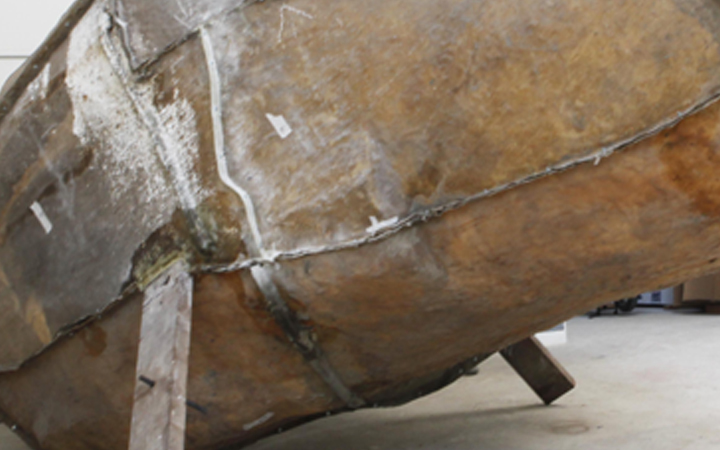
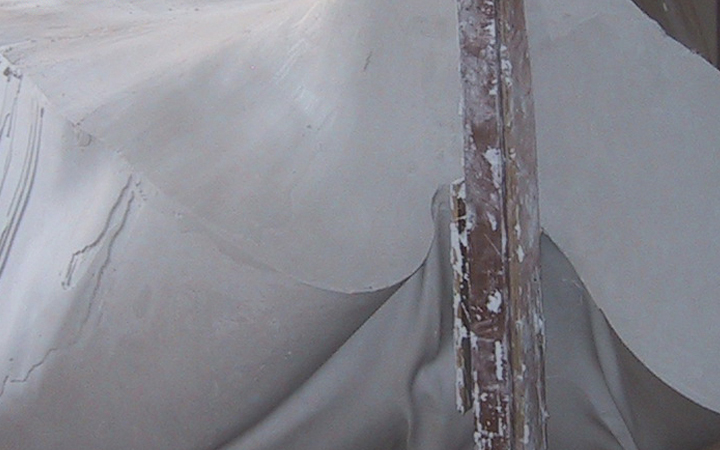
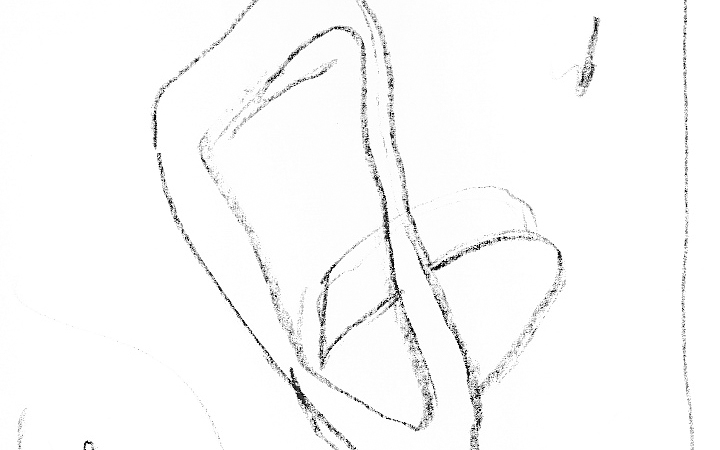
Já estava assim quando eu cheguei
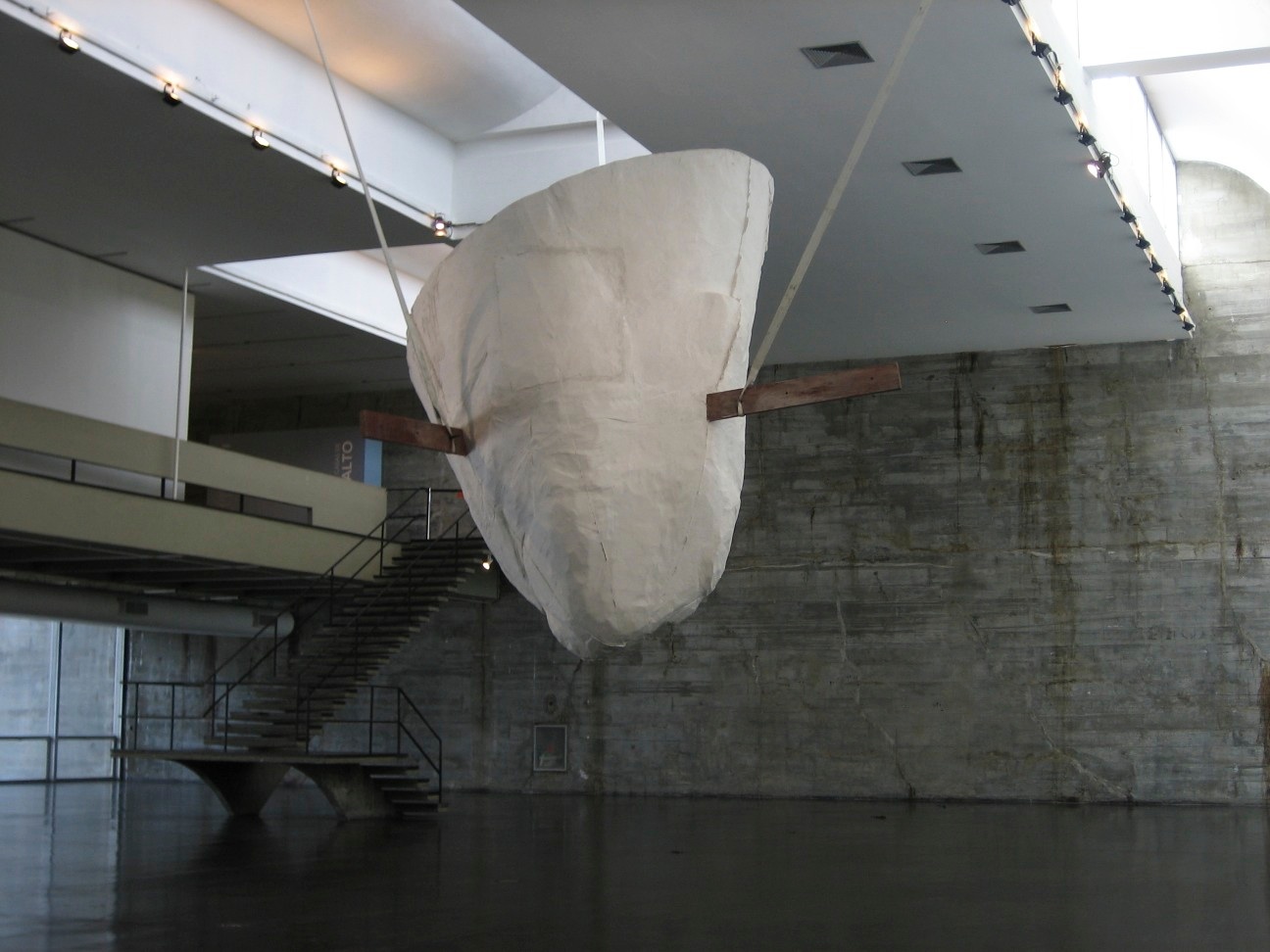
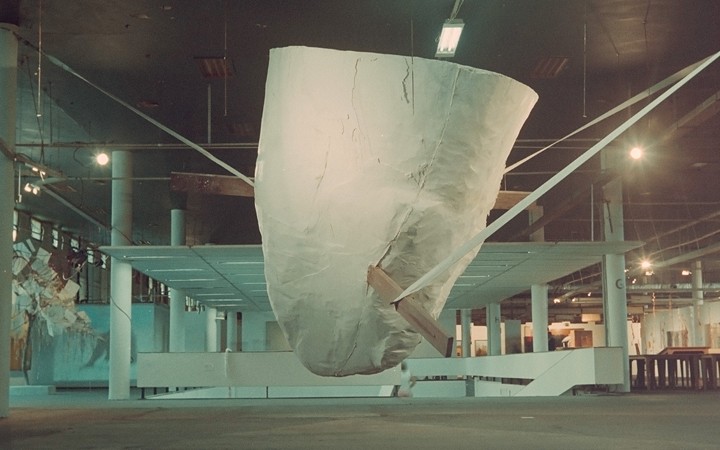
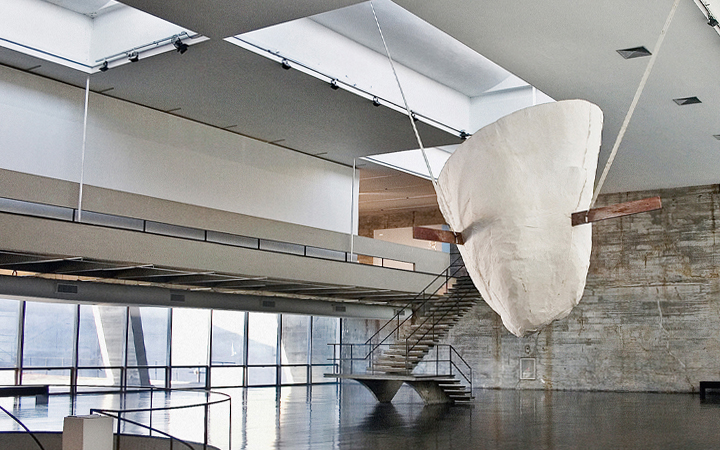
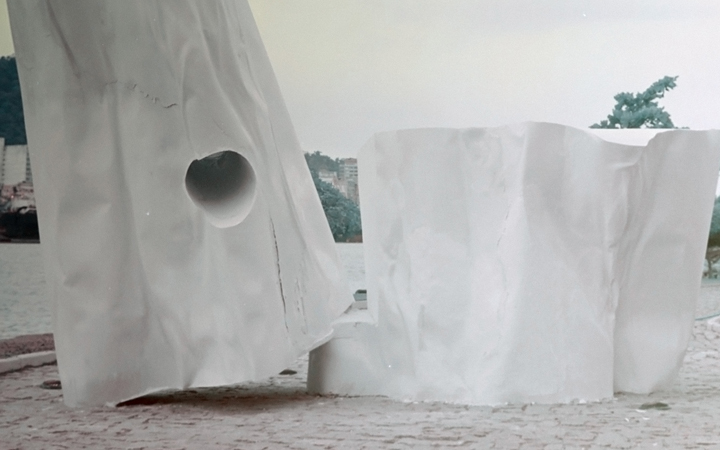
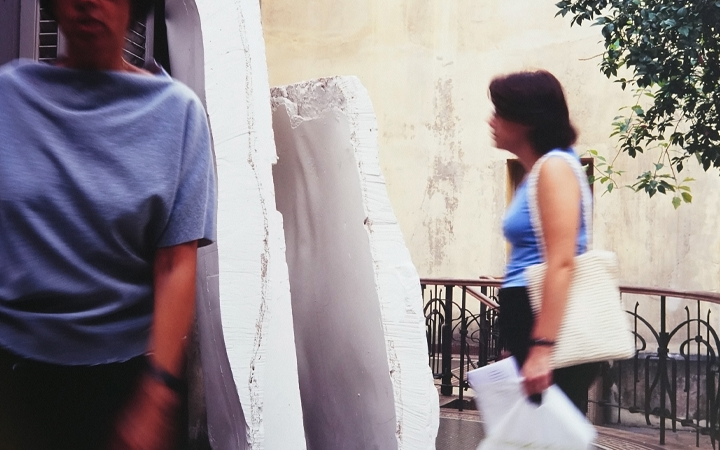
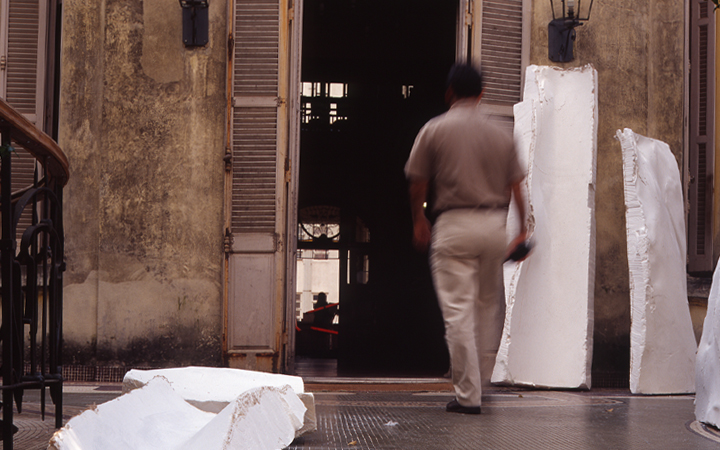
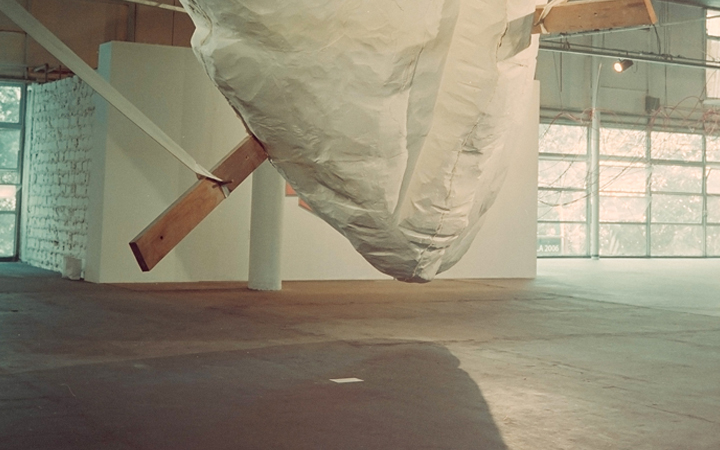
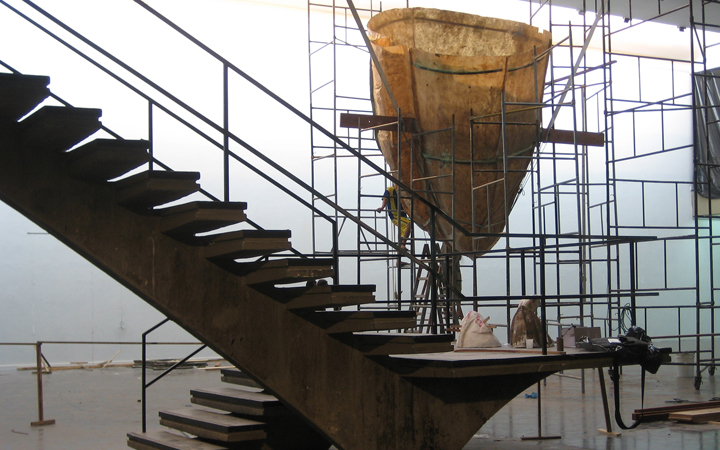
On another order of reflection, “Já estava assim quando eu cheguei” (“It Was Like This When I Got Here”), by Carlito Carvalhosa, seems to allude to migration. Made by a São Paulo artist who moved to Rio, the sculpture is a decapitated Sugarloaf Mountain. Then again, it might refer to colonization: what was here before the westerners arrived was a large rock with another name. To name is to own. However, the work harks back to an even more primordial time than this when it asserts that the rock—a monumental geological accident—“was there when I got here” and had no name, only form. The artist does not establish any dichotomy between the disparate times of “arrival” and “being there before”. Rather the work addresses the constitutive moment of the sentient subject. This difference between the ego and the world (that was “already” there) is consciousness itself. The affirmative title creates a point of suspension, prior to the stage of expressive intensification of its attack on the problem of artwork construction: that of keeping the unnamed in a mutating formal state. Merleau-Ponty’s ontology of the visible (it, or that geographical mass, “was there when I got here”… it was already visible before my gaze) is considered from the perspective of Cézanne. If the French philosopher still dabbles in metaphysics, Carvalhosa dispenses the cultural memory of the cliff (his symbolic history of the nation) and perhaps a Bachelardian phenomenology of the order of La Terre et les rêveries de la volonté. However, he knows that, essentially, he finds himself before a Merleau-Ponty confrontation that is allusive to Cézanne: constructed humanity (the producer-subject of art: the artist) suspends its habits (such as that of considering the landscape as something given in painting) and reveals “the base of inhuman nature upon which painting has installed itself”. If Carvalhosa’s memory derives from the sensorial apparatus, its unfolding in his work has its eye on the history of art. “The landscape thinks itself in me, and I am its consciousness”, wrote Cézanne. Like Mount Sainte-Victoire in Cézanne, the Sugarloaf is a mere worldly (pre-worldly) given through which Carvalhosa pits the specificity of sculpture against primordial nature (Husserl’s Erde). Between the opacity of memory and non-knowing, Carvalhosa reveals his chiasmus: what comes from the thing (and was “already there”) and what derives from himself in his work.
Da “pintura que não dá pé” à escultura que afoga
Text written about the exhibition Please Do Not Touch, curated by Lorenzo Mammi and presented in the main hall of the Centro Maria Antonia in 2005.
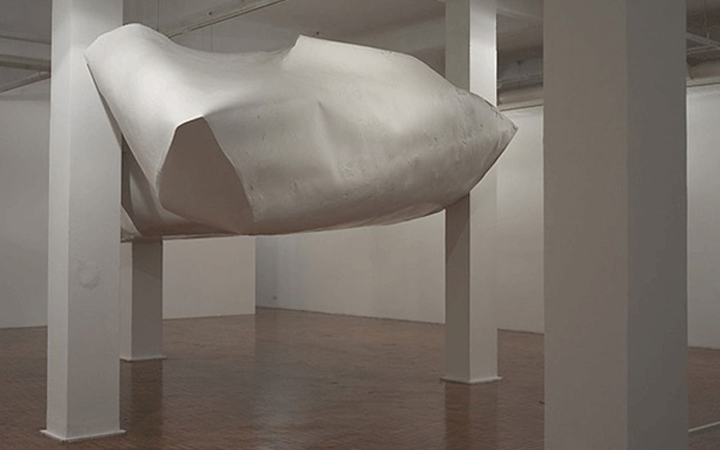
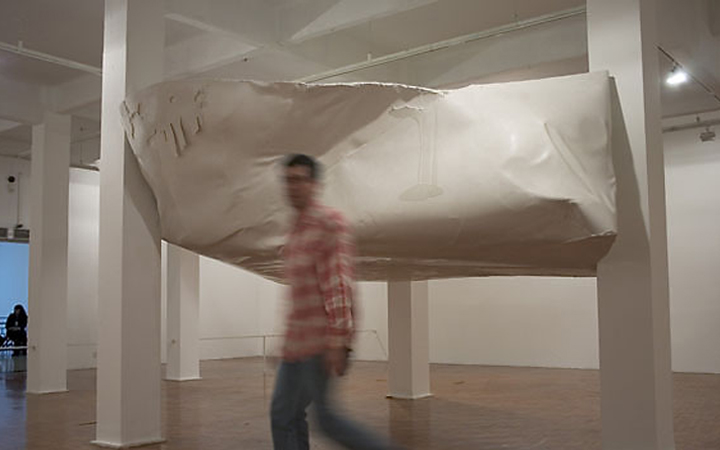
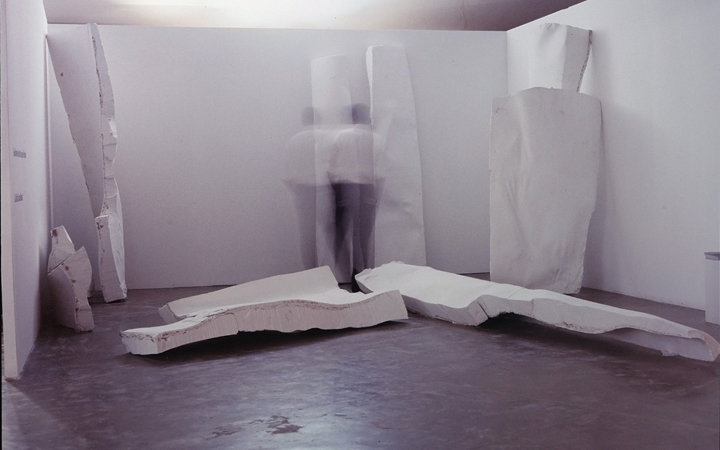
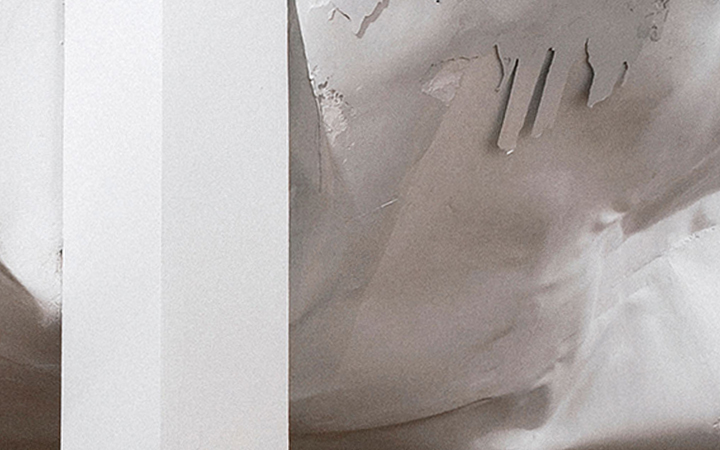
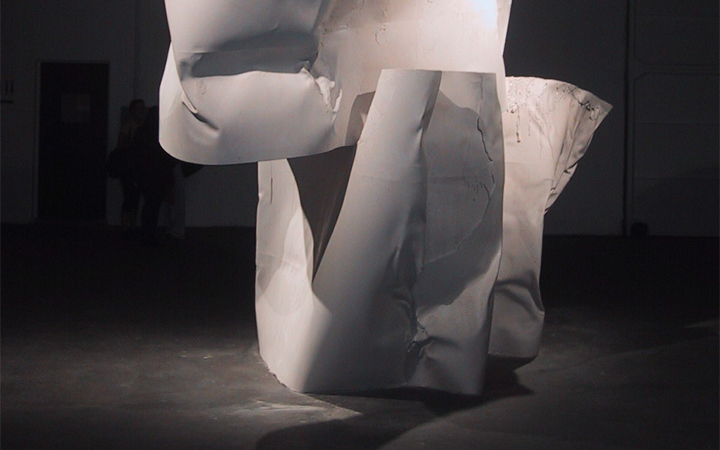
The empty main hall at the Centro Universitário Maria Antonia (Ceuma) on opening night must have been quite a sight to behold, with the public all corralled behind the little white rail aligned with the first two columns. Perhaps it is something like the works by Serra that gradually close in on people, except that, here, the wall was invisible and tenuous. From the part of the hall open to the public, all you could see was a plaster block wedged in a void.
“There’s none of that getting up close, slapping your beer can down on it and calling it mate!”(1)
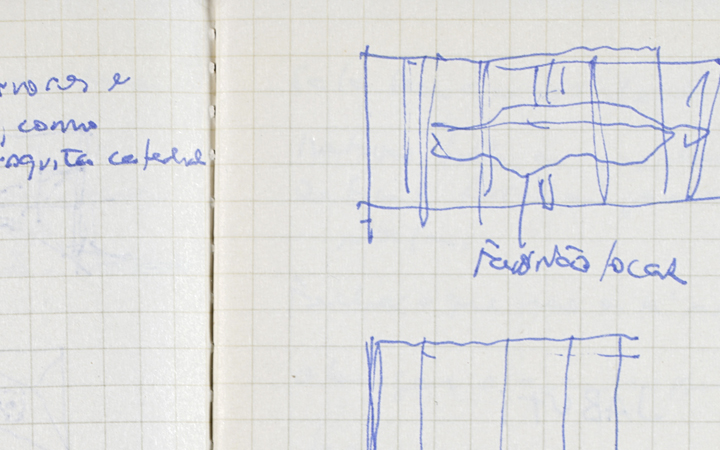
The title of this work by Carlito Carvalhosa was supposed to be Perna de três (Three-Leg Truss), but this was changed to Favor não tocar (Please Don’t Touch) during construction, when the artist decided to erect a barrier to keep back the public. Knowing this name-that-almost-was-but-wasn’t allows for some initial proximity between the sculpture on show at Ceuma and a series of works the artist produced at MuBE in 1999, entitled Duas águas (Two Waters).
There would seem to be two families of titles in Carvalhosa’s work: those that practically describe the physical constitution of the piece, such as Ceras perdidas (Lost Waxes) and Espelhos graxos (Greased Mirrors), and those that sit midway between technical terminology and poetic expression, between physical and metaphorical description of the work, such as Duas águas (Two Waters) and Perna de três (Three-Leg Truss), with the added coincidence of both titles including numbers.
Perna de três is a device used in construction, while duas águas refers to an inverted V-shaped roof that allows water to drain off on either side. The two facets of this roof-type inspired João Cabral de Melo Neto to take this as the title of a 1956 collection of published and unpublished works: one facet hermetic in nature, and the other more ‘popular’; poems to read and poems to be recited.
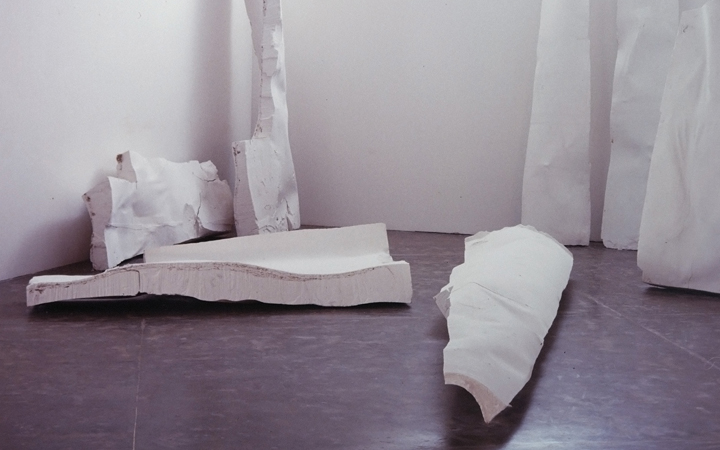
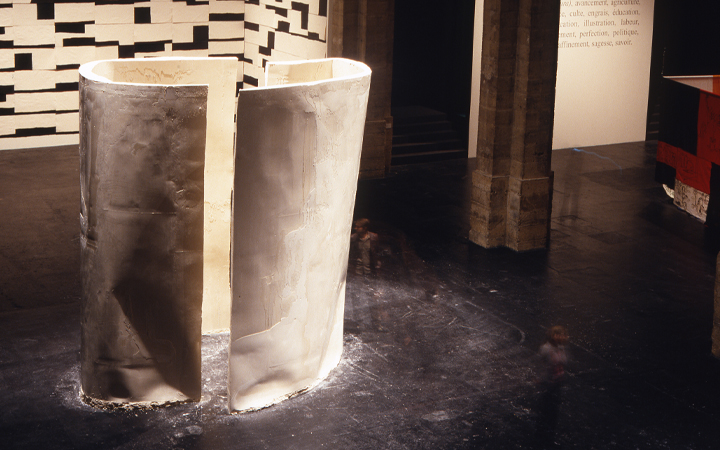
Besides a possible relationship between the names of the works, other common denominators between Duas águas and the piece on show at Ceuma are the material used, the color and density disguised as levity. Might the Maria Antonia exhibition be a follow-up of the pieces exhibited at the MuBE in 1999, as if, beyond groupings by title, Carvalhosa’s works also reveal a kinship of content?
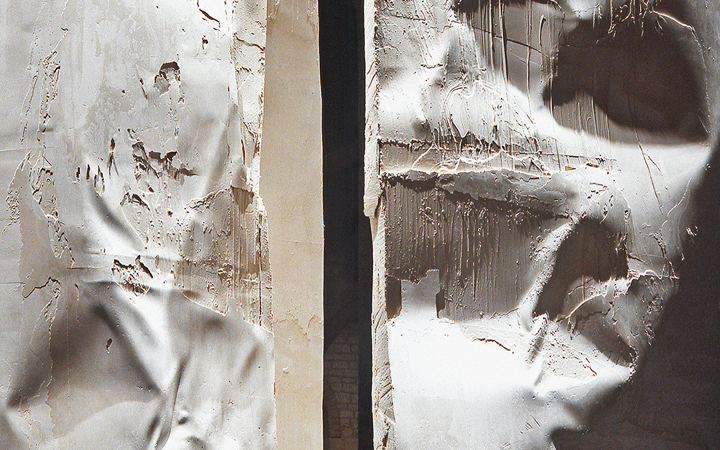
This group of works is of more distant lineage to the perforated plaster sculptures shown at Galeria Raquel Arnaud in 2003, which establish greater dialogue with the glazed porcelain series of 1996/7, not so much because of the perforations, but because of a sort of “dry” finishing, unlike the “humid” finishing of Duas águas and Favor não tocar.
“The piece at the Raquel had various natures, a perforated part, a wafer-thin part, a more hybrid part, after the porcelain work. A piece you could walk around and around and it would always throw up something you hadn’t noticed before. This time I figured it would be possible to see the thing with more intensity if I kept some distance from it; made the surrounding space part of the piece itself.”
It is as if the distance renders the sculpture more visible, in the sense of that original experience of seeing, as opposed to the contemporary experience of “re-seeing”, of which Paul Virilio speaks: “Today, we are no longer truly ‘see-ers’ (voyants), but already ‘resee-ers’ (revoyants); the tautological repetition of the same, at work in our mode of (industrial) production, is at work equally in our mode of perception” (Paul Virírlio, L’horizon négatif, Paris, 1984, p. 31).
The opposite of “reseeing” is to “render the invisible visible”; the philosopher’s self-ordained task. In order to combat this visual surplus that gets in the way of perception—“I was suddenly persuaded that vision gave less to see, that it was above all a process of occultation”—Virilio proposes a voluntary blindness that leads us to note the articulations between objects, not just the objects themselves, finding new and more complex forms in the intervals and interstices.
By making the surrounding space part of the work, Carvalhosa forces us to adopt a sort of involuntary blindness. In our habitual eagerness to see more and better, to see and touch at close quarters, we end up—between frustration and impotence, trapped there behind the railing—failing to see the void and to consider how the thing came to be where it is, if there might be something somewhere out of view that is holding that shapeless body up.
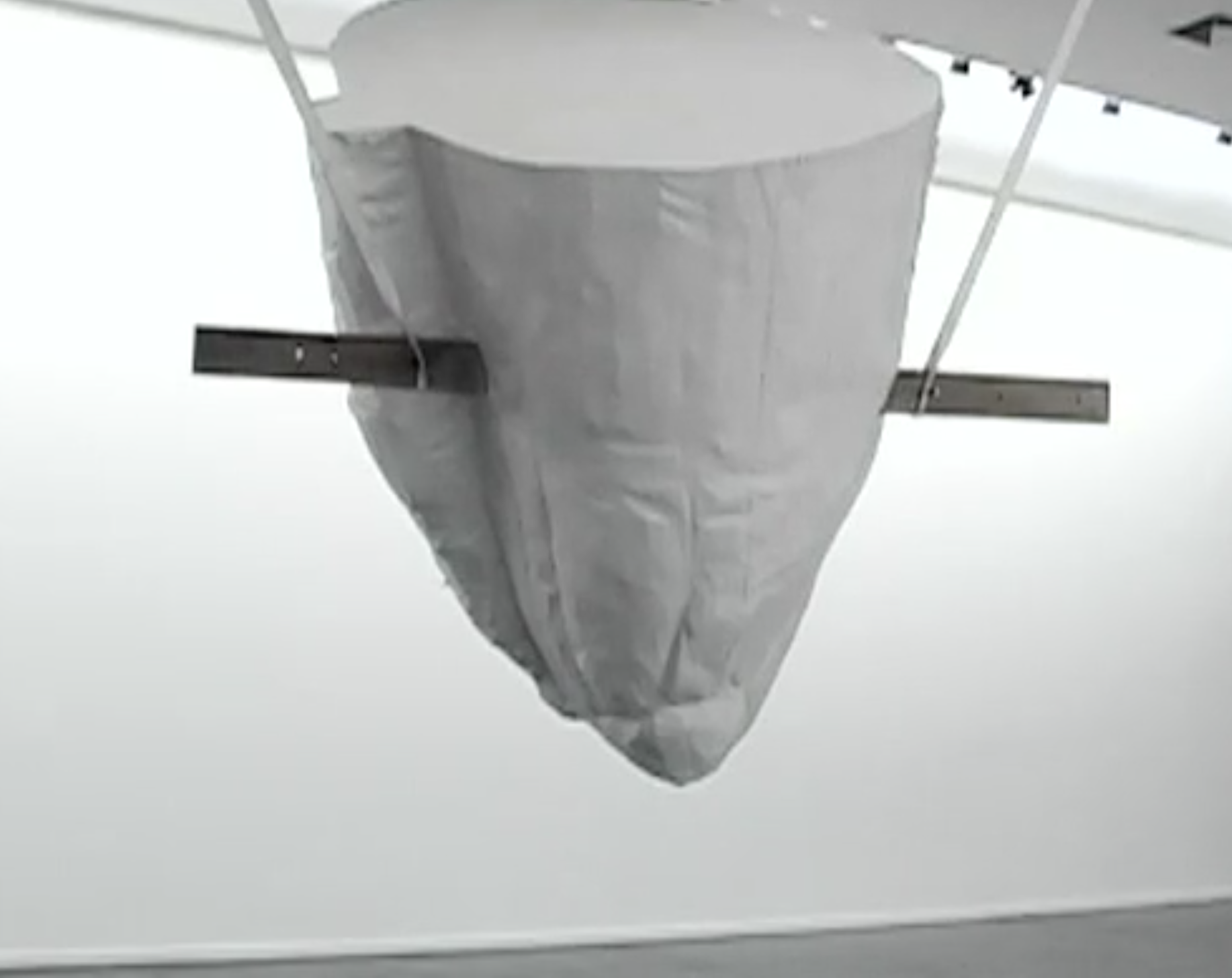
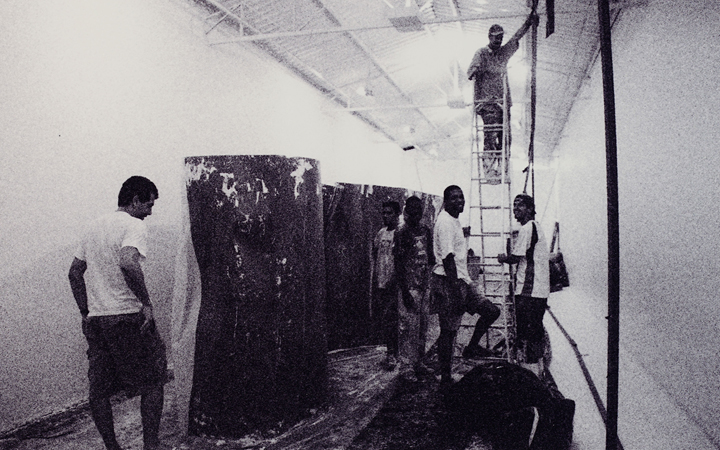
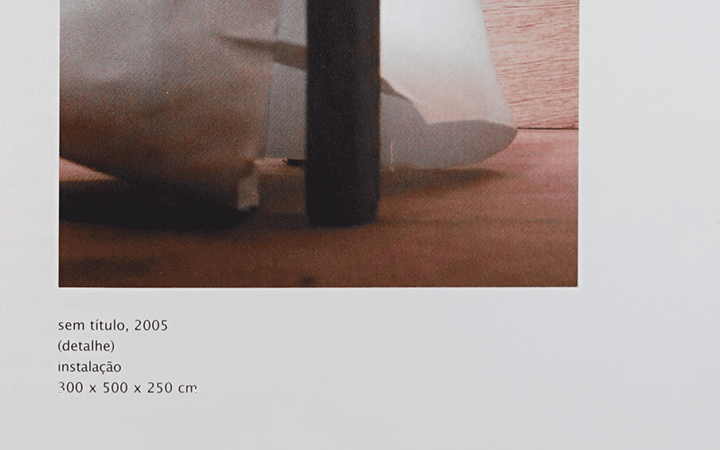
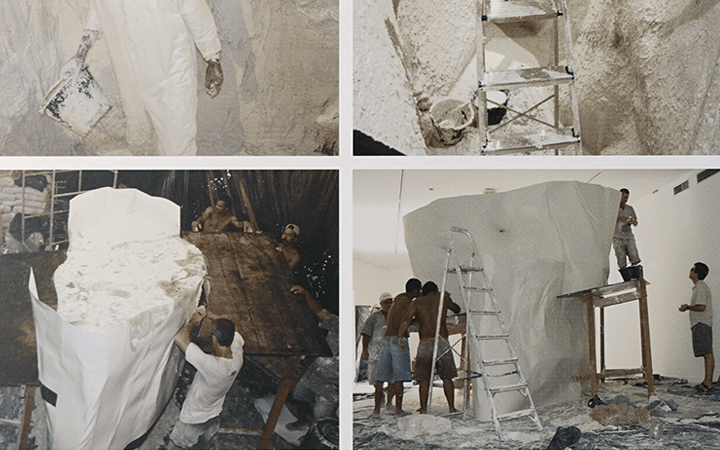
It is interesting that the block was lowered rather than raised into position; it was built at a tilt, above the point where it would eventually wedge. The work slid into position, and then and only then did the artist insert the steel pegs to prevent it from sliding further over the course of the exhibition, which might not actually have happened, as the ton-weight of plaster is well and truly jammed between those columns.
This suspension harks back to the “frozen moment” paintings exhibited at the Raquel Arnaud (in plaster, oil, grease and resin on mirror-glass). And also to earlier works in which the artist sandwiched wet plaster between glass. This suspension hovers somewhere between precariousness and lastingness, a paradox like that underscored by Rodrigo Naves in his text on the divided nature of the work.(2)
“I like this paradox, I like the pieces to be unstable, in terms of their meaning, of the presence of the materials and their relationship with the space.”
Lorenzo Mammi has some beautiful definitions for the artist’s works as “in-over-your-head painting,”(3) and these can serve to clarify the current piece. This sculpture also draws us out of our depth, not out of some lack of definition between figure and background (which was what Mammì saw in the paintings from 1989), but because it sits above the line of the horizon: we don’t see the topside and find ourselves on the tips of our toes, craning our necks to keep chin above water.
Another of Mammi’s observations: “the truth of the work resides in some no-man’s land between nothing and the anecdote.”4 Favor não tocar also inhabits this realm between “nothing and the anecdote” because it evokes things without imitating anything (it resembles a cloud, a plane, a ship run aground, an animal, a shark, and yet it is none of these) and also because it hides its process of construction—in line, once again, with the critic’s reasoning.
“In fact, in-over-your-head sculpture would be a good name. However, I think there is a lack of definition in this piece between figure and background, and I think it transforms the scale of the room.”
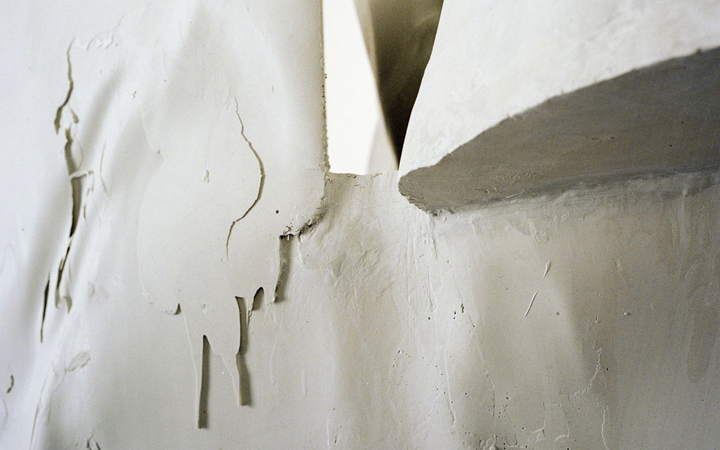
And, after all, is plaster a good or a bad thing?
“Plaster is an everyday material, used in everything from the cast for a broken arm to the decorative finish of a ceiling. It is a material of transition in art, nobody gives it much thought, which is why it interests me. I like the way it goes from wet to dry, the way it is so neutral it’s hard to know what it is. I once went to a baroque castle in Germany, where all the pillars were of plaster made to imitate marble. It seems that in the 17th century it was more expensive and sophisticated to make mock marble in plaster than to use real marble, and that’s why the pillars were all made of plaster, with the fake proving more ostentatious than the real.”
Notes:
1. The interventions, in quotation marks, are excerpts from an e-mail interview with Carlito Carvalhosa on July 27 and 28, 2005, concerning the exhibition at Ceuma.
2. NAVES, Rodrigo. “Óleo sobre água”, in Carlito Carvalhosa, Lorenzo Mammì (org.). São Paulo: CosacNaify, 2000.
3. MAMMI, Lorenzo. Preface to the book Carlito Carvalhosa. São Paulo: CosacNaify, 2000.
4. Ibidem.
Espelhos e Porcelanas
This text has not been translated into English
Sólido Insólito
This text has not been translated into English
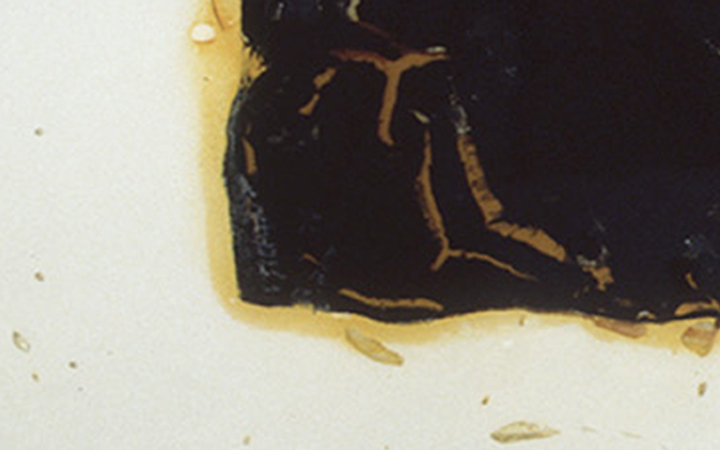
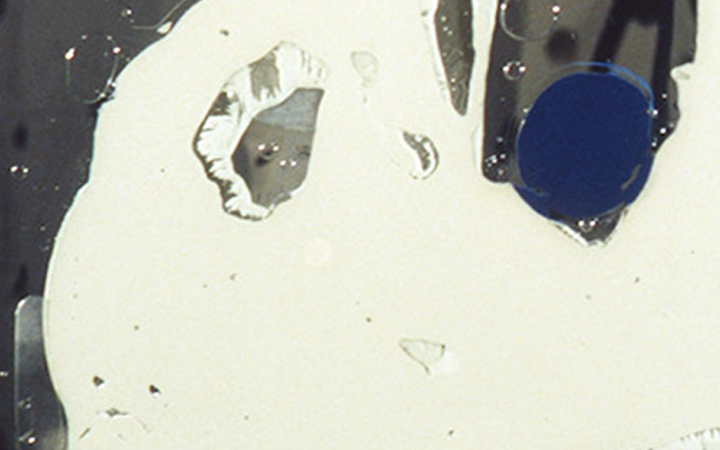
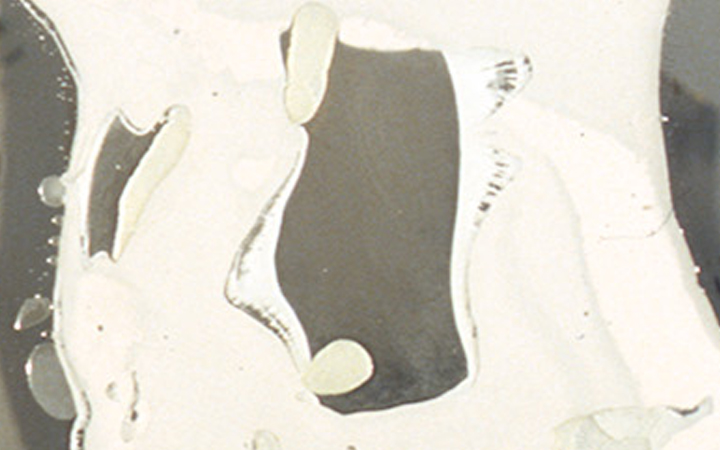
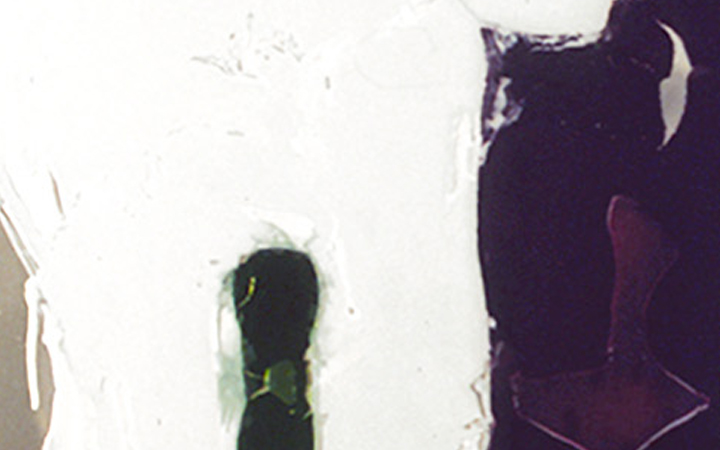
Espelhos Graxos
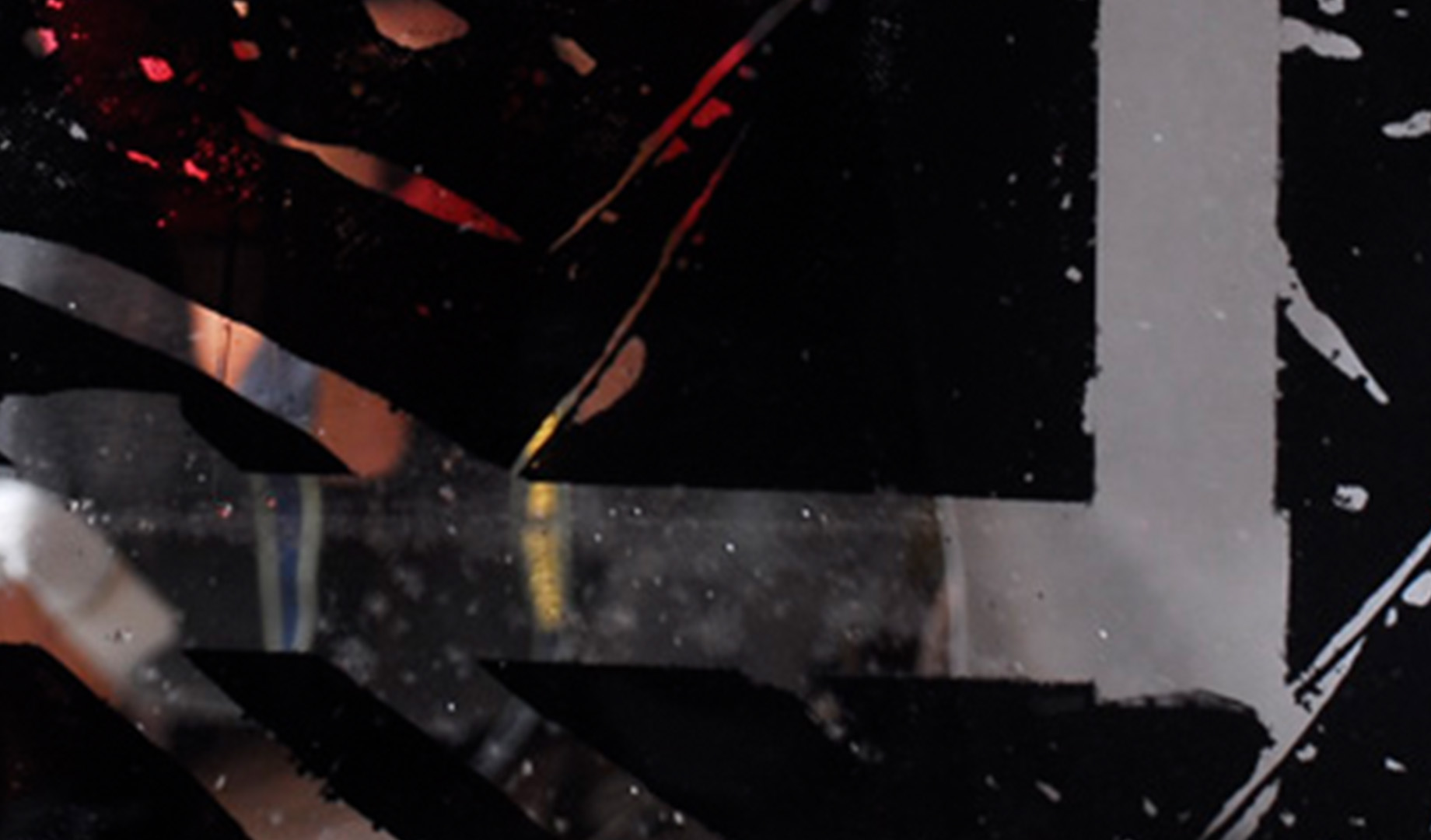
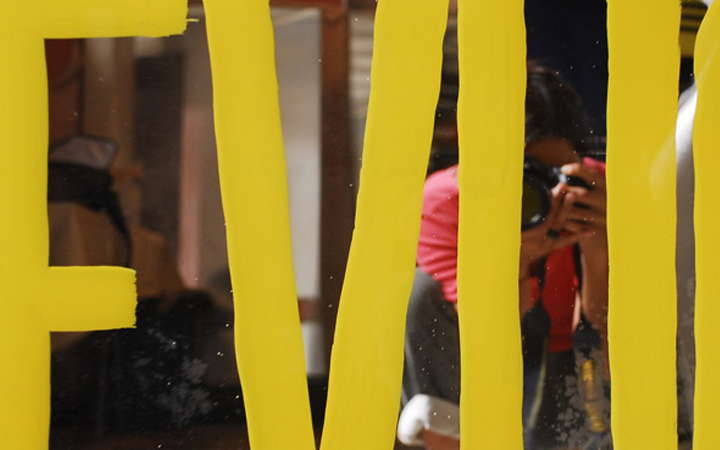
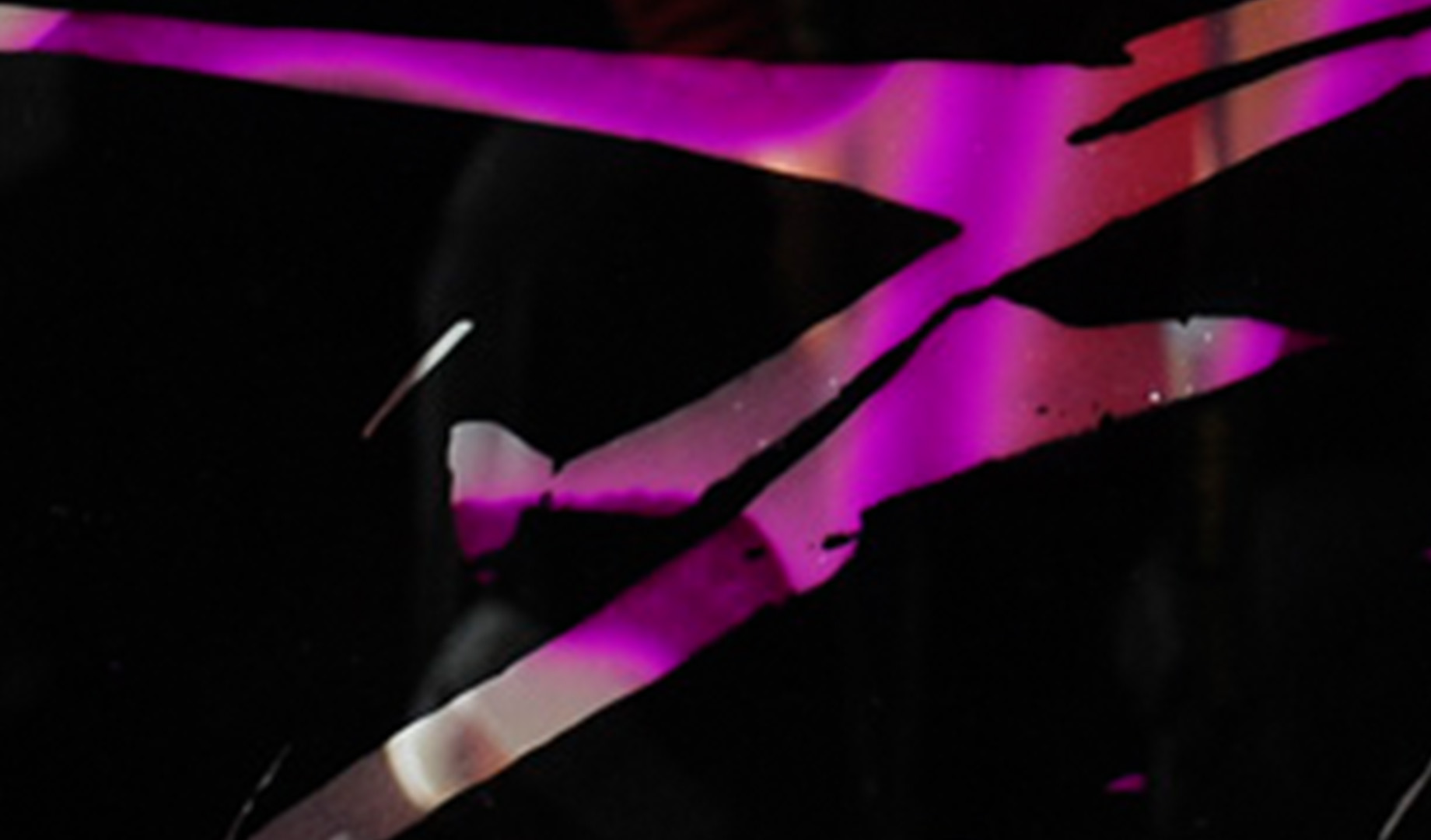
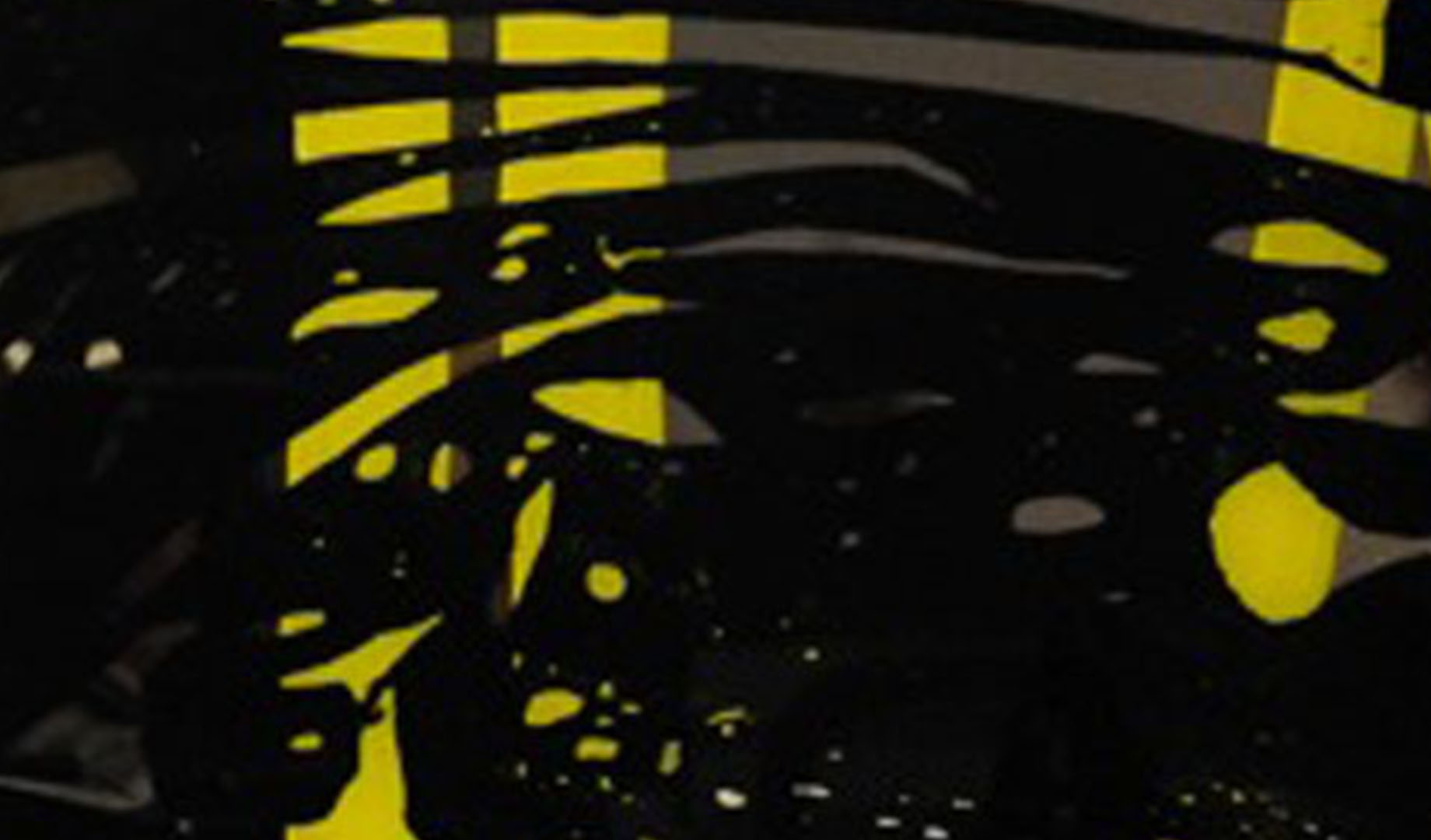
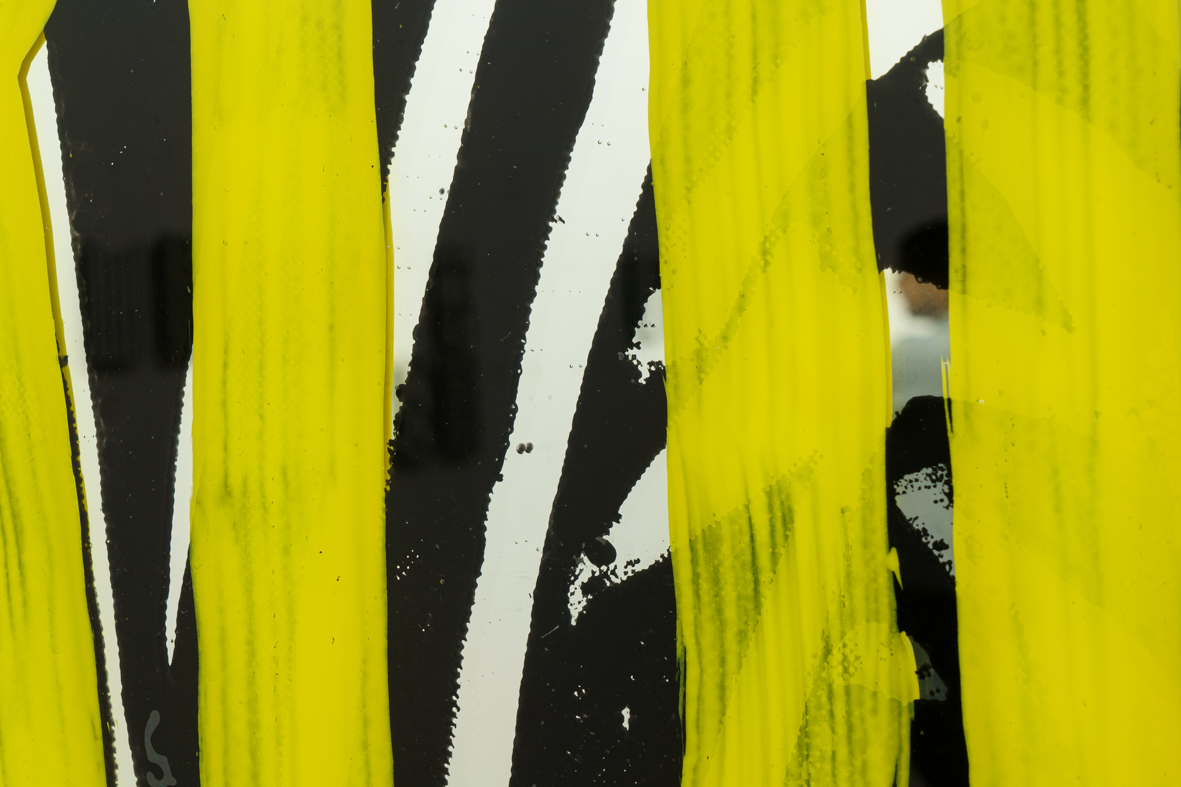
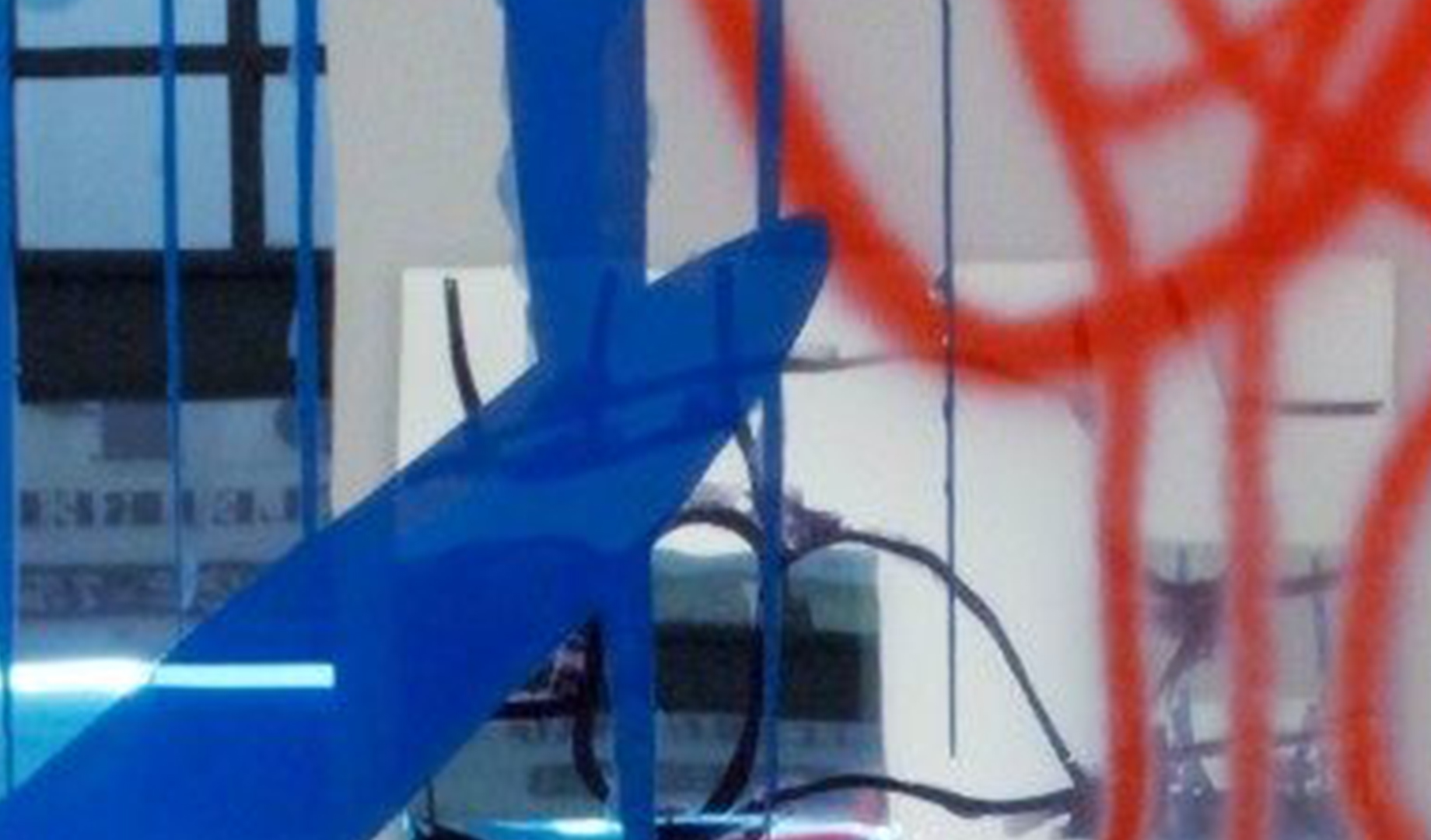
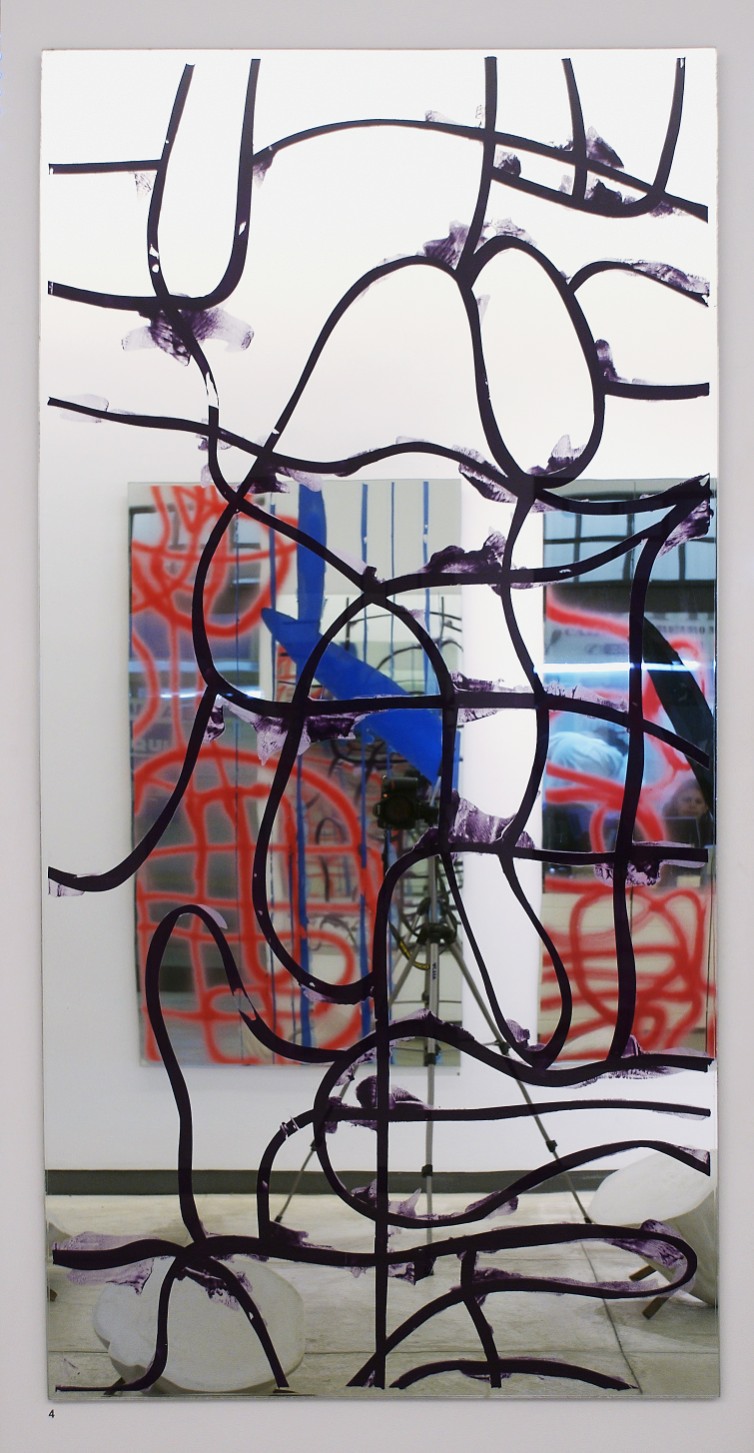
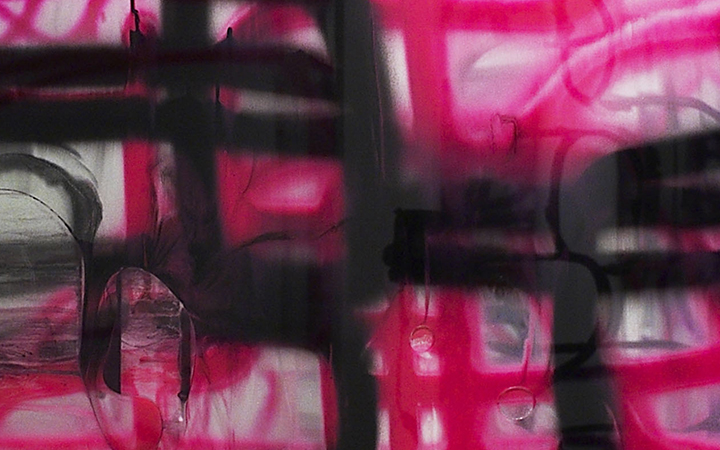
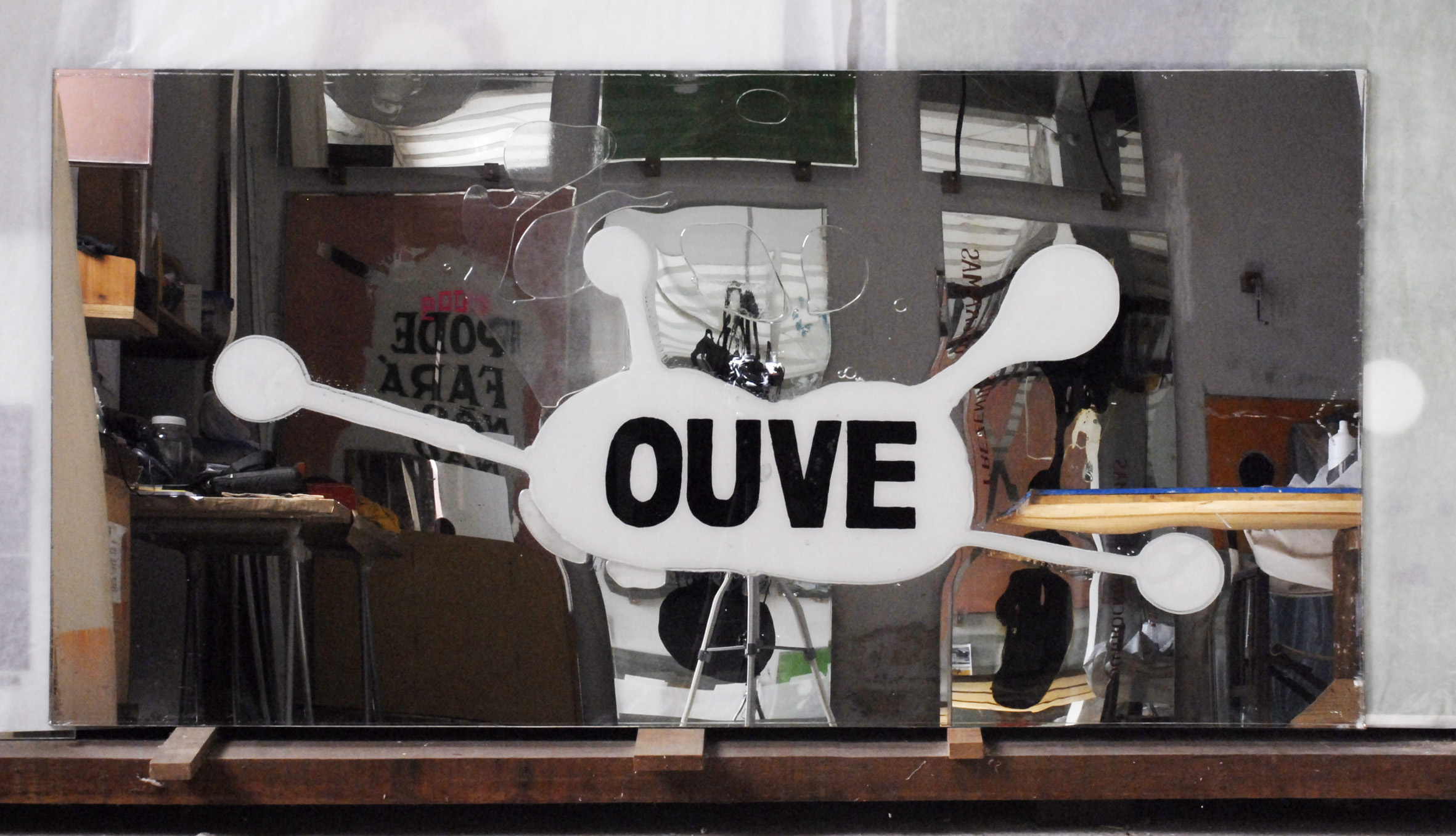
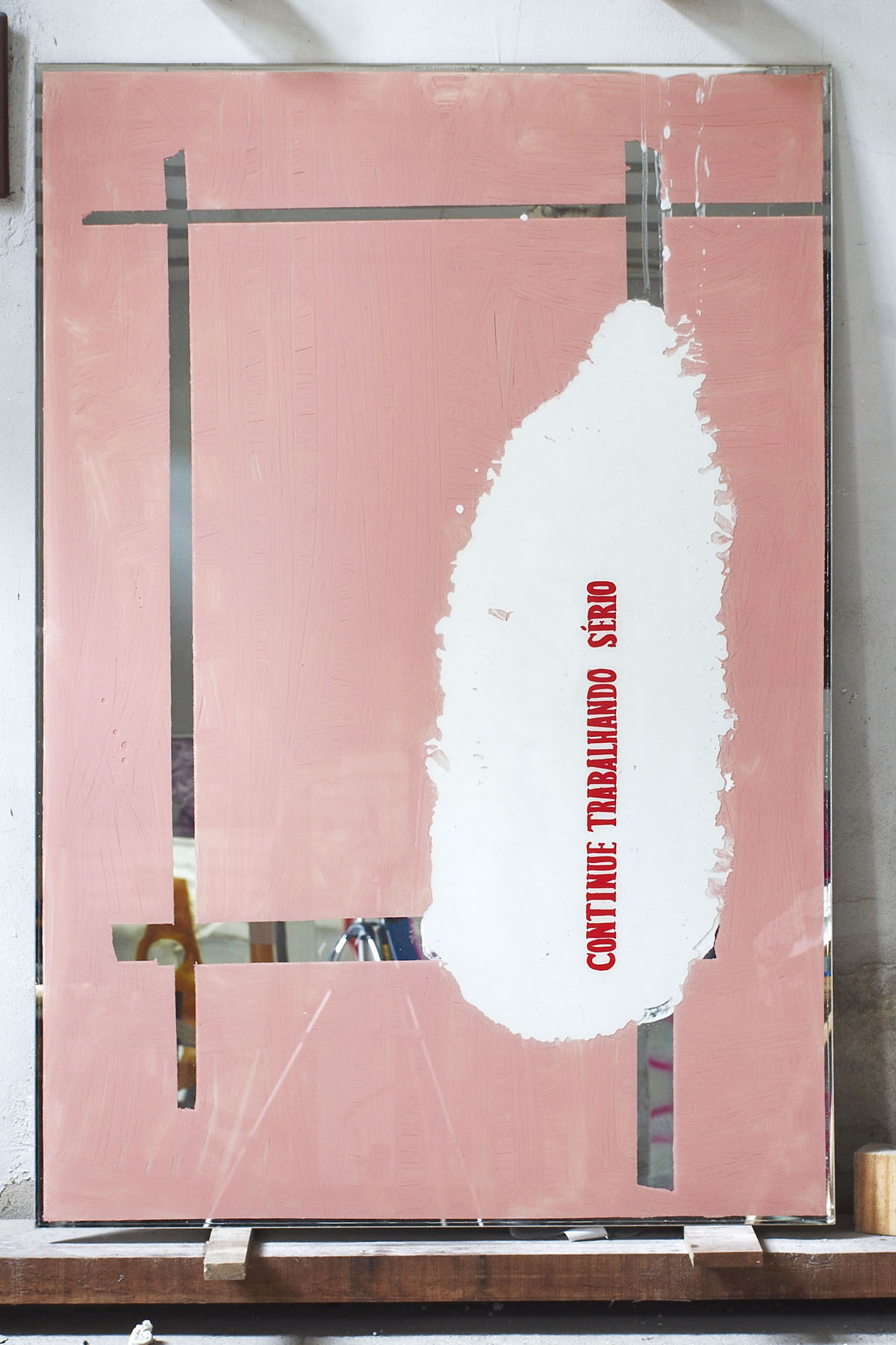
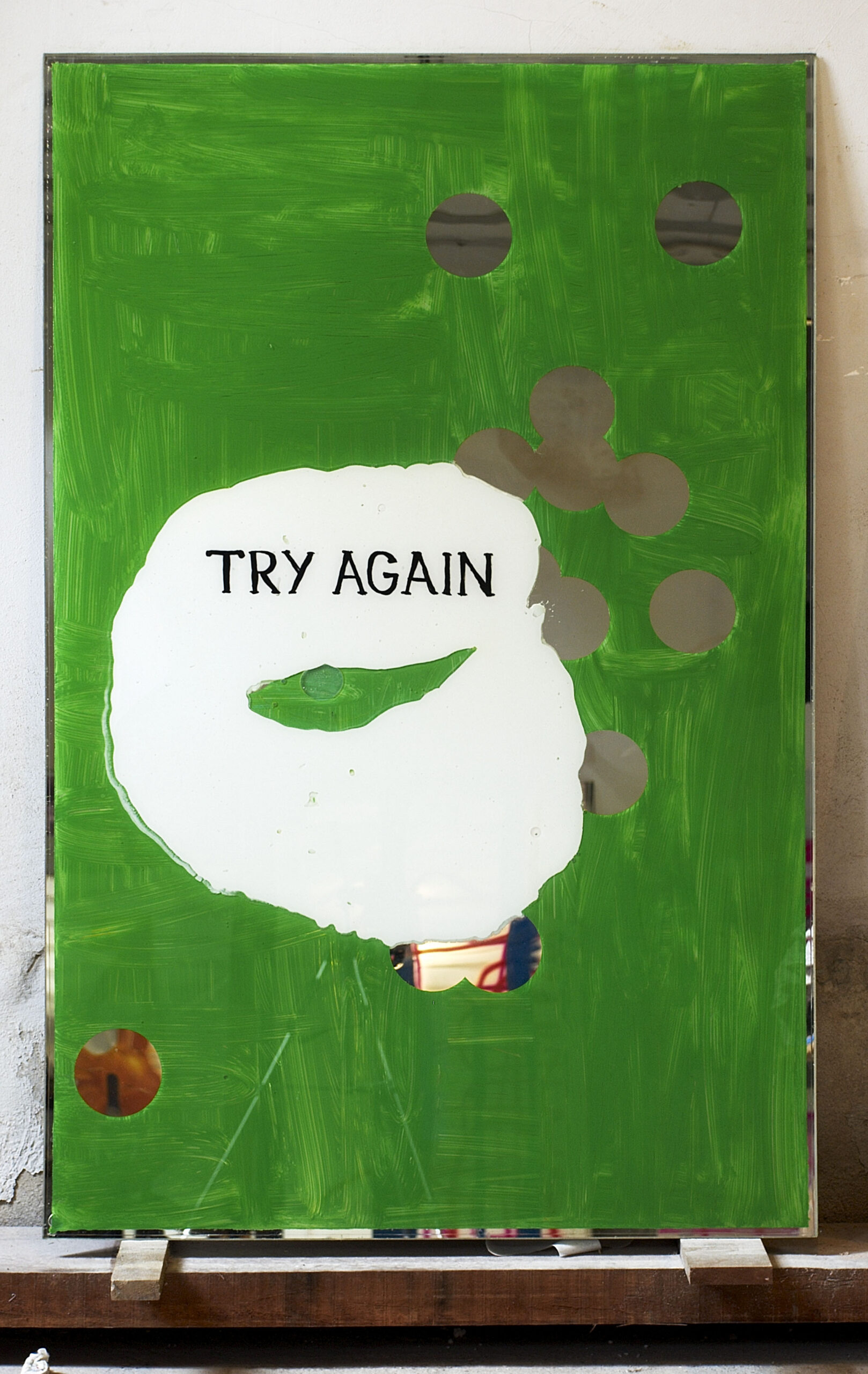
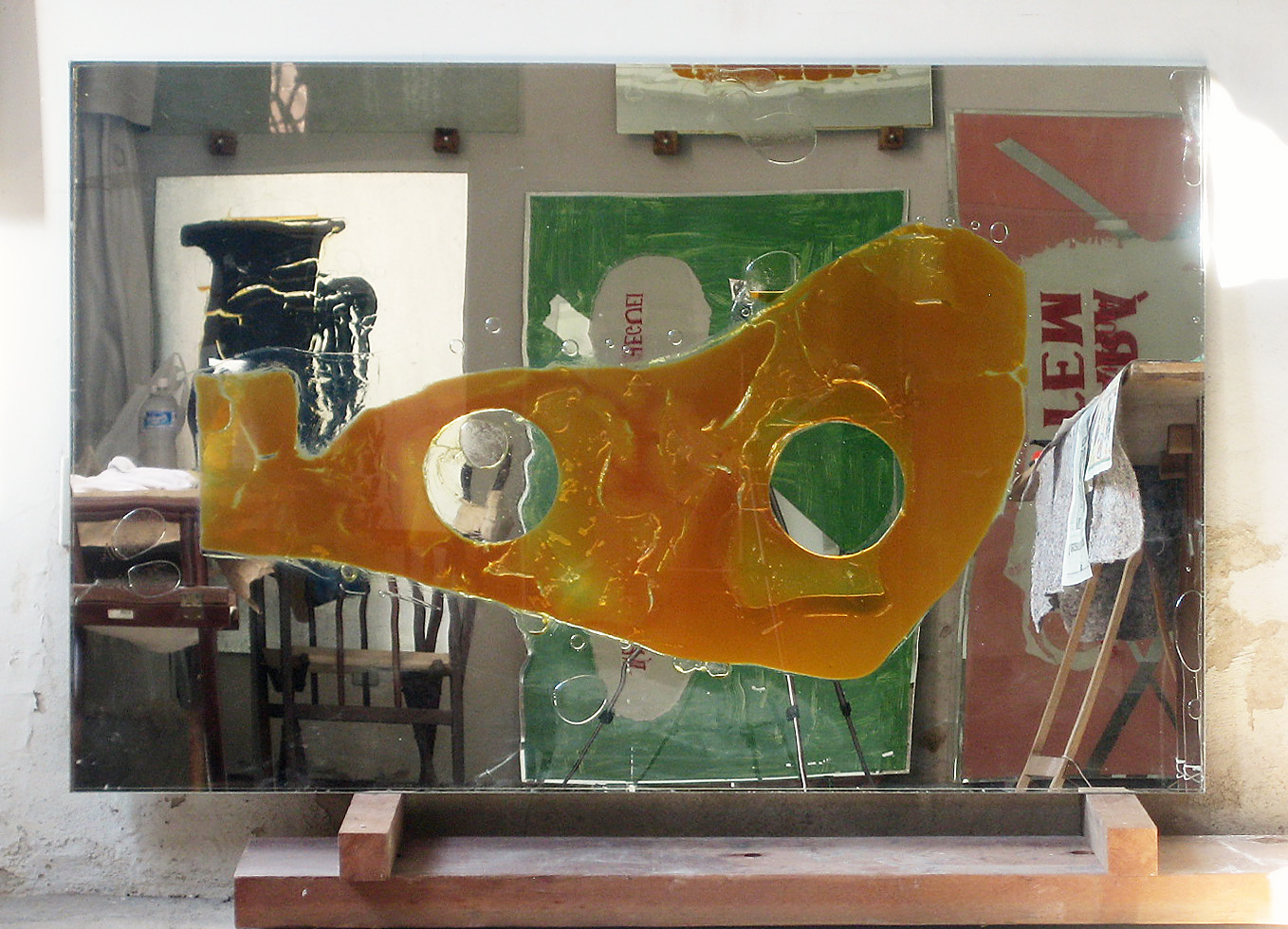
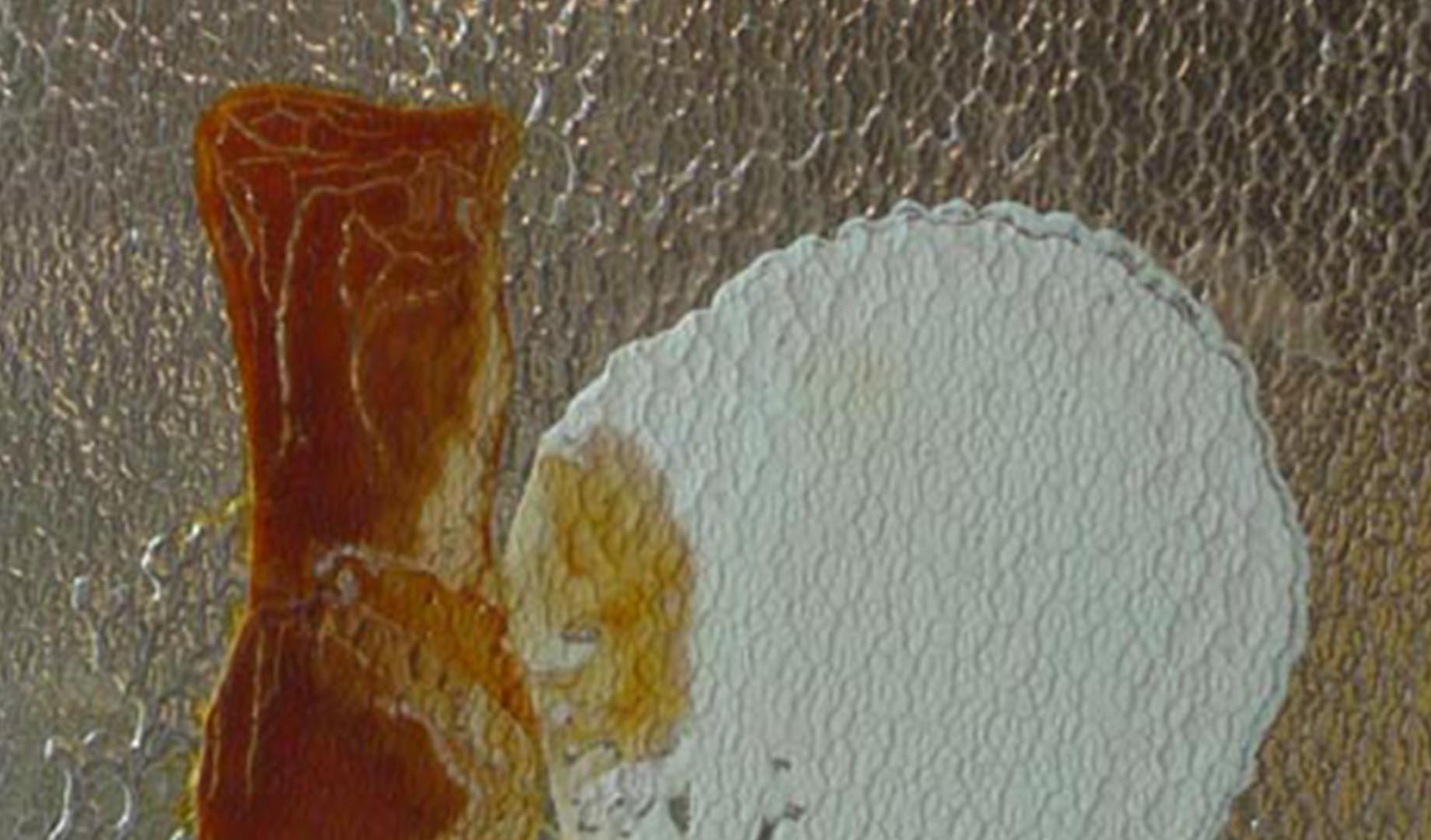
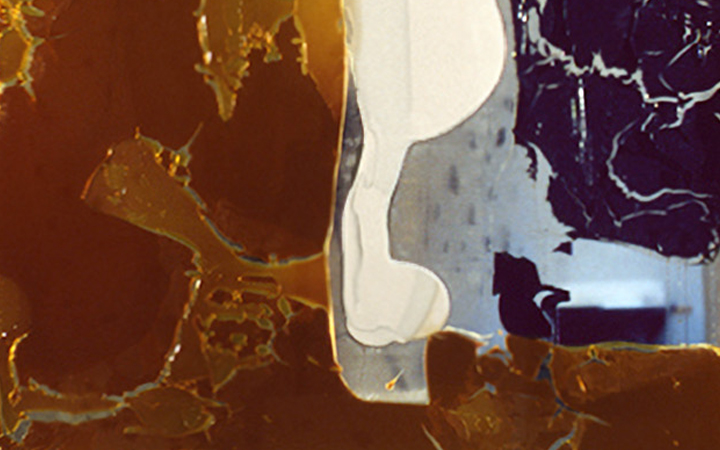
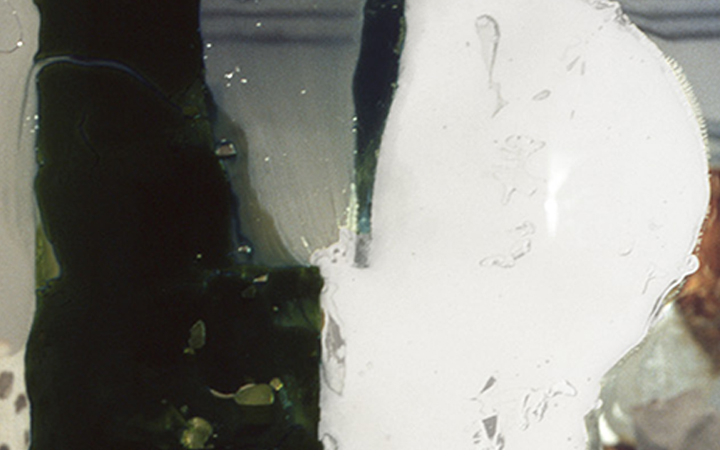
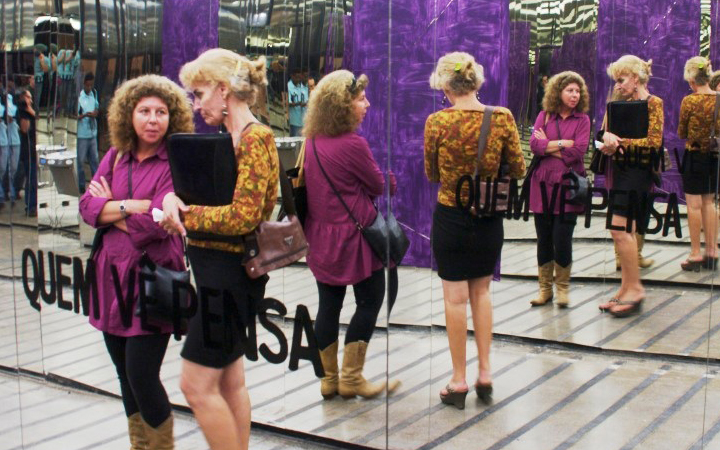
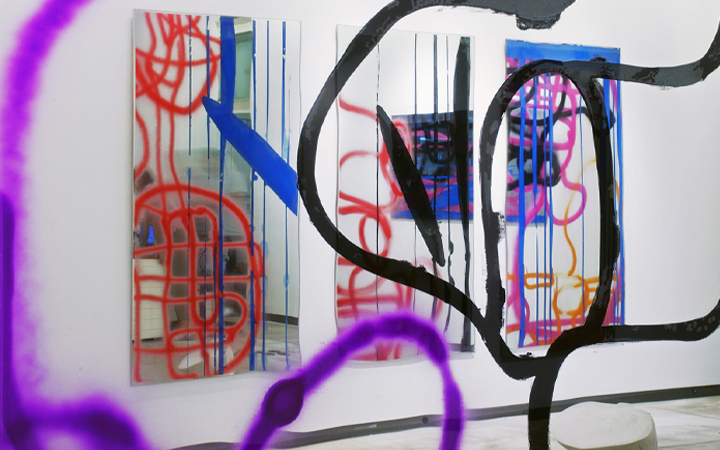
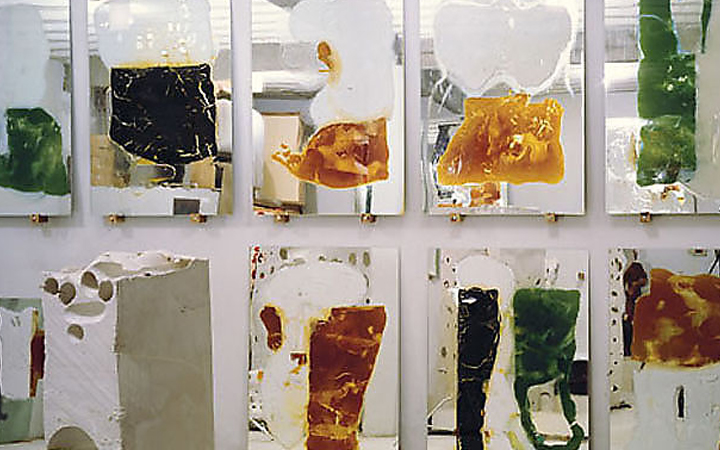
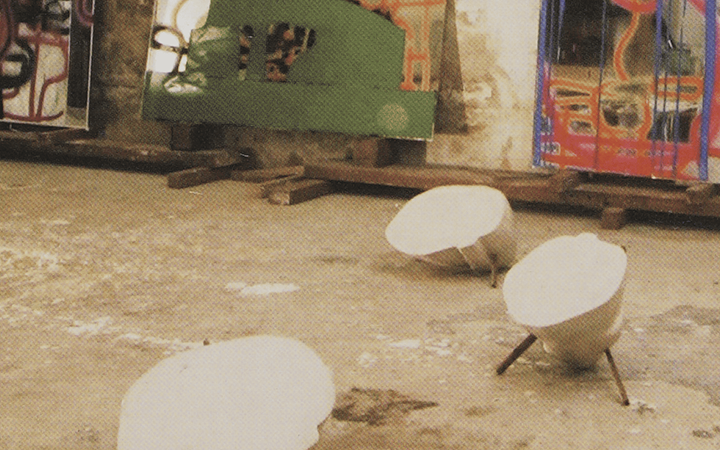
We had never seen a hall of mirrors quite like this one. Mirrors that you would think defective or imperfect if you came across them somewhere, for only a manufacturing flaw could explain why the reflection we expect to stare back at us is obstructed by some caked layer or smudge that blots out our faces, some form of seepage trapped and immobilized on the inside. We see ourselves in these mirrors, but cannot quite discern what it is that has butted in, or whether it is there to be seen or to prevent us from seeing.
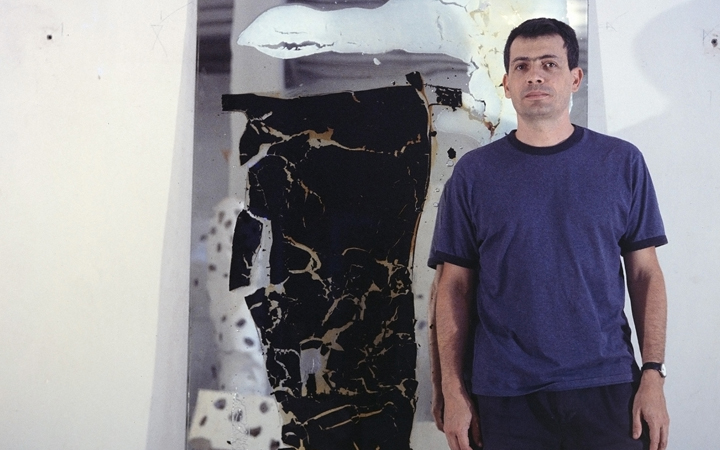
A mirror is not just any surface, but one that inevitably stokes our narcissistic impulses. There is no resisting the allure that draws the eye unappealably towards that surface, in which we see ourselves twofold: in the painting and in the mirror. And that intruder, which belongs to the “painting”, stands between us and our reflection, and we have to dodge it in order to see ourselves. So the defect is actually an effect? The “mirror mirror on the wall” is occupied by something other, and we don’t know how it got there. How did it get inside? What work is this that a viscous, greasy material can produce, having infiltrated and settled therein, unwanted, making a nuisance of itself? It has raised from horizontality to verticality, like a puddle that is flung in our faces; a floor become wall, stamping the totalizing visual violence of our day into those pools of grease, which, at least, are the material itself, without manipulation.
These paintings that put our reflections inside them are also mirrors. We are in there when we look at them and see ourselves seeing. Yet the surface is smeared with something we cannot identify. Some homeless image now squats there, where people come and go, glancing quickly before moving on, but never staying. The mirror has become a viscous window display, robbed of its original use, hijacked by a gooey substance that has this tacky glittery aspect of more than dubious taste, an effect the grease exploits to create this visual intrigue.
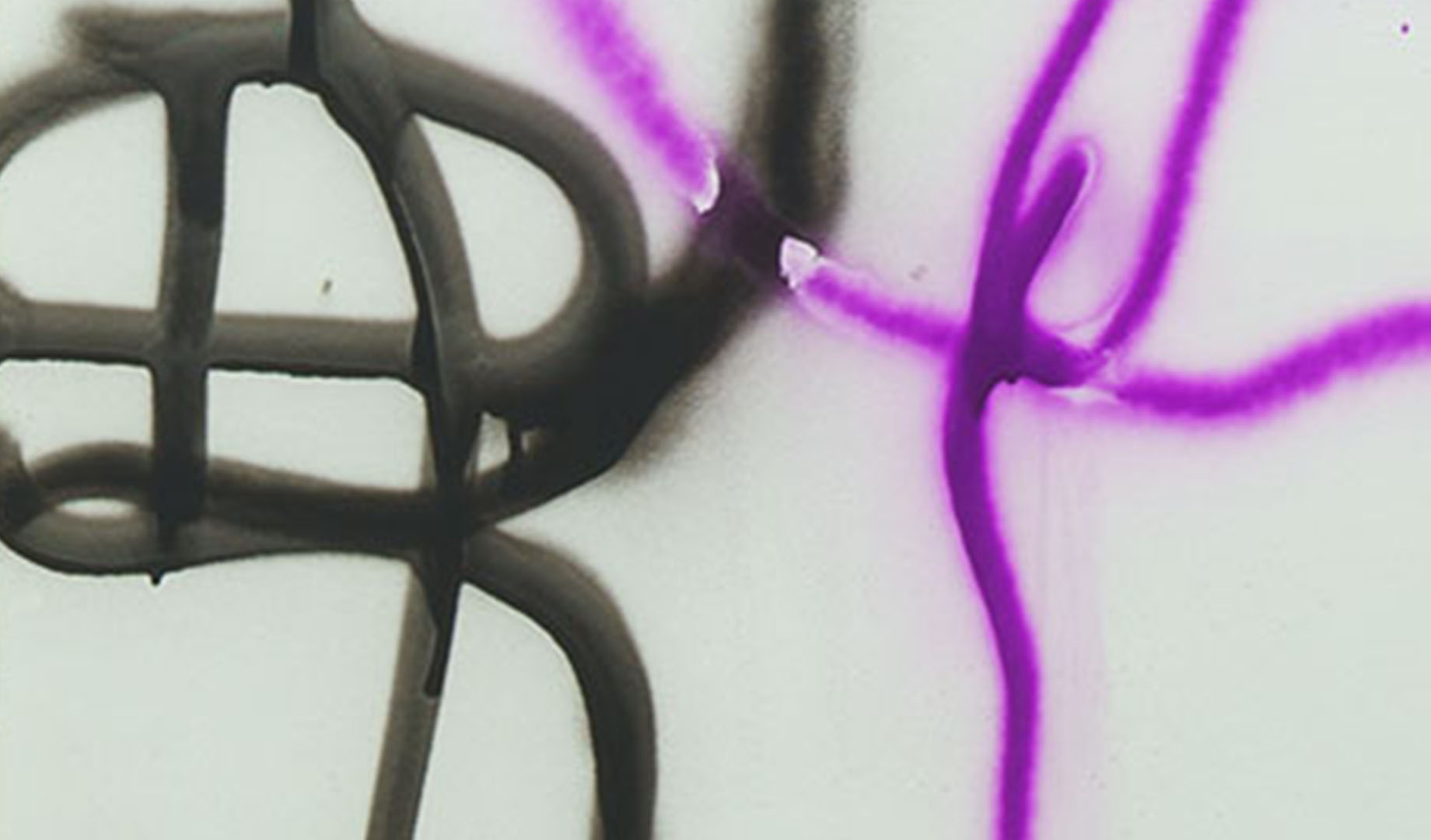
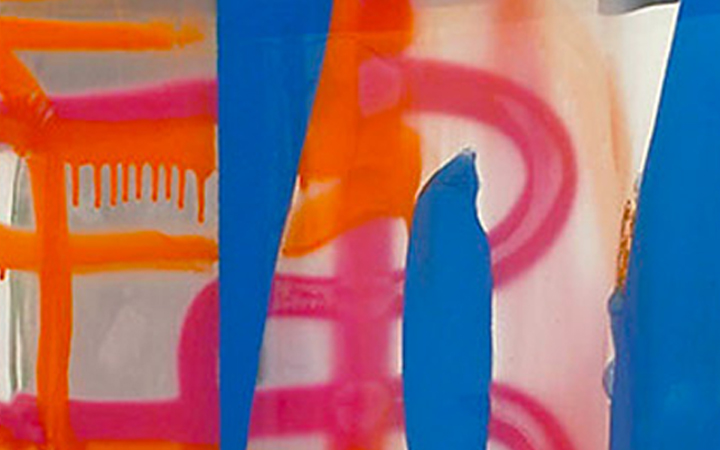
As I see it, through what goes on in the mirrors, Carlito Carvalhosa gives continuity to the impulse toward form that is proper to painting, but which will, from now on, reside in the oscillating and the ambivalent, the upstanding and the suspect, the vulgar and the sophisticated, transferring autonomy of form to the behavior of a single ordinary material, grease. The mirror surface strives to repel the prevailing principle of total plasticity expressed in these greasy blotches and smudges, as theirs is an unpleasant blur, the antithesis of unequivocal specular clarity—such that the resulting visual experience suggests a whole array of disparate references external to the form taken in isolation.
What we can see is that the work has left behind the earlier closed organization in order to exhibit an amplified and risky external contamination. The anterior form, organic and dominated by organicity, circumscribed by the monochrome and cohesion of the single material, seems here to have circulated in unsuspected or frankly suspect environments to which the mirror is a witness. These images have wandered, experienced the excessive reflection of vernacular and nauseating displays of vulgar glitter, the dubious highlighting of cultural declassification that a lack of distinction brings into relief, depreciating everything. This empire of viscous, formless narcissism might seem superficial and specular, but it is not. The task of reconverting its own marked degradation by appellative commercial consumerism to an experience of form therefore becomes an interesting challenge. We remain at some point beyond the process Andy Warhol followed at close-quarters, now dissolved into a post-kitsch emulsion of higher glamorized pop; stages of ferocious degradation that art has accompanied. Extracting some expression of beauty from this grotesquely self-satisfied countenance requires decontamination, and that means taking the fascination this sheen irresistibly holds and consigning it to suspension in a void, reconverting the enchanting fatuity that emanates from it. This shift in Carlito’s work has something of contemporary architecture to it, which likewise strives to lend plastic expression to technological saturation and articulate freely the effect of the image with the possibilities of the material, and vice-versa, as do Frank Gehry’s titanium curves, for example.
It is reasonable that the mirror should come after the plaster, to which it stands as an opposite; as if one absorbed and captured the other visually; as mutually negating pairs, with one striving to occupy the space of the other. And both, simultaneously, demonstrate this dysfunctional nature of the totalization of the image that the work of Carlito Carvalhosa attempts to accentuate and reveal in the current state of things: the abundance offered to the gaze and the little that taxes the eye.