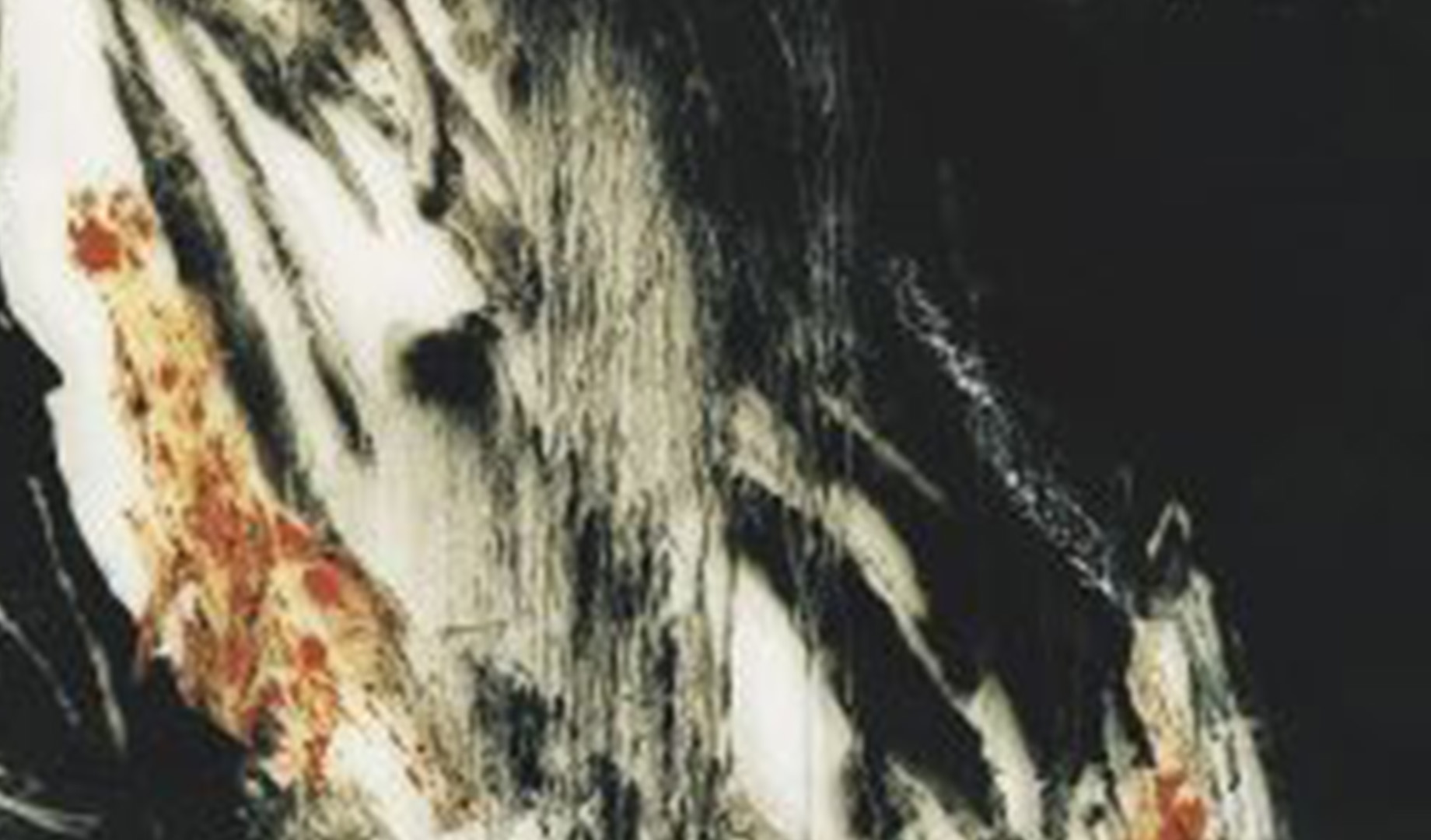
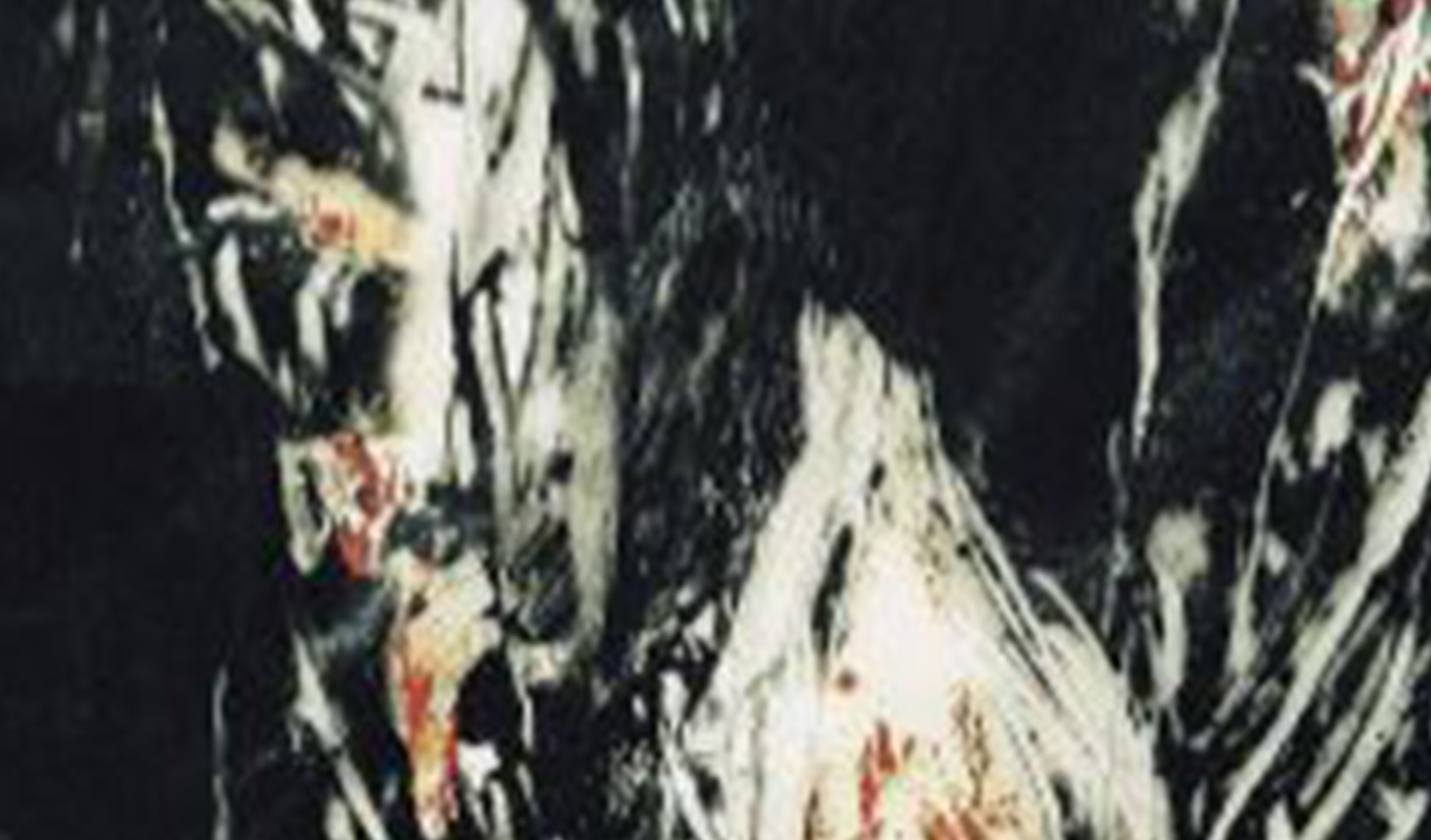
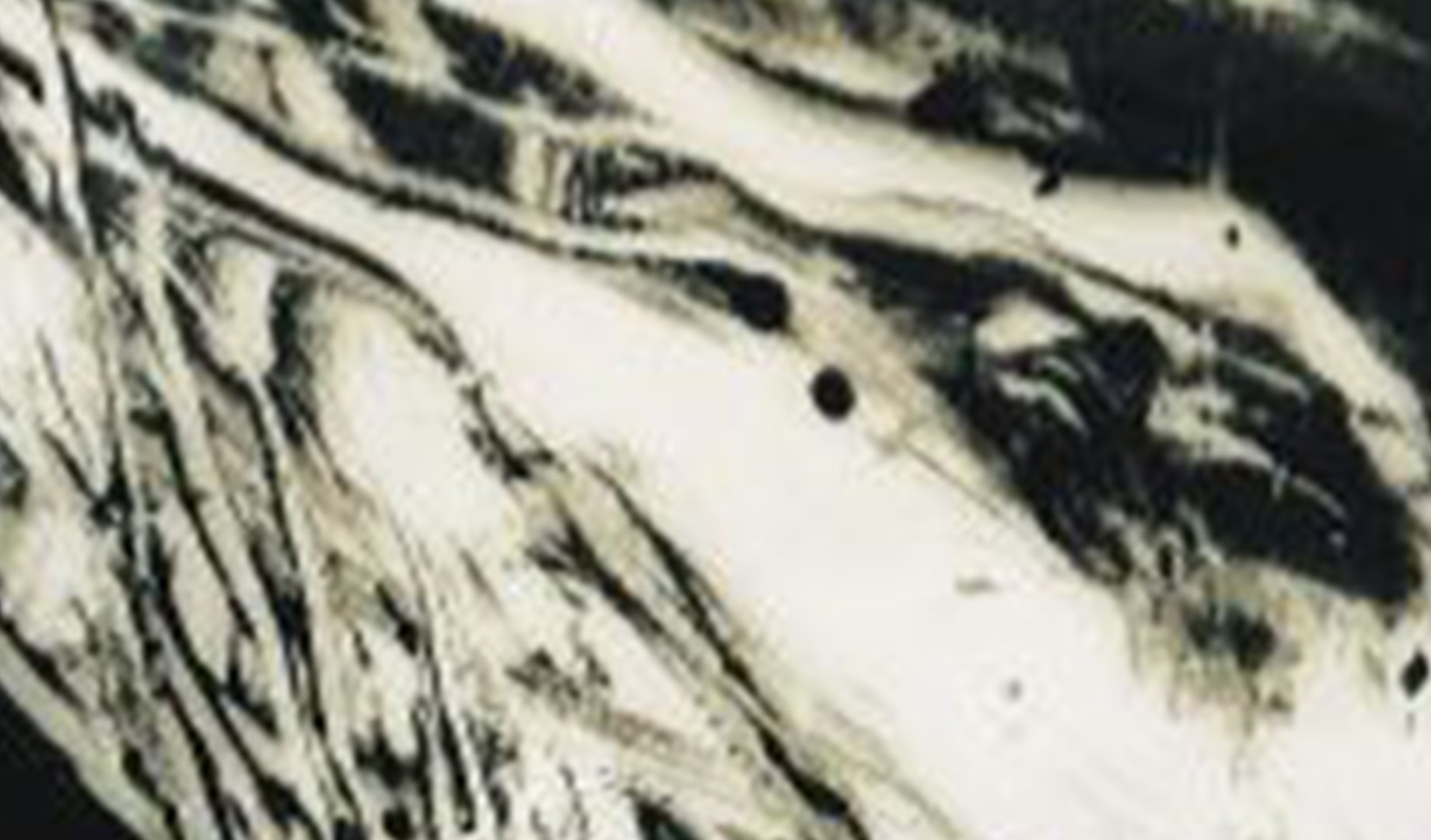
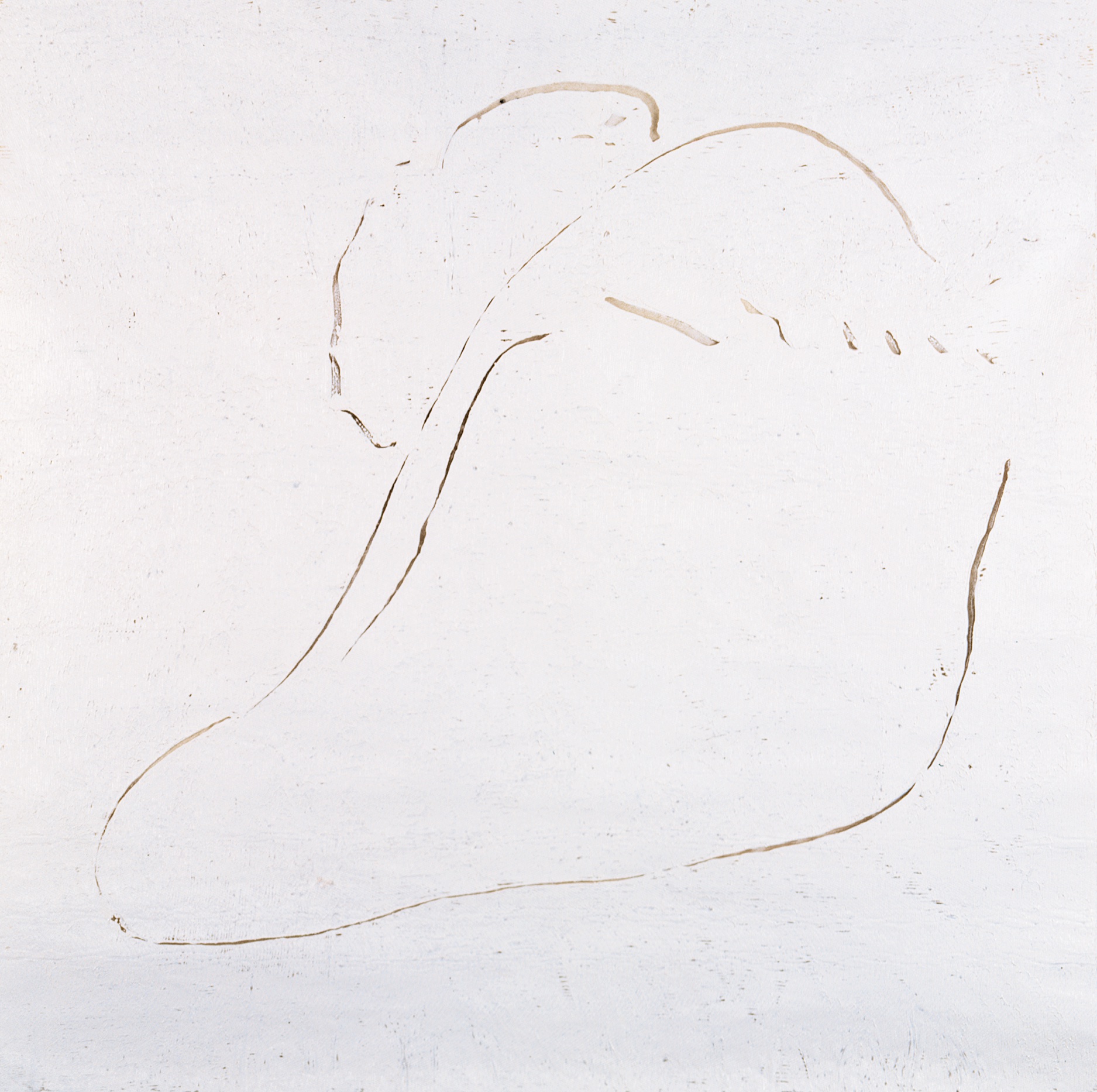
Década: 1990

ArtKitchen
Escultura brasileira: da Pinacoteca ao Jardim da Luz
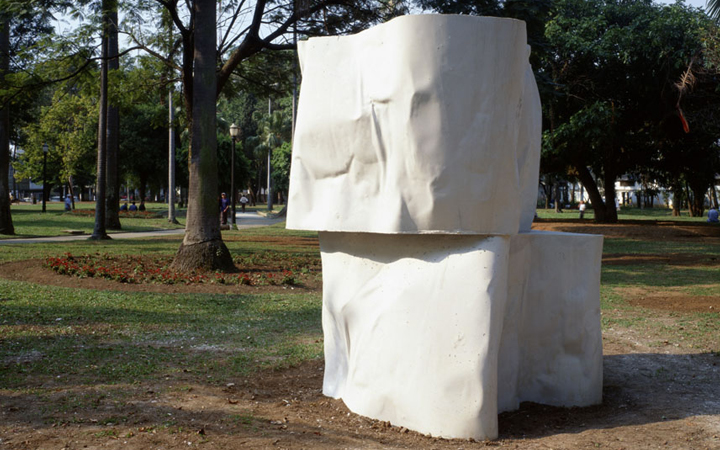
Cerâmica brasileira: construção de uma linguagem
Meia verdade
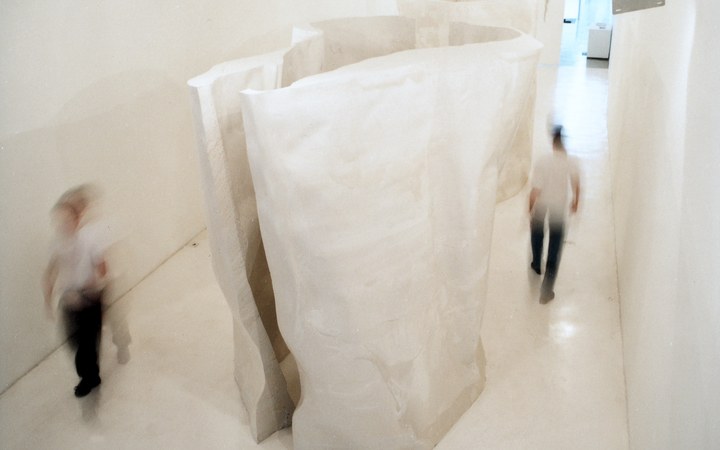
EKWC Holanda
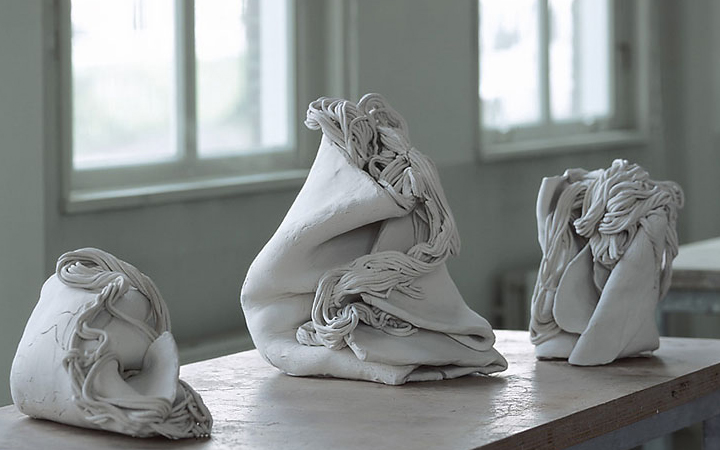
Duas águas, MuBE
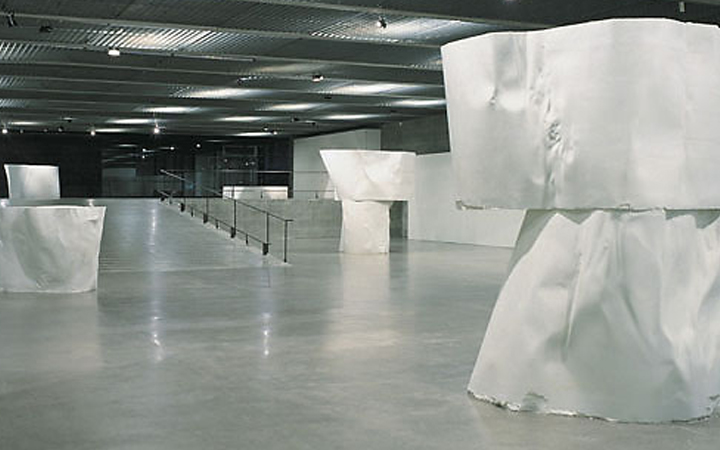
Duas águas, Paço Imperial
CCSP
O colecionador
Brasil CURADORIA:
Espelho da Bienal
5ª Semana de Arte de Londrina
Formas transitivas: arte brasileira, construção e invenção
Gabinete de Arte Raquel Arnaud
Carlito Carvalhosa
Arte/Cidade Ill e suas Histórias
Museu de Arte Moderna do Rio de Janeiro
Arte contemporânea brasileira na coleção João Sattamini
CCSP
Metrópole e periferia
Ceras perdidas
Bienal Brasil século XX
Carlito Carvalhosa
Espaço Namour
2° Fórum Brasília de Artes Visuais
Um olhar sobre Joseph Beuys
Programa Anual de Exposições de Artes Plásticas 91
João Sattamini/Subdistrito
Galeria Paulo Figueiredo
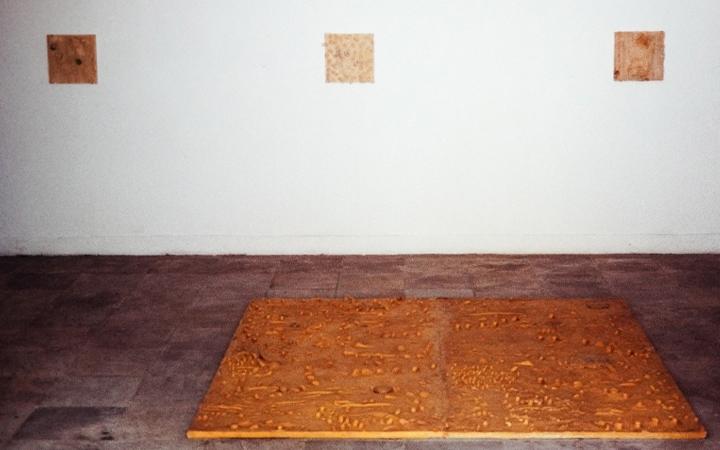
Exposição Europa Brasileira
Programa Anual de Exposições
Untitled
Untitled
Untitled
Untitled
Untitled
Untitled
Untitled
Untitled
Untitled
Untitled
Untitled
Untitled
Untitled
Untitled
Untitled
Untitled
Untitled
Untitled
Untitled
Untitled
Untitled
Untitled
Untitled
Untitled
Untitled
Untitled
Untitled
Untitled
Até dez 97
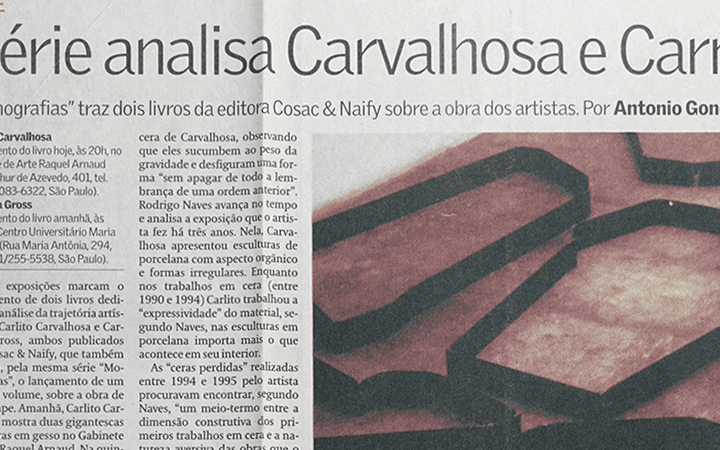
Série analisa Carvalhosa
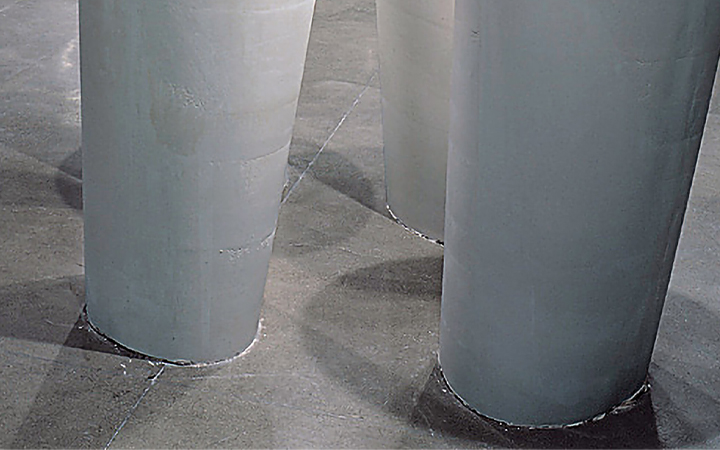
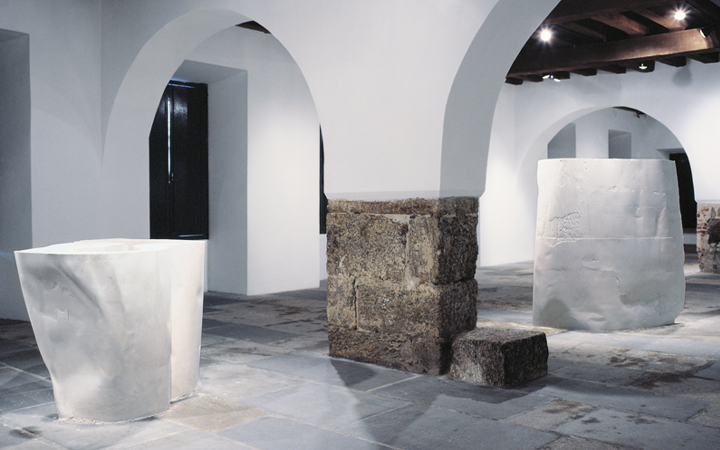
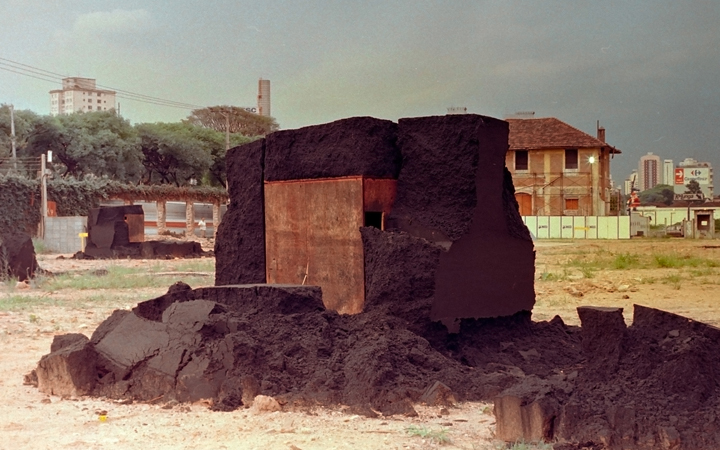
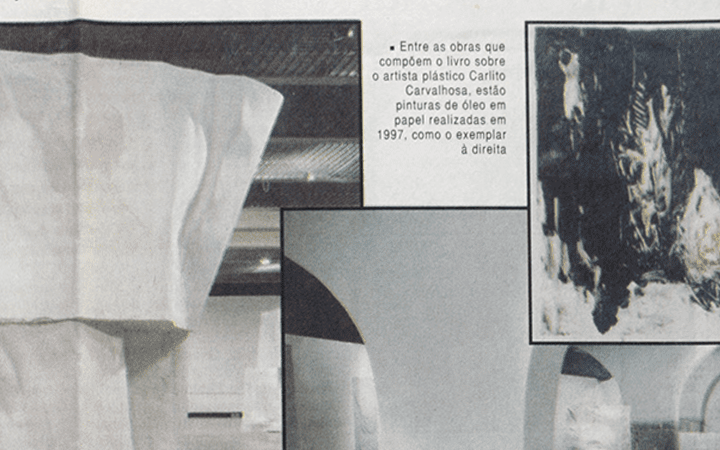
Grandes blocos
Gigantes
MuBE
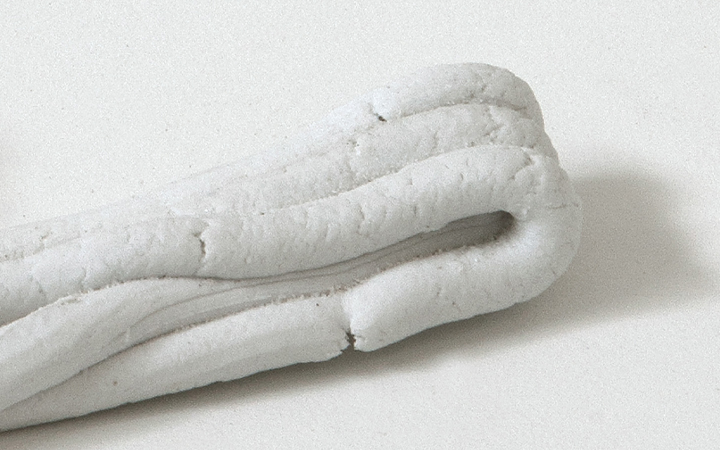
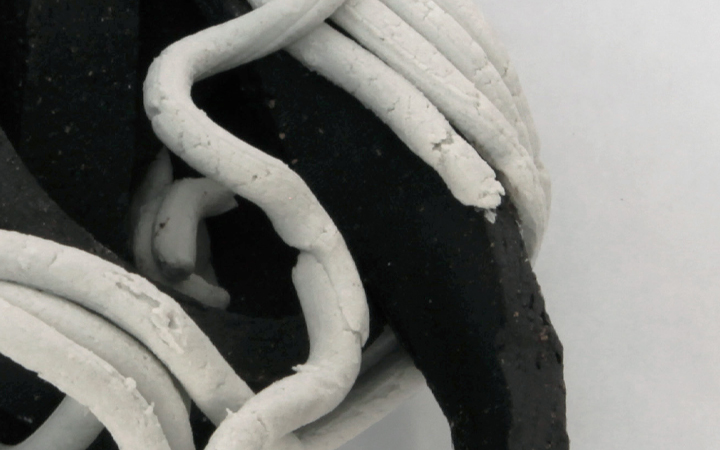
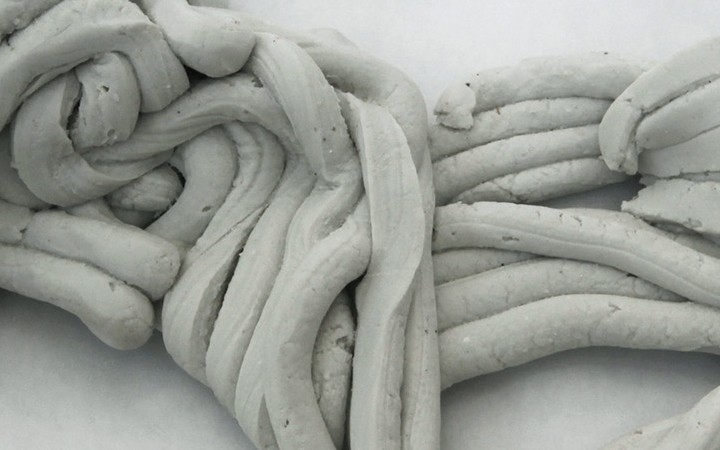
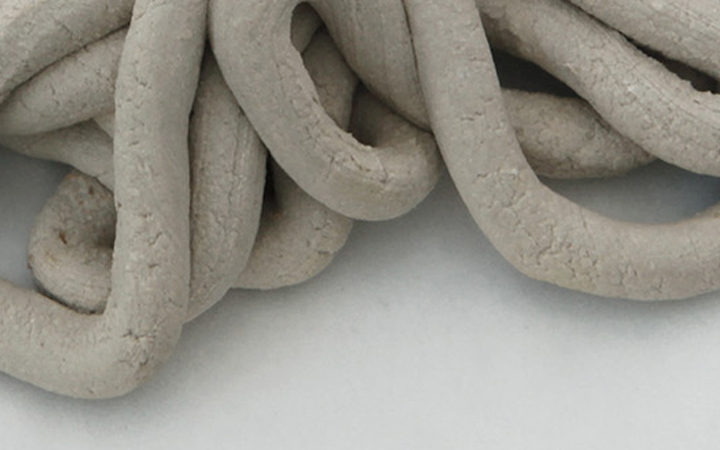
Provocadas pelo fogo
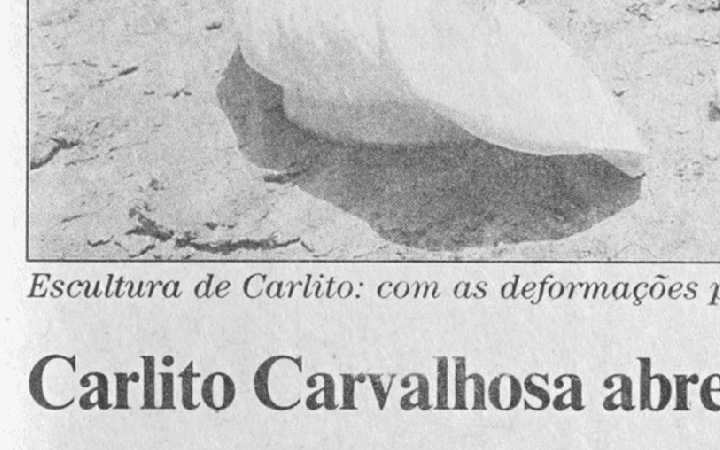
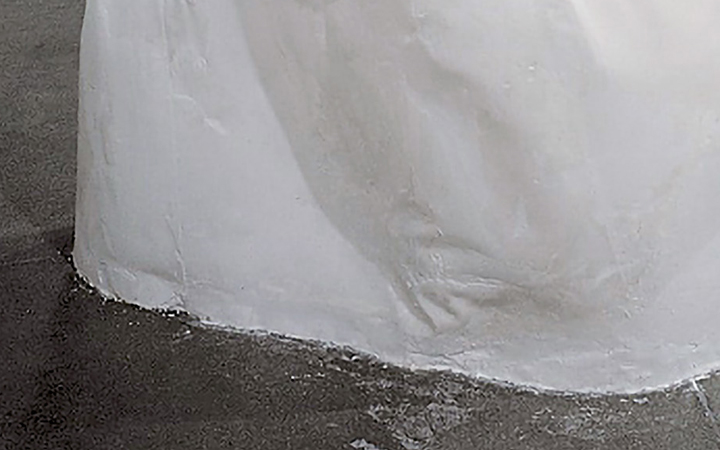
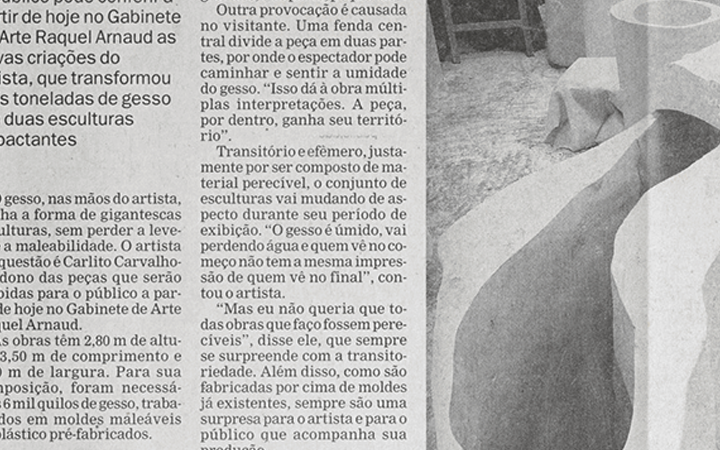
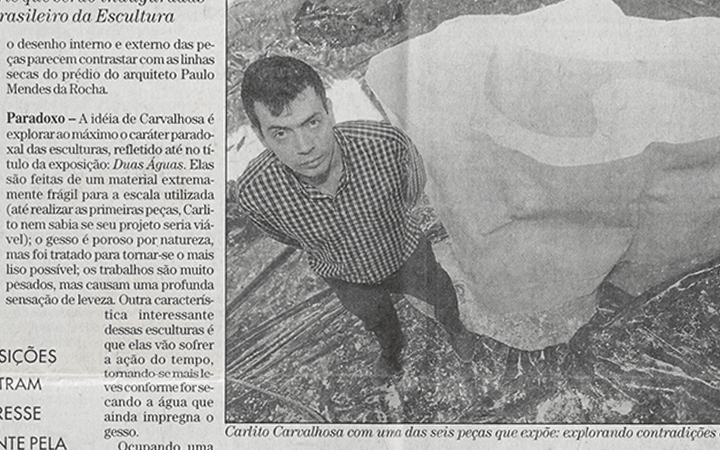
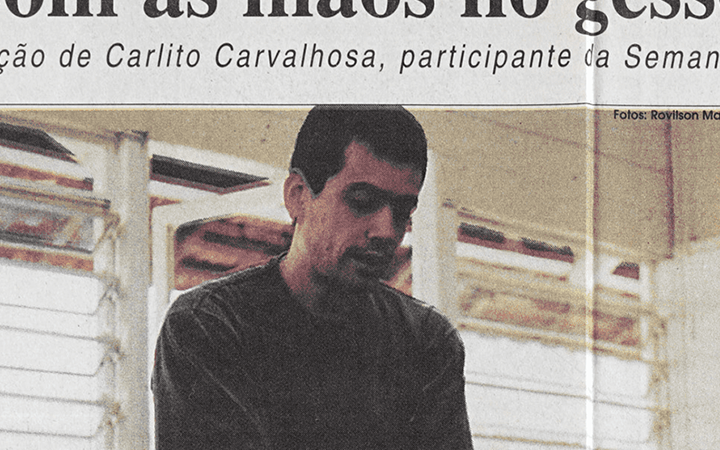
Com as mãos no gesso
Formas mutantes
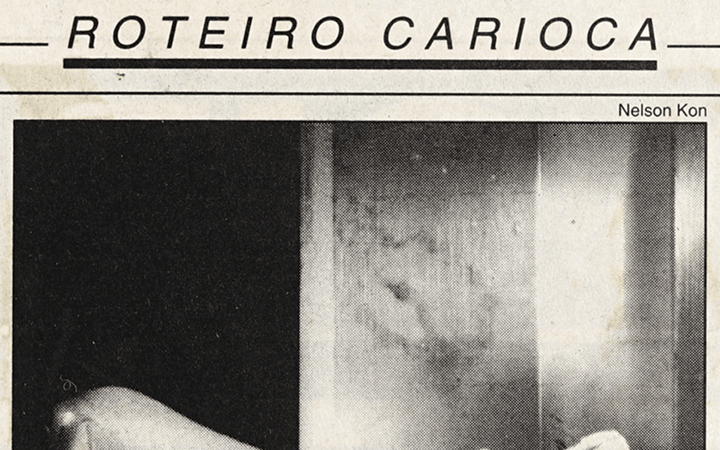
Calor e acaso
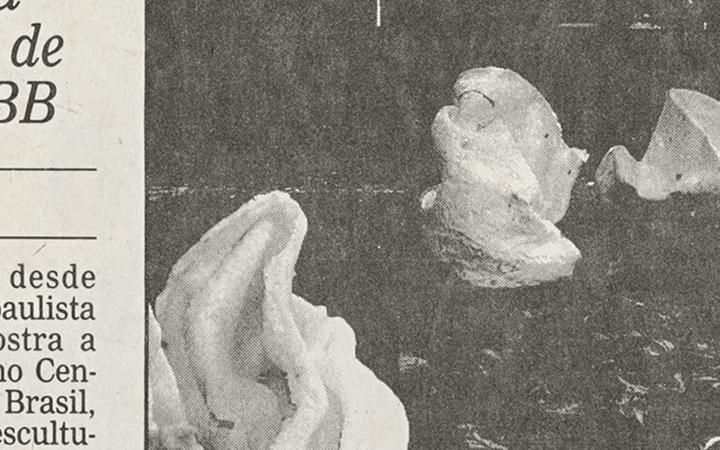
Criaturas
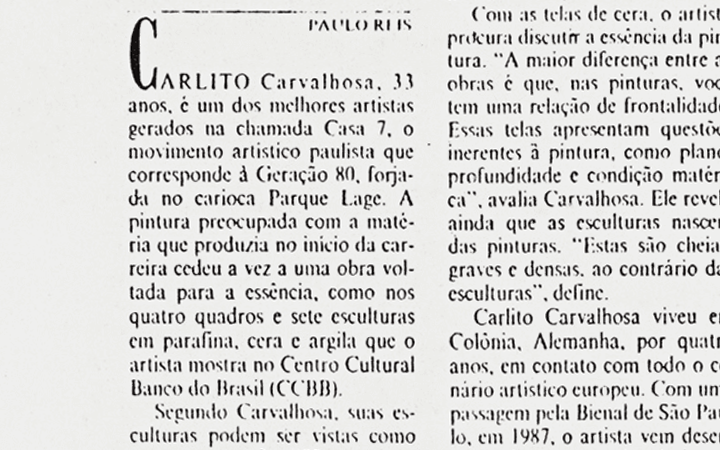
O formal e a não-forma
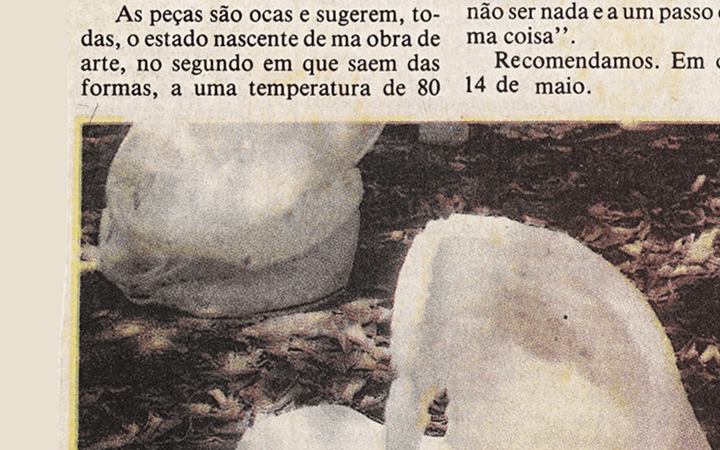
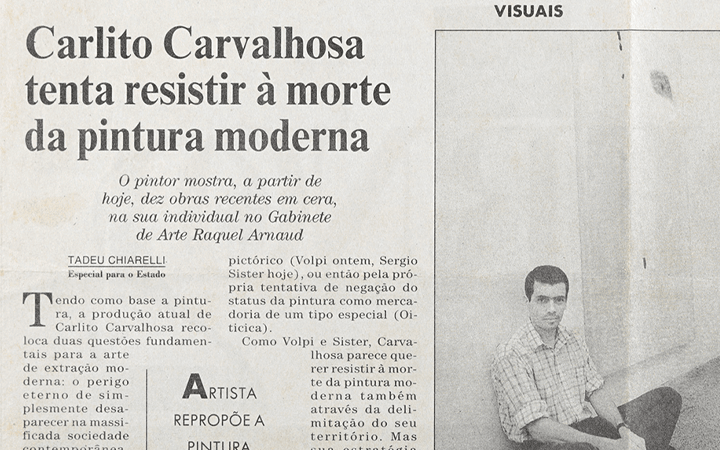
Morte da pintura moderna
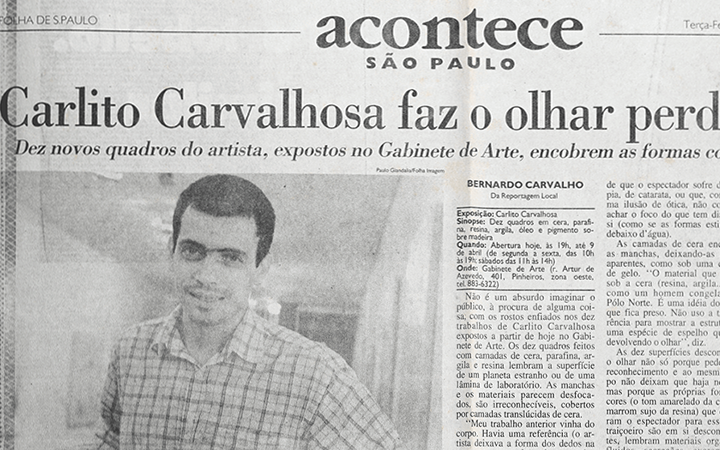
Faz o olhar perder o foco
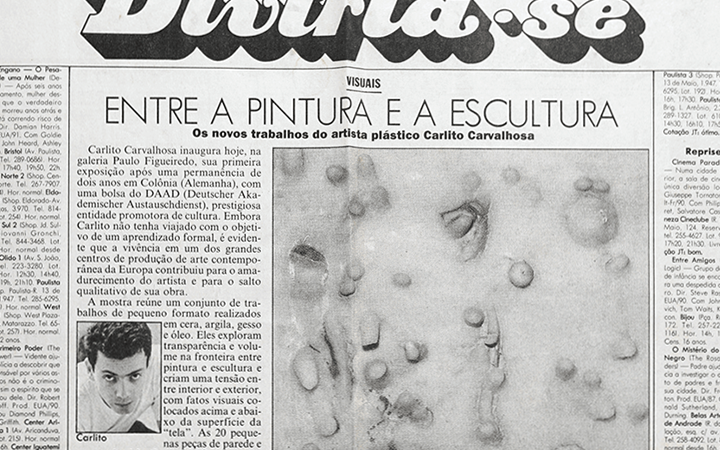
Entre a pintura e a escultura
Convite Livro
Duas Águas
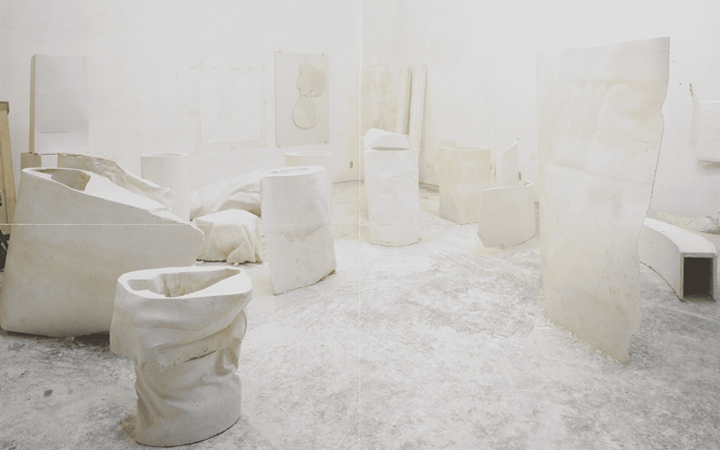
Galeria Raquel Arnaud
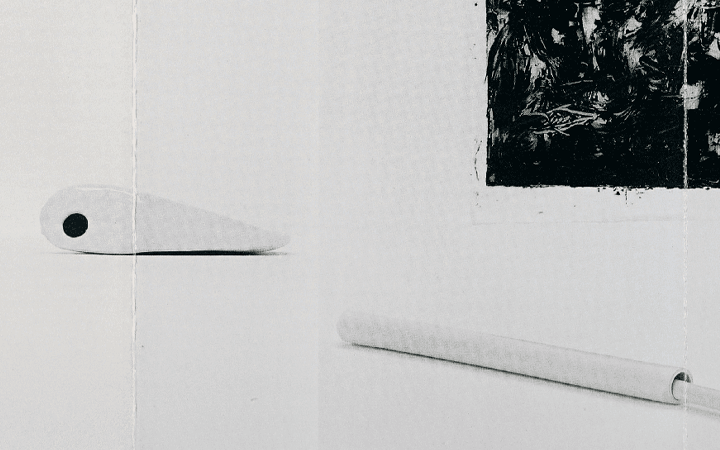
DPM
CCBB
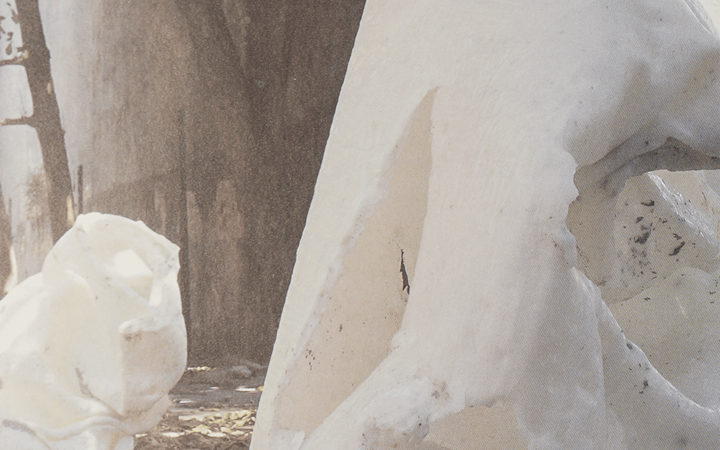
Galeria Raquel Arnaud
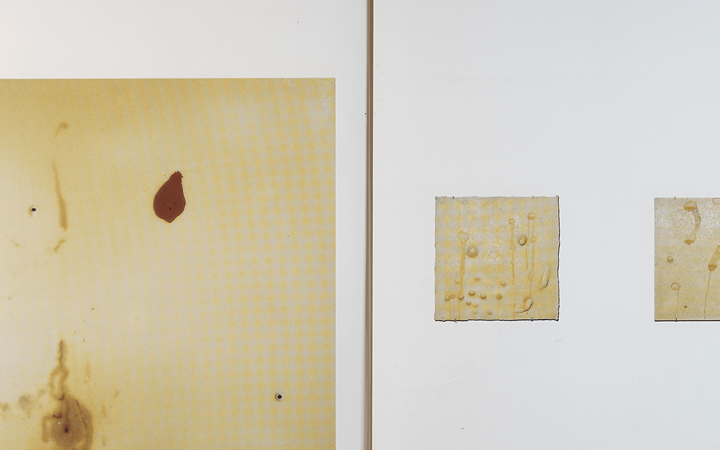
Malacara
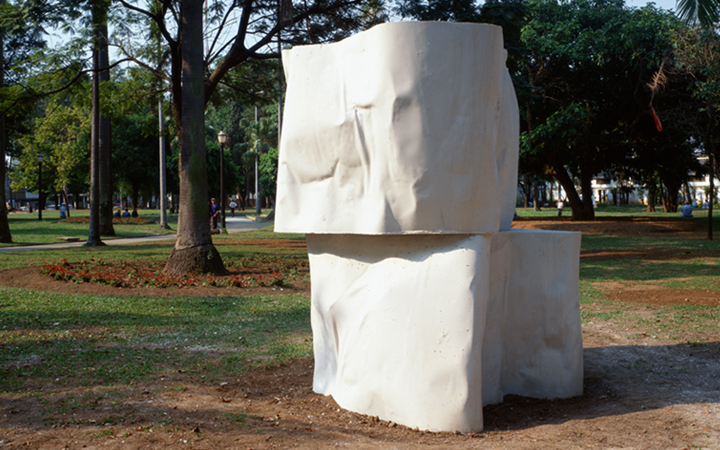
Vazador
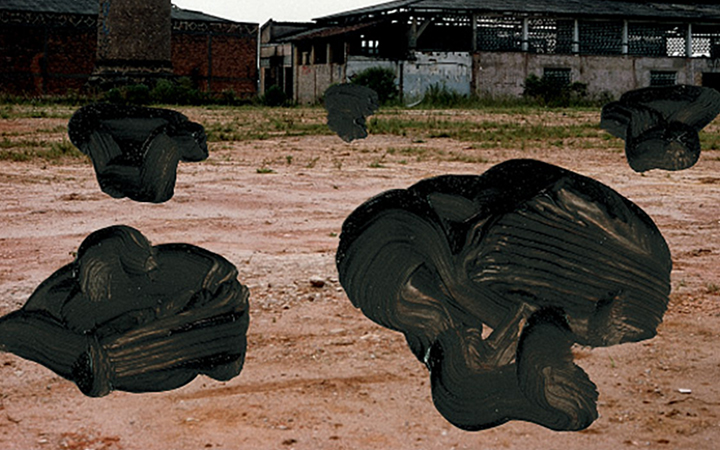
Arte Cidade
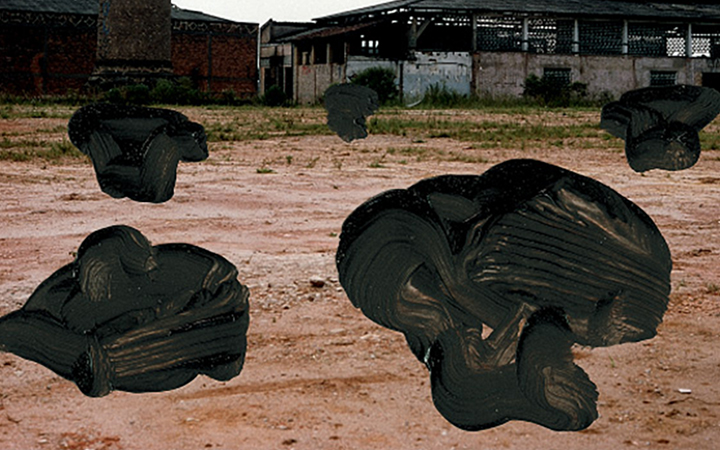
Holanda EKWC
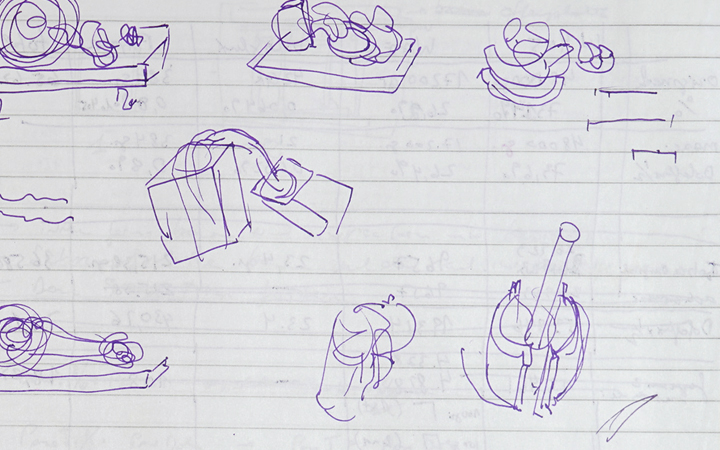
Amsterdam EKWC
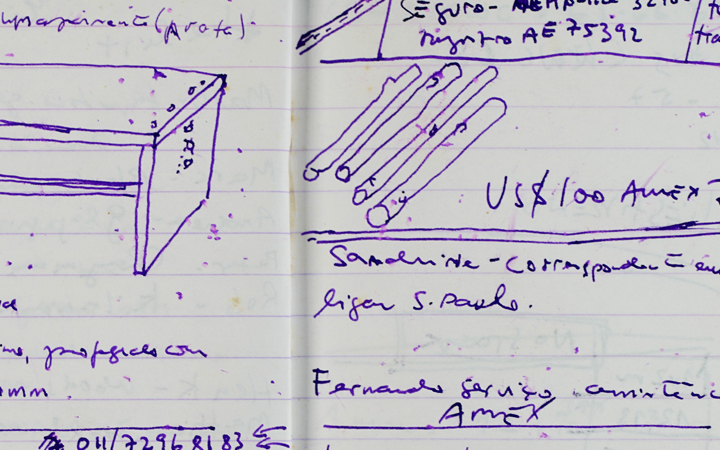
Galeria Raquel Arnaud
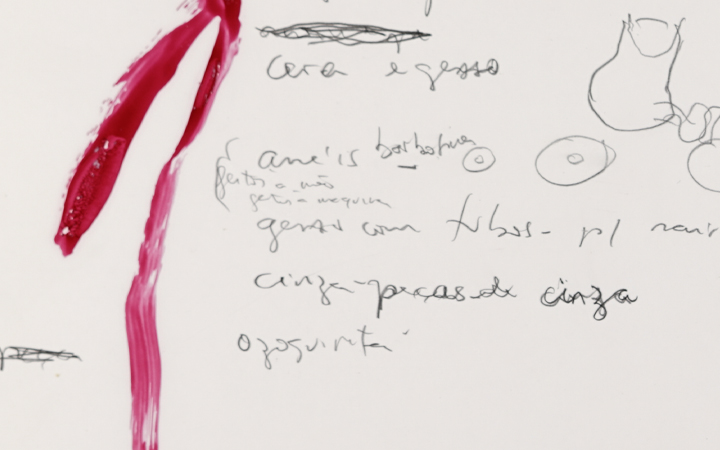
MuBE
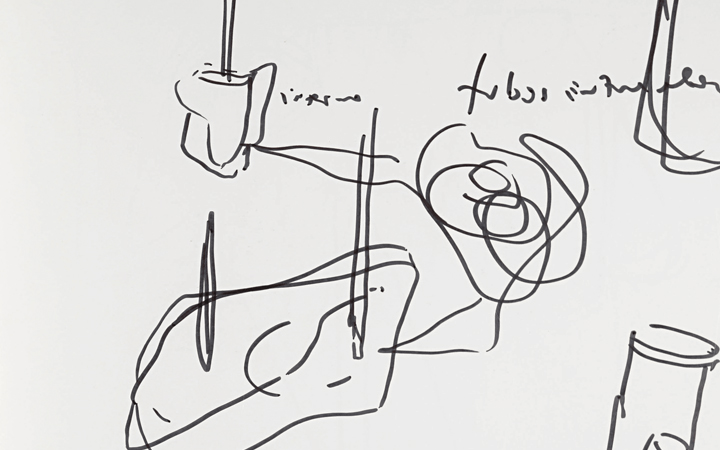
Sketch Book
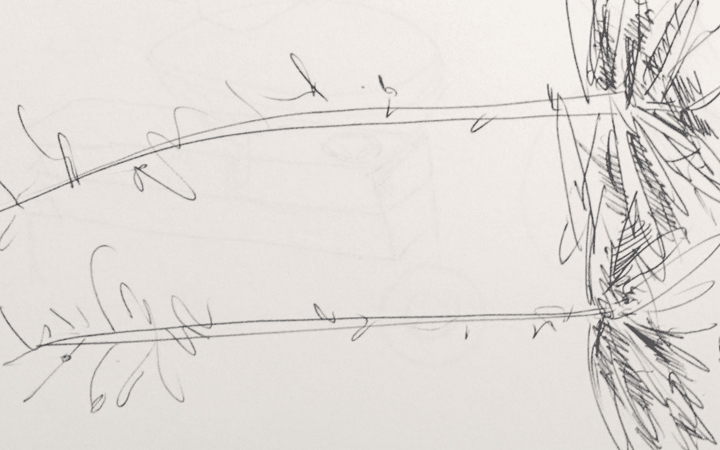
Bloco
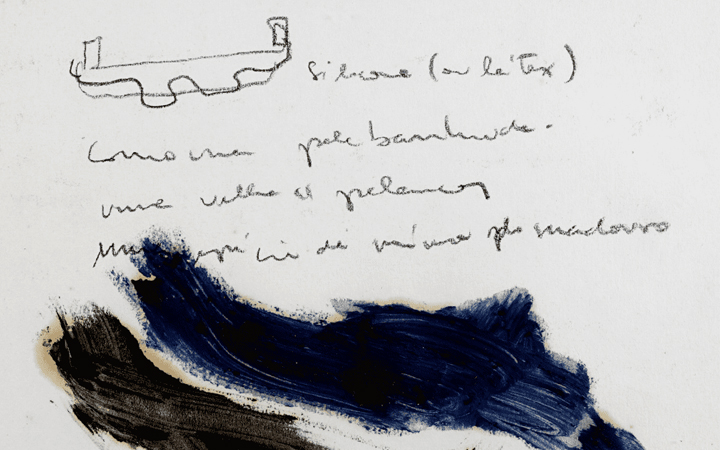
Basic Sketch Book
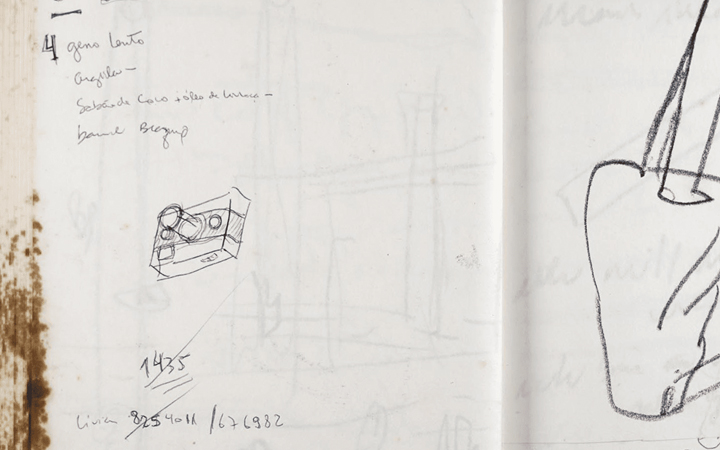
Óleo sobre água
Text published in Carlito Carvalhosa, CosacNaify, São Paulo, 2000, p 23-26Translated by Regina de Barros Carvalho & Jonathan Morris
— I have scales but am no fish. I have a crown but am no king.
If they were not so appealingly simple, riddles like this one might describe extremely strange creatures. But childhood is full of such things. Changing the place and function of objects – making a gun out of a slipper, majestically striding a broomstick, and making a common branch into an invincible sword. In this way, a simple pineapple can present itself as a hybrid of fish and king, living between the water and the throne, as unusual as the “unexpected meeting of an umbrella and a type-machine on a autopsy table”, of which Lautréamont spoke, and which delighted the surrealists. Such strangeness, however, lasts no longer than the time it takes us to unravel the riddle and put things back in their places. Little by little the metaphors adhere to the elements they refer to, until both cover each other perfectly and everything returns to its everyday sense: crowns are but braqueteas – the leaves of the pineapple – and the scales are but the flowers of this representative of the Bromeliaceae.
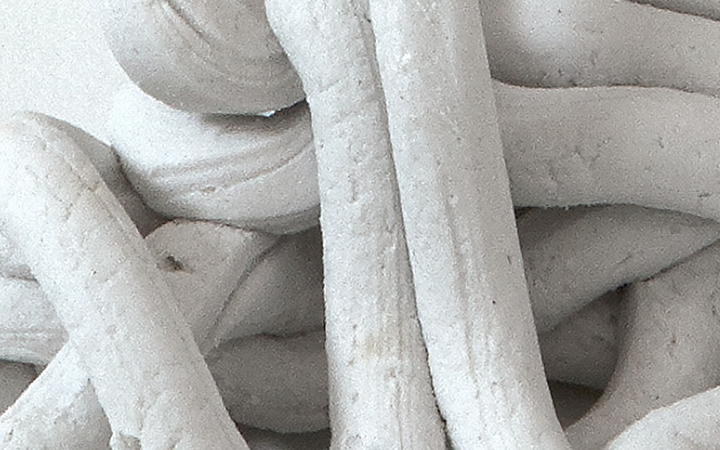
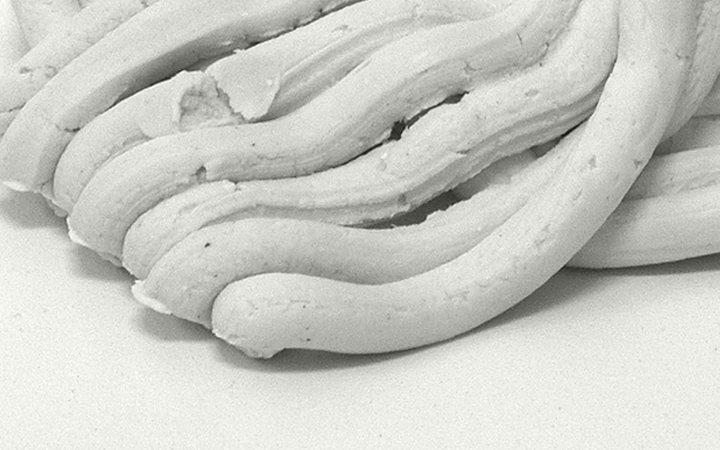
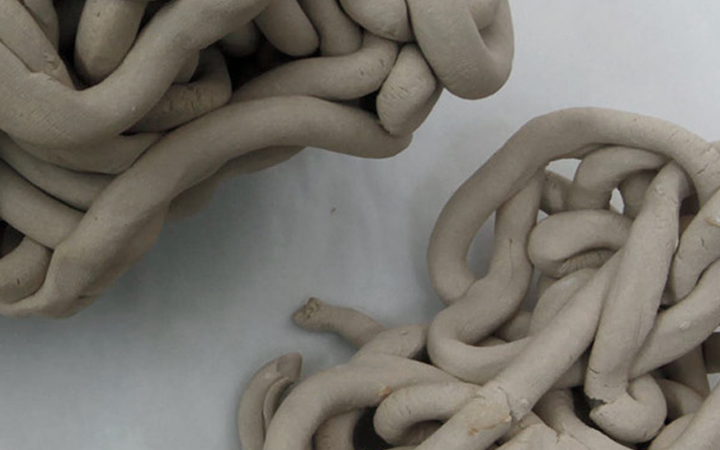
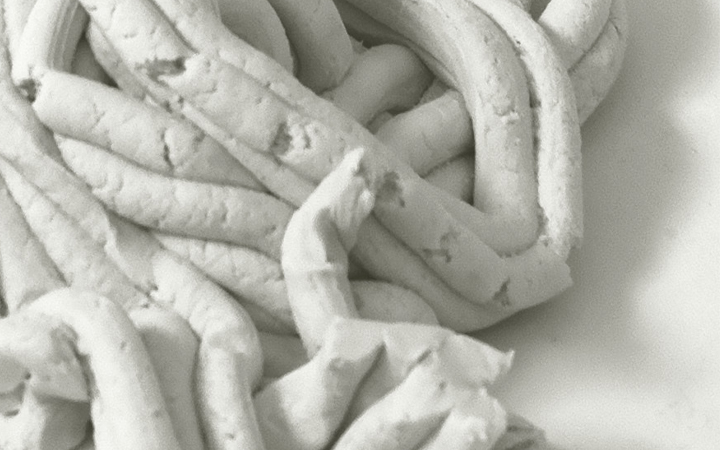
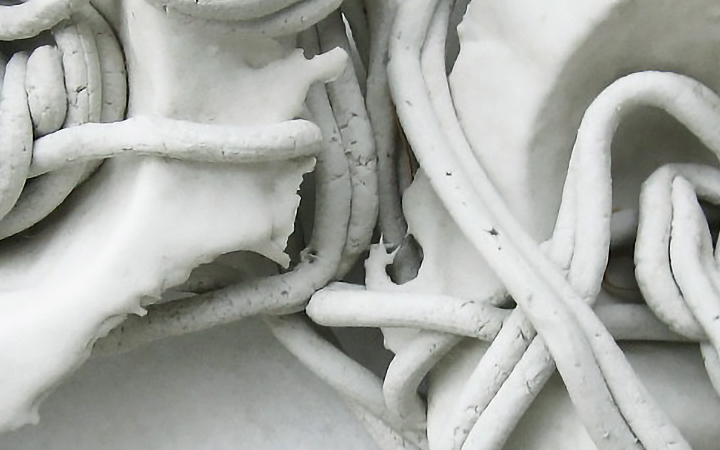
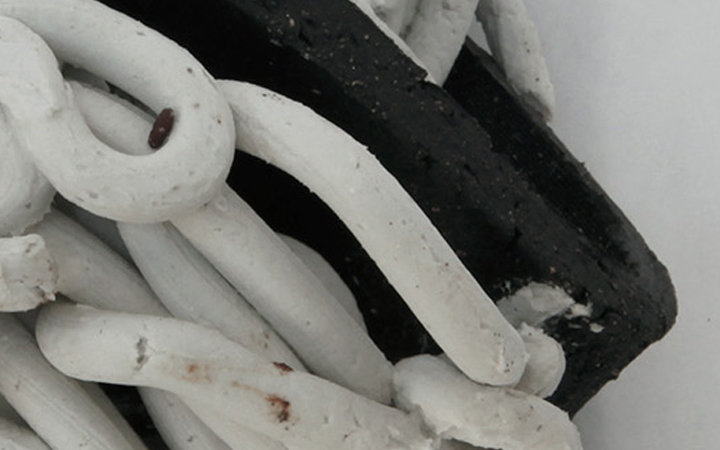
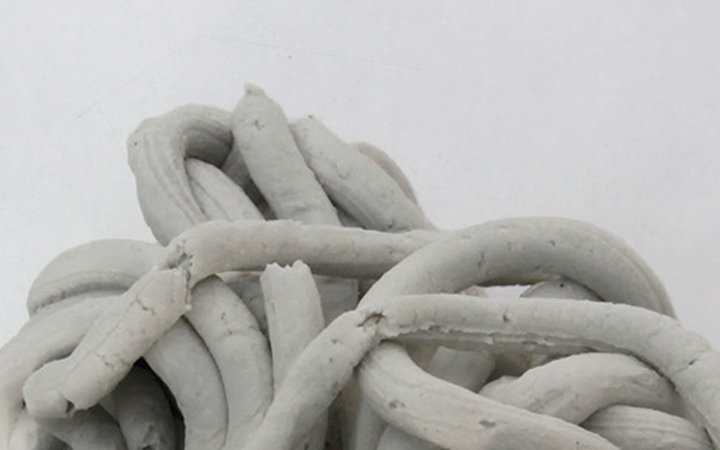
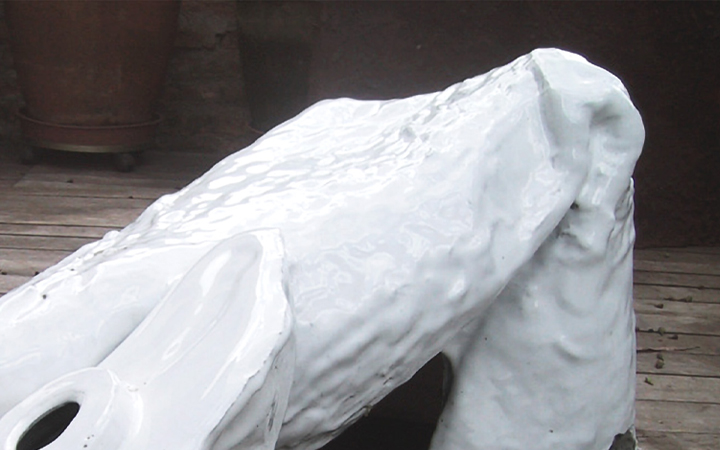
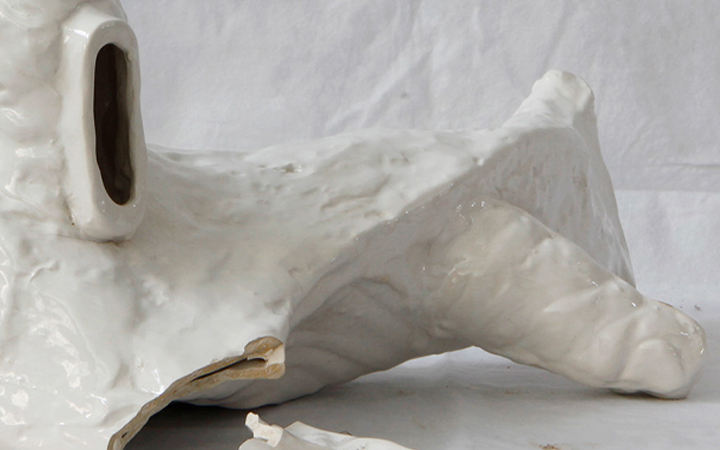
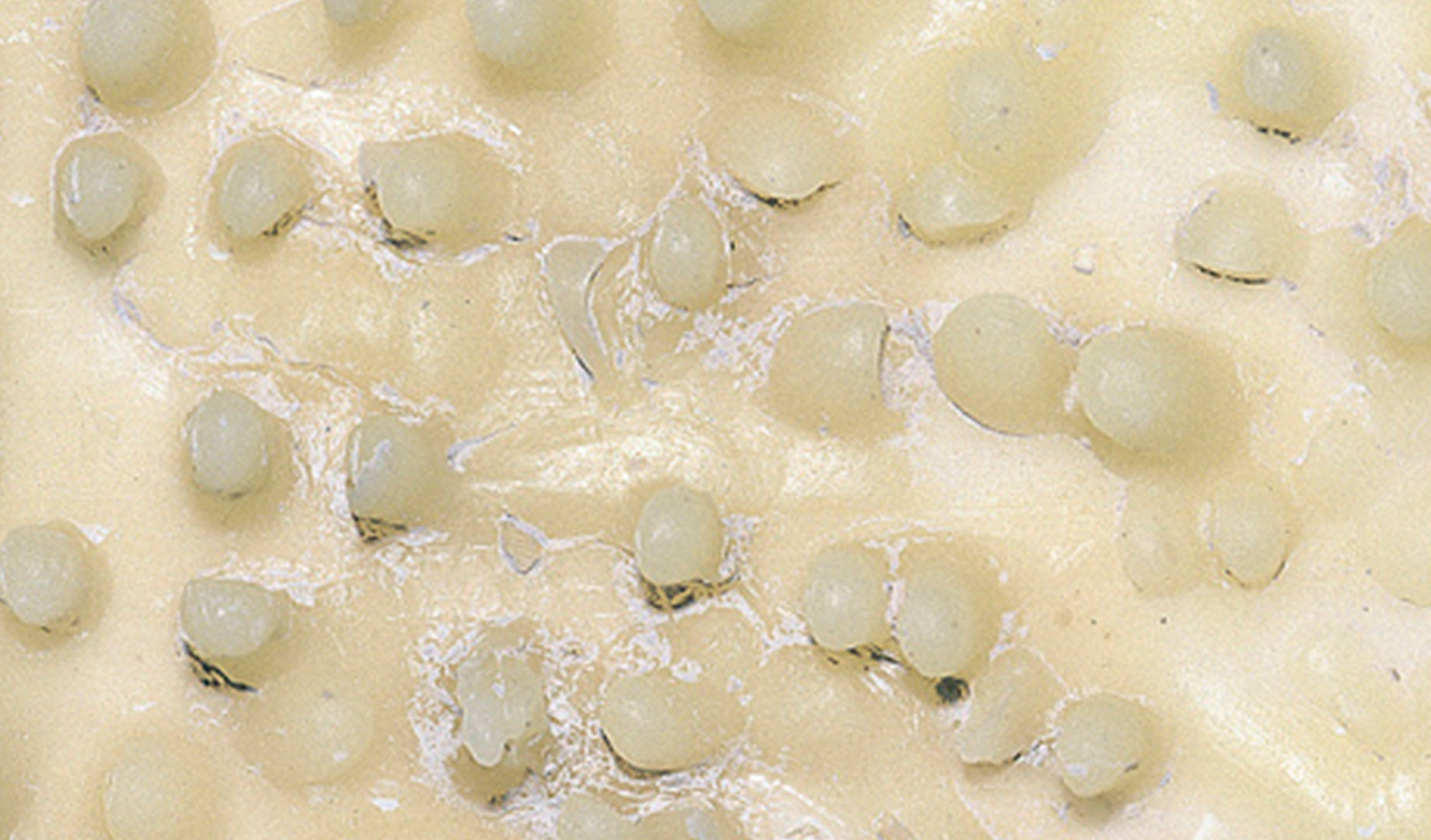
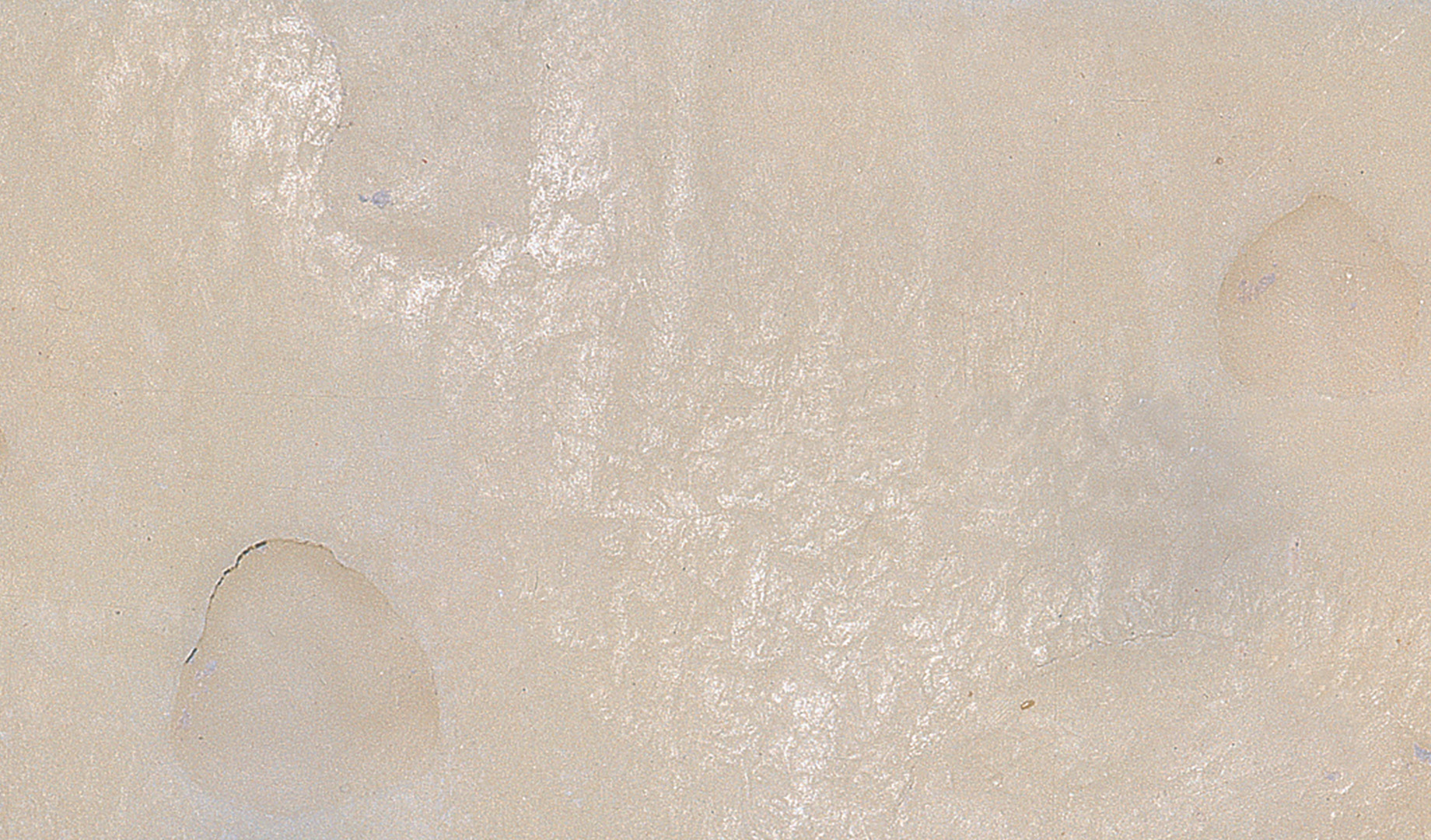
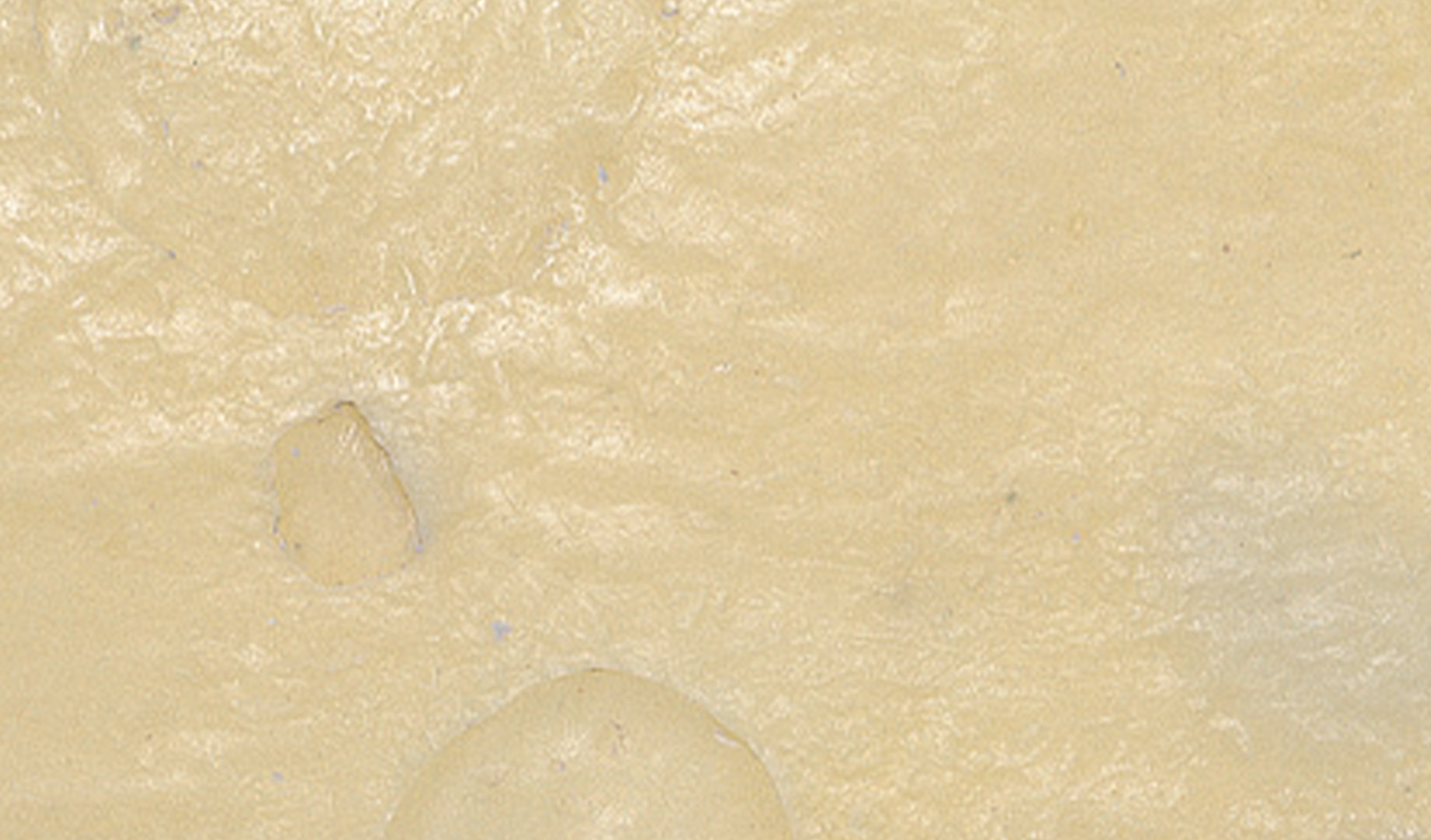
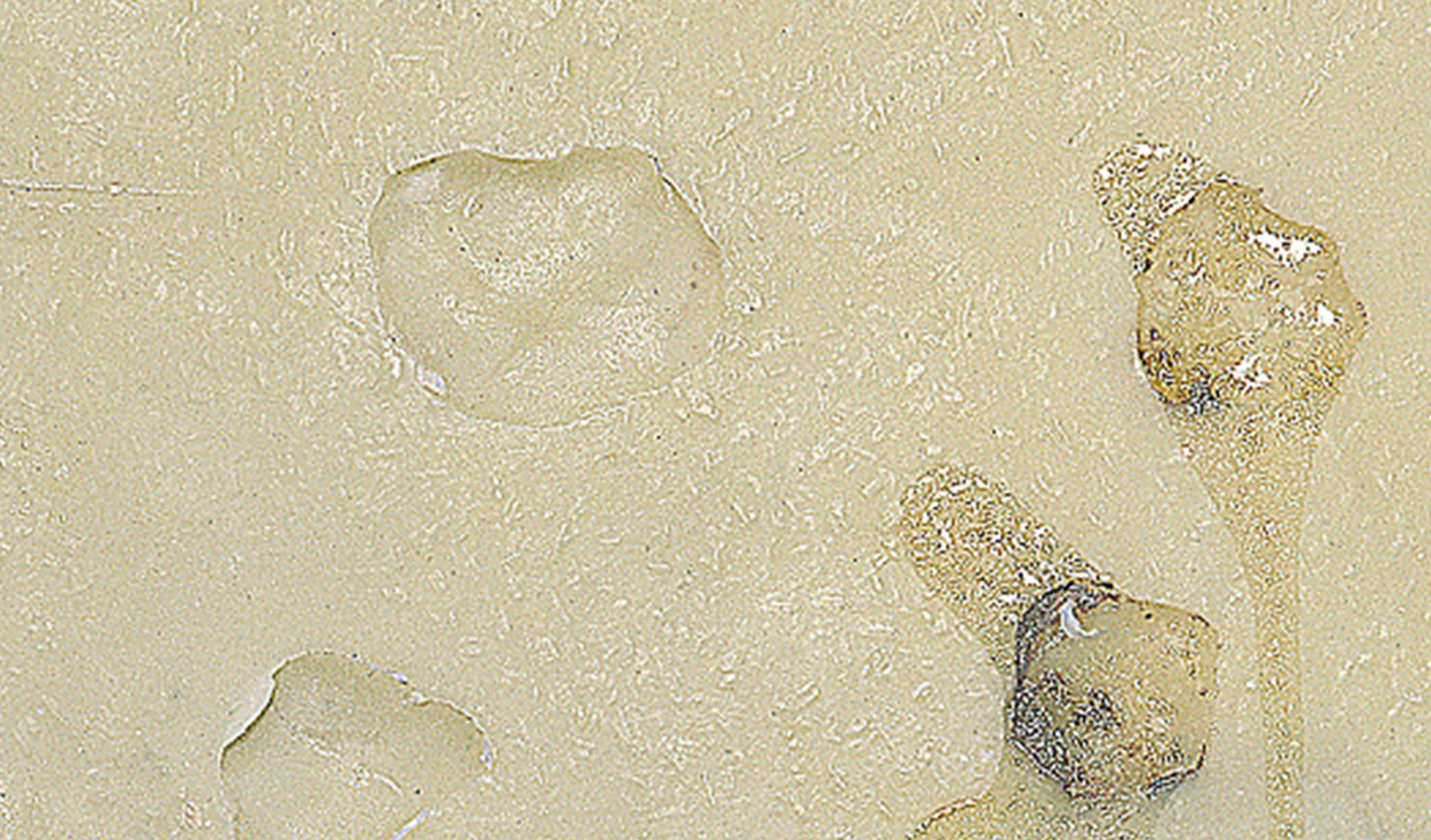
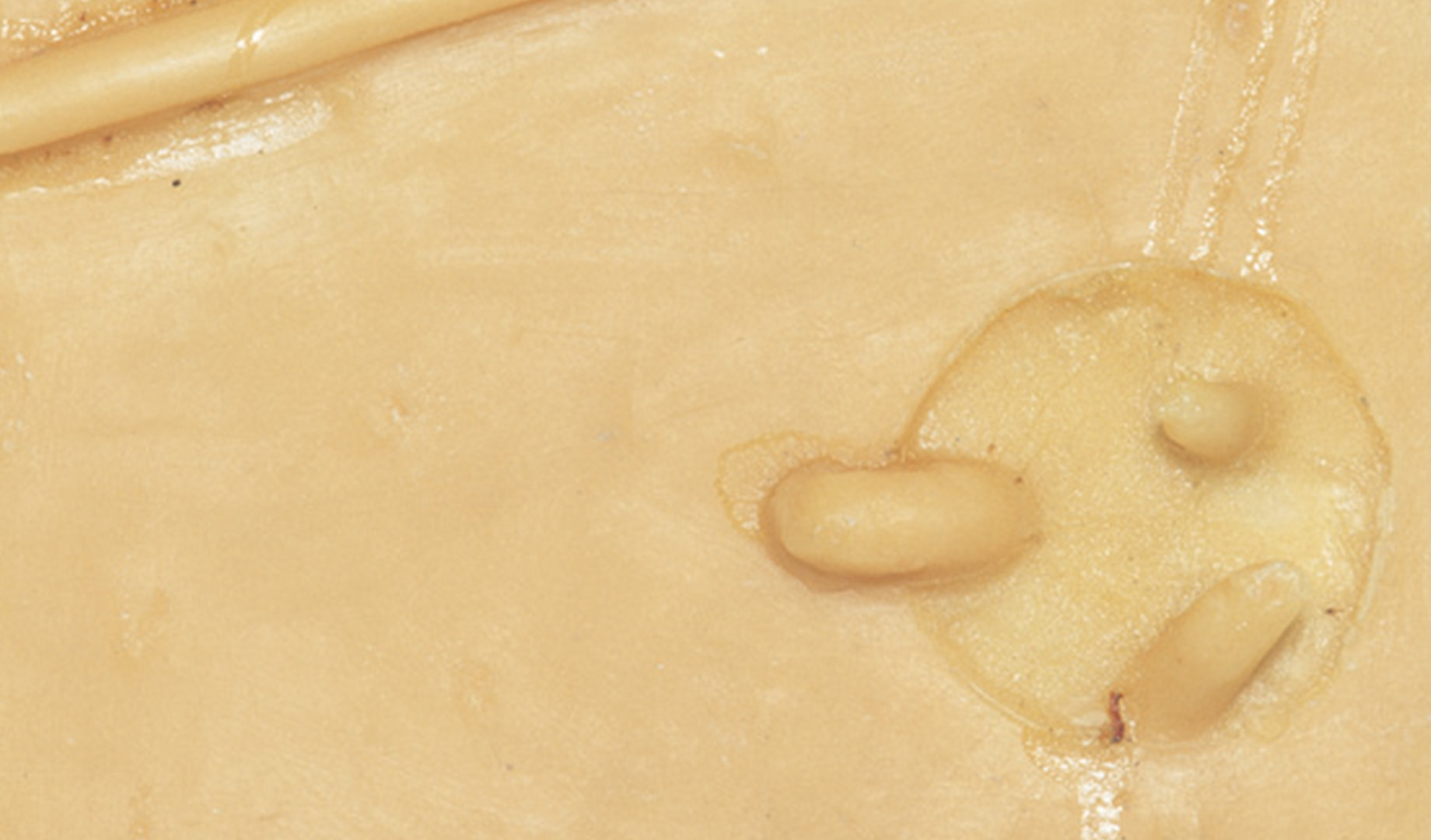
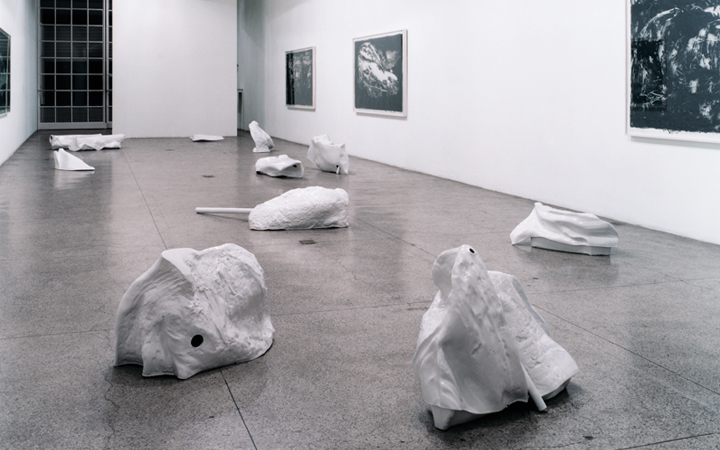
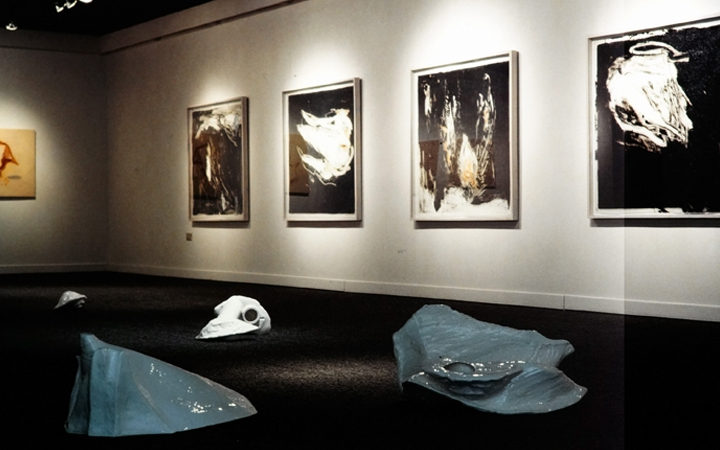
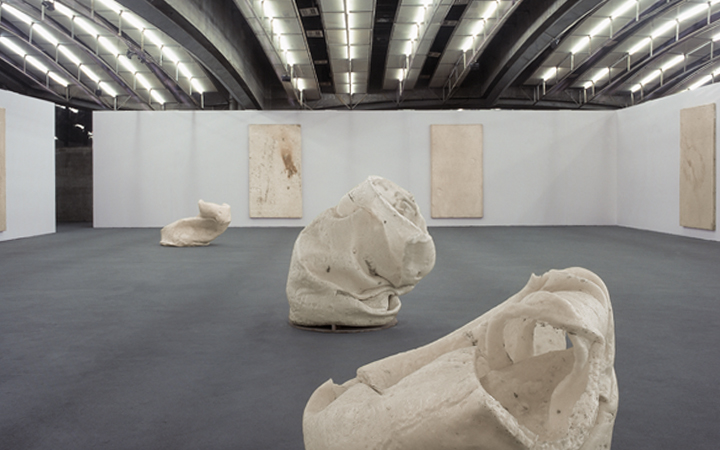
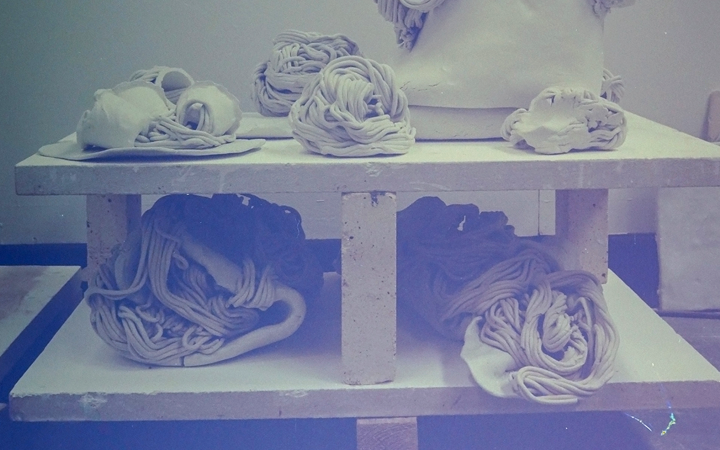
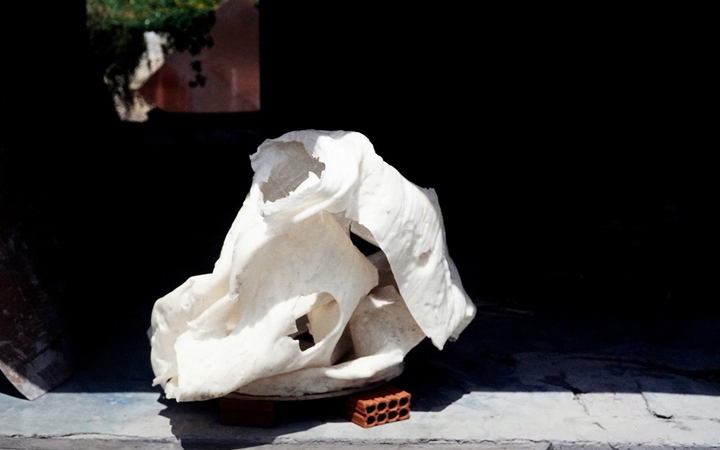
The more recent work of Carlito Carvalhosa seems to have the form of these riddles. Take, for example, the porcelain sculptures shown in 1997 at the Gabinete de Arte Raquel Arnaud. Malleable at birth, they hardened on firing and then softened again when illuminated. We could go even further, since the paradoxes presented by these pieces seem endless. Perhaps this is the precise source of the absolute lack of empathy of these works, as they bring together plastic qualities that do not belong together, and in so doing, place our perception in a difficult situation, due to the practical impossibility of accommodating them in the same object.
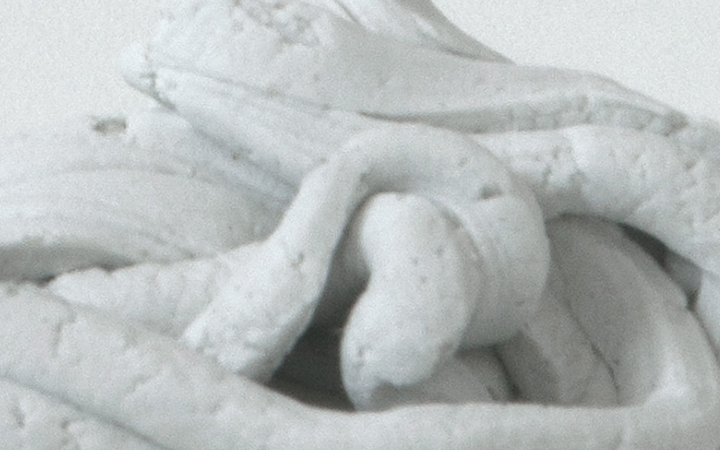
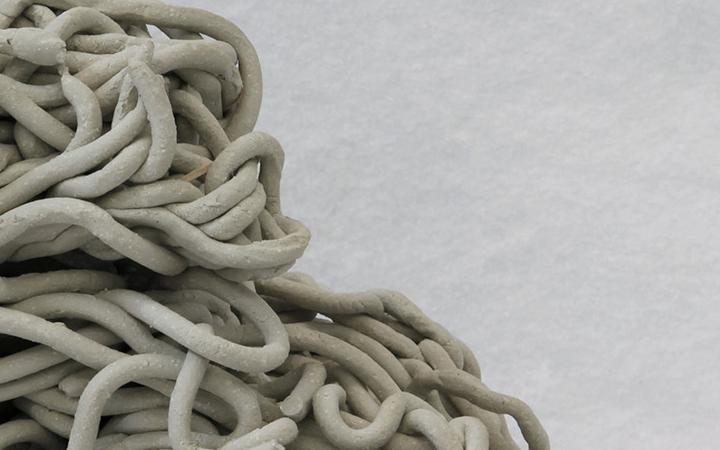
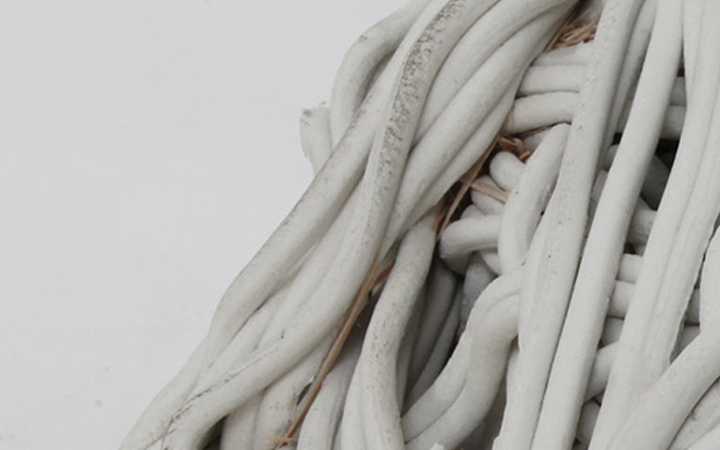
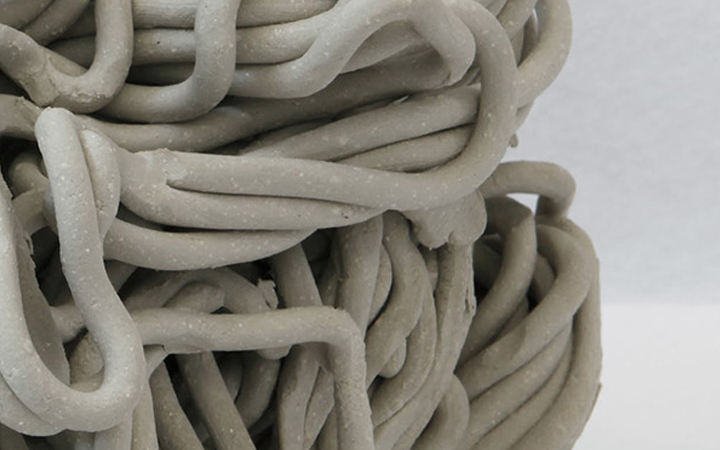
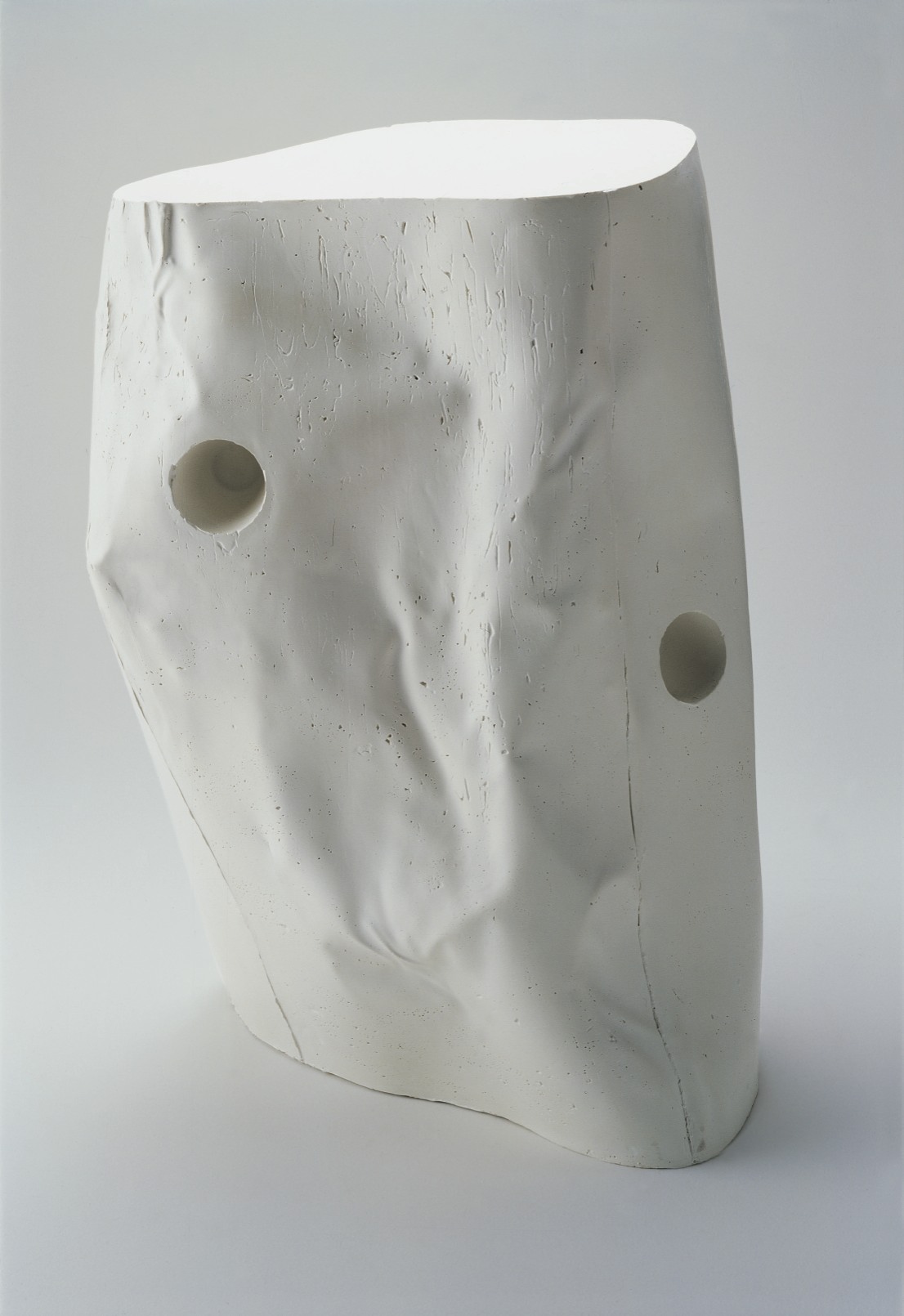
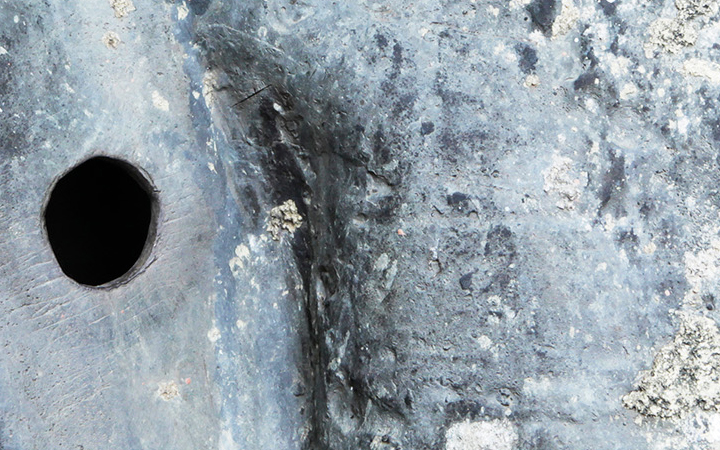
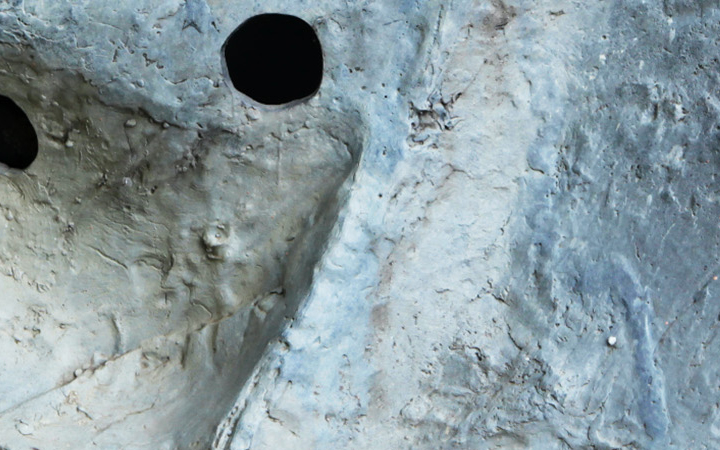
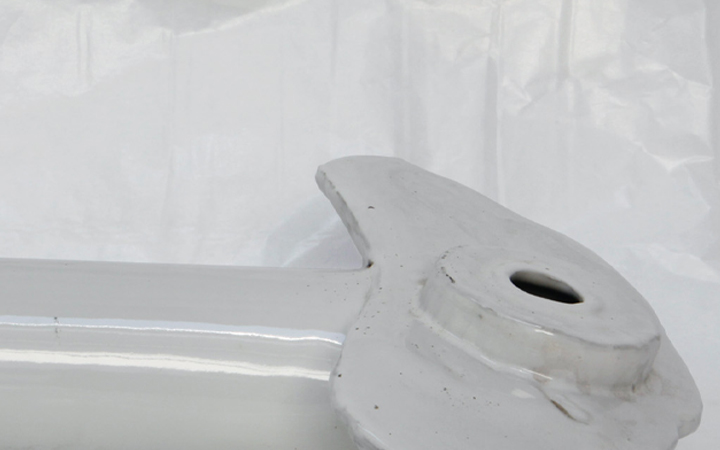
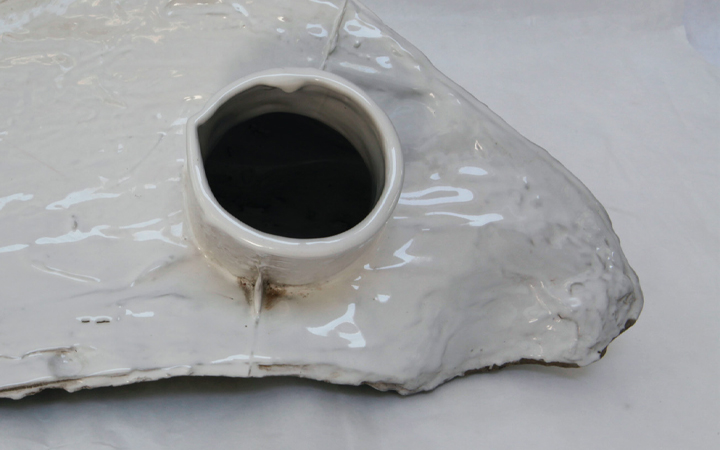
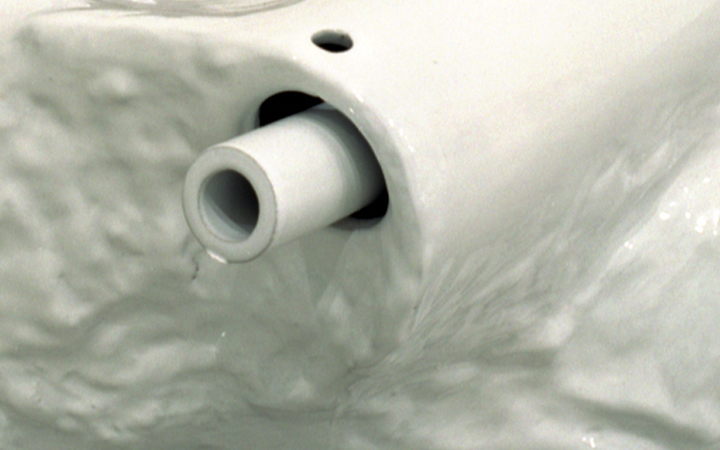
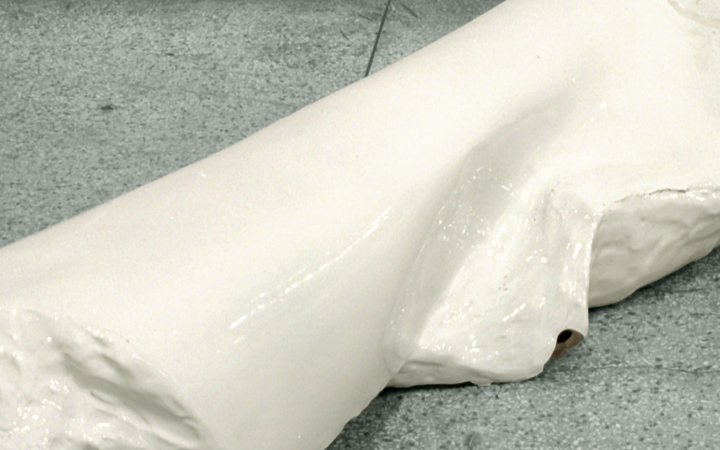
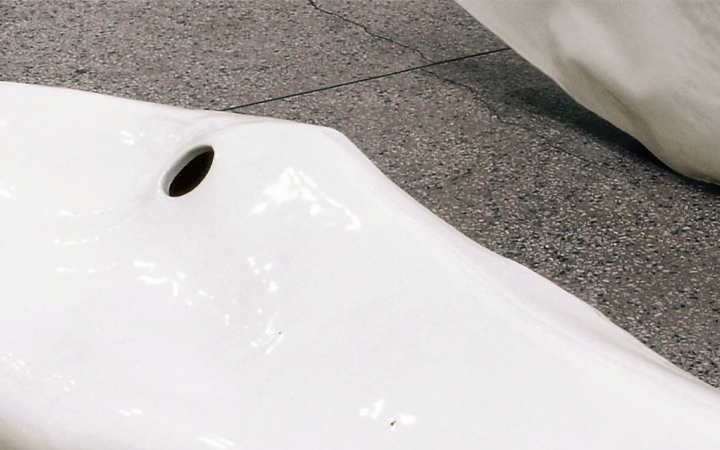
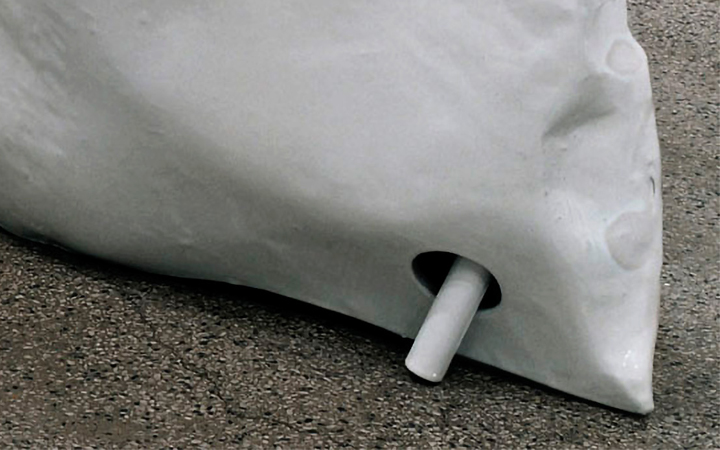
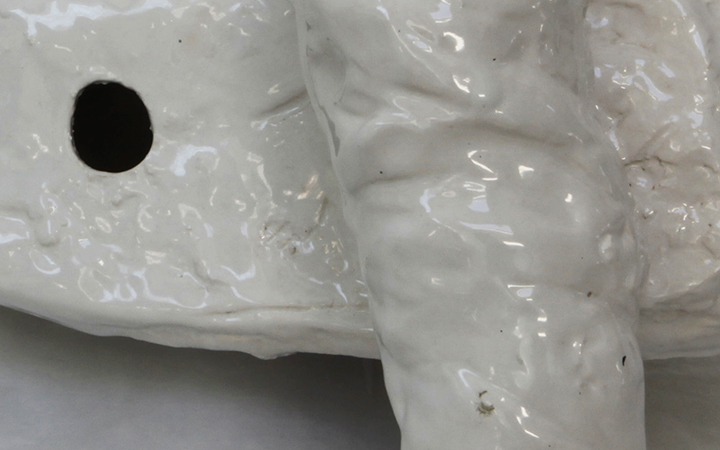
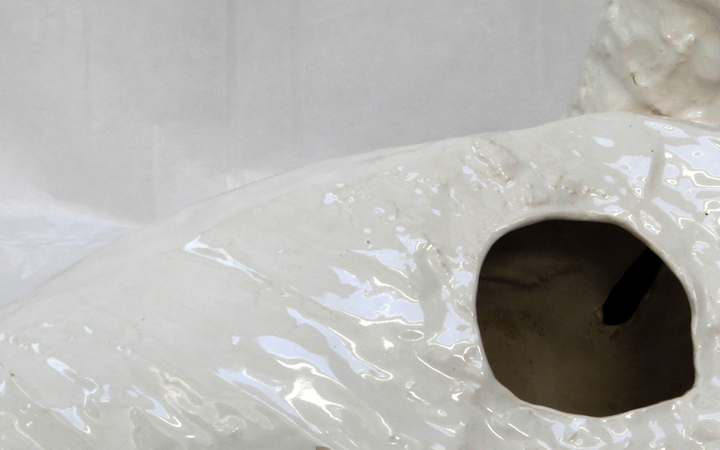
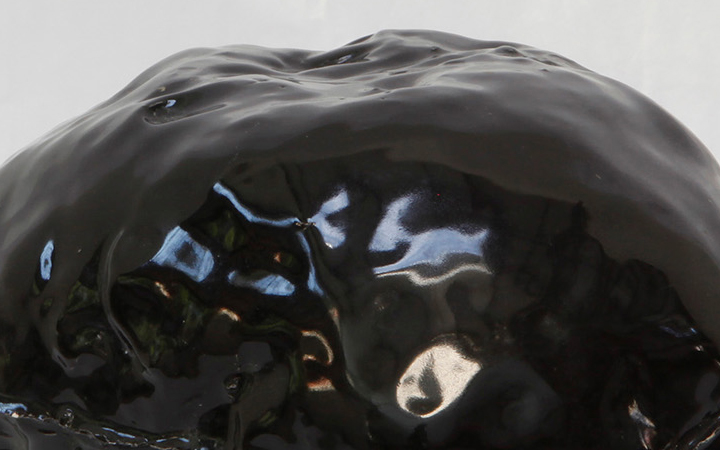
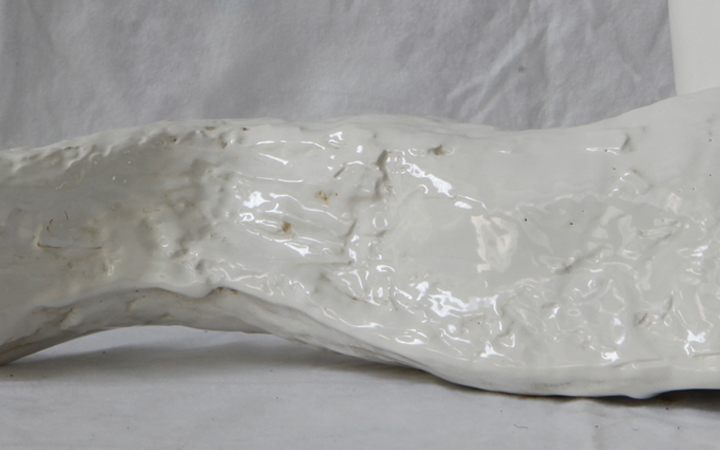
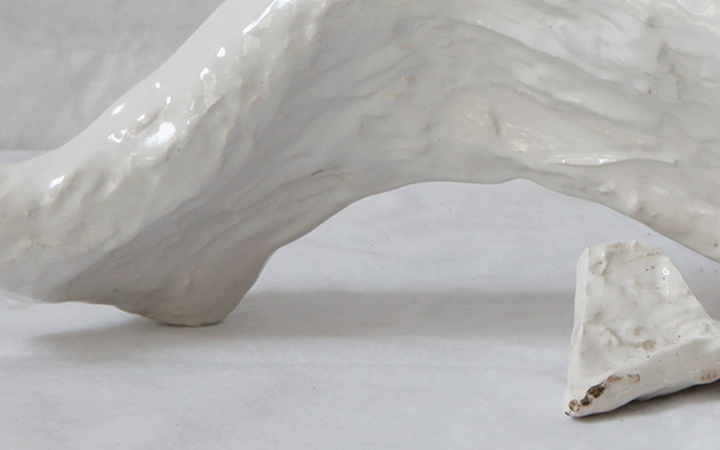
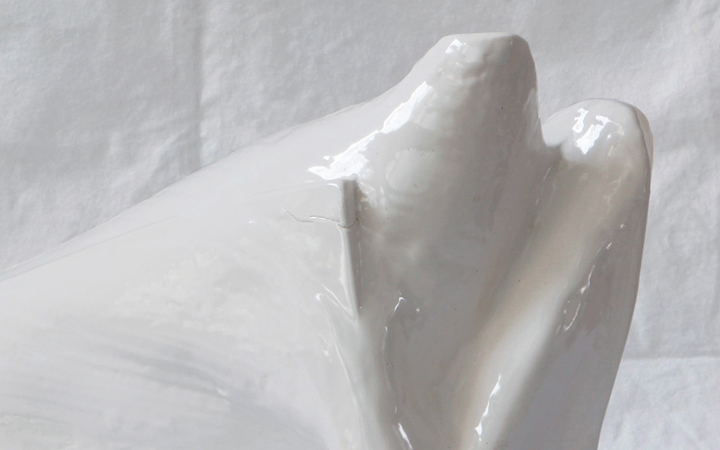
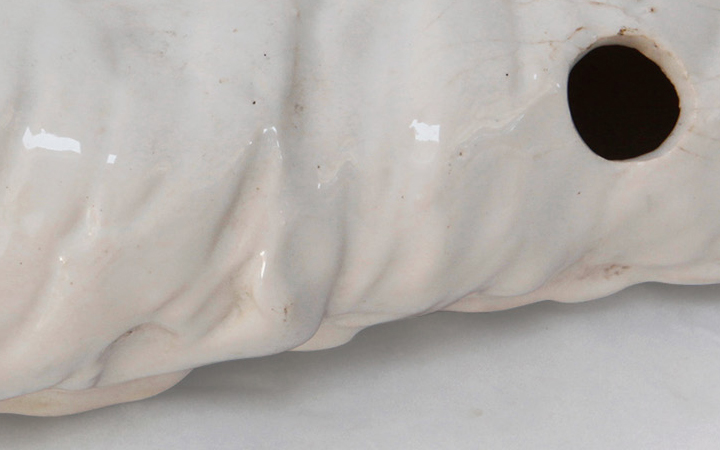
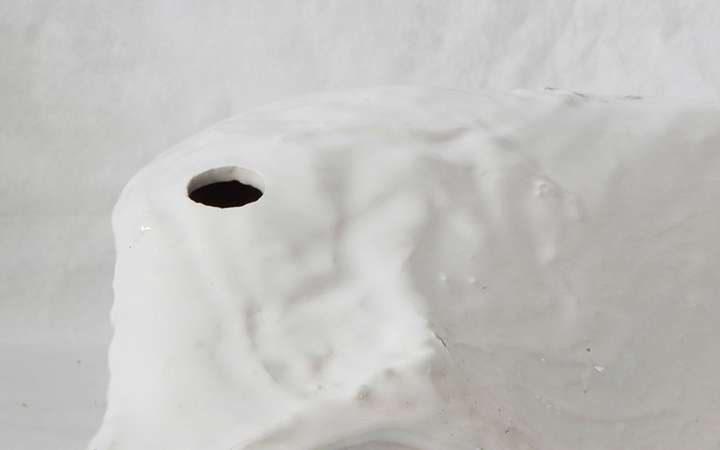
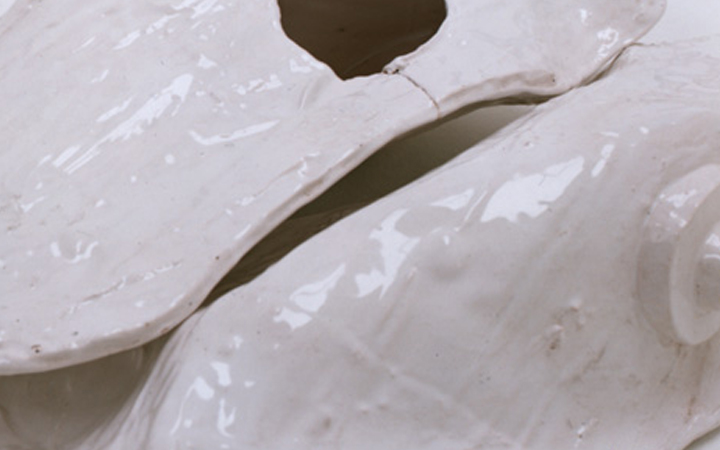
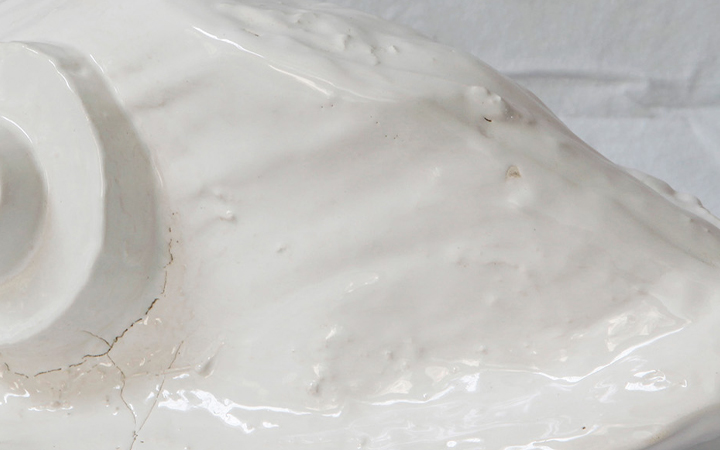
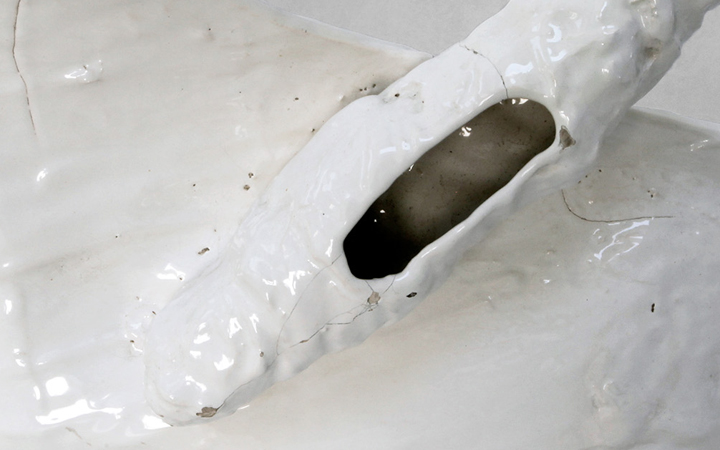
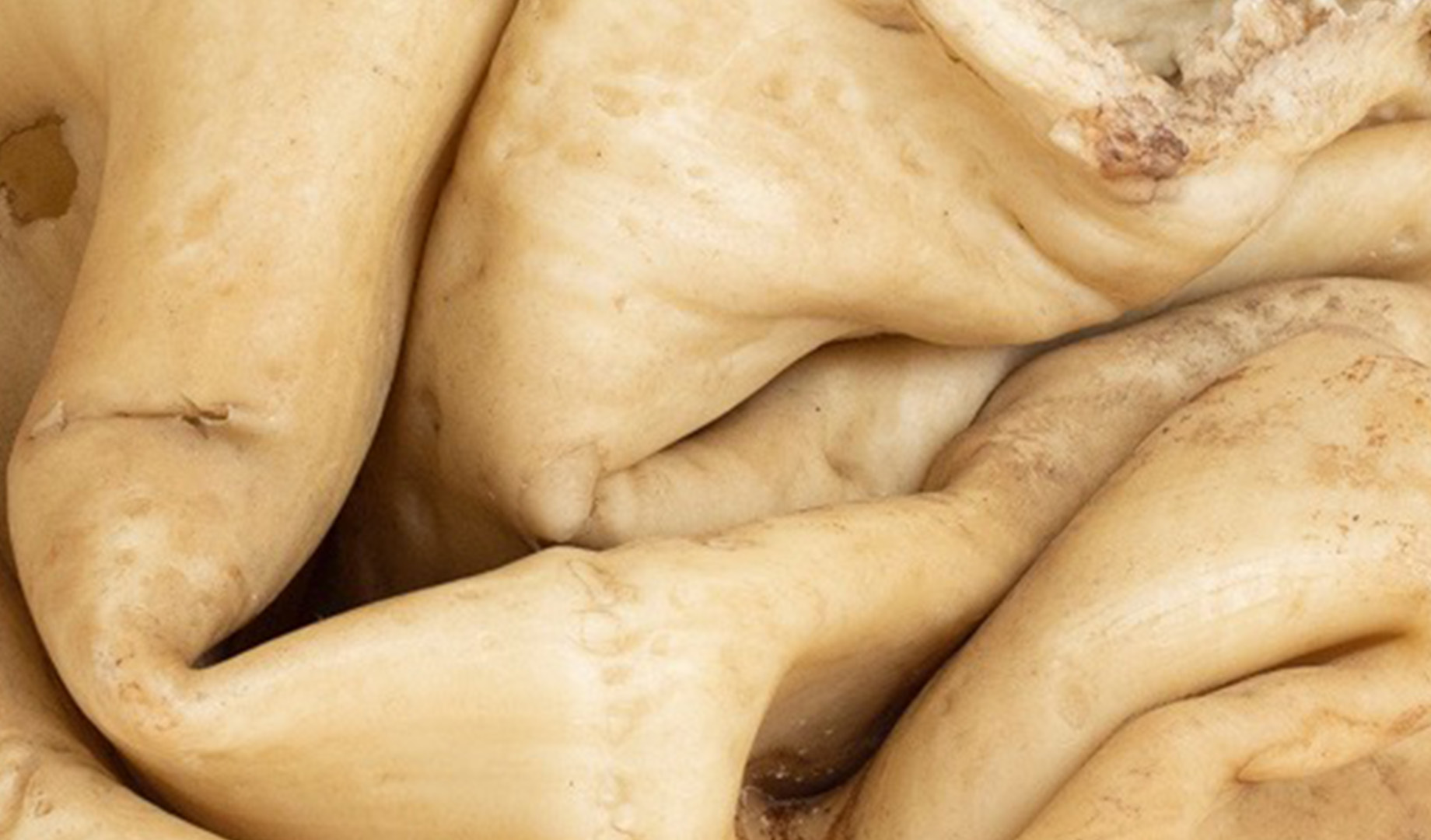
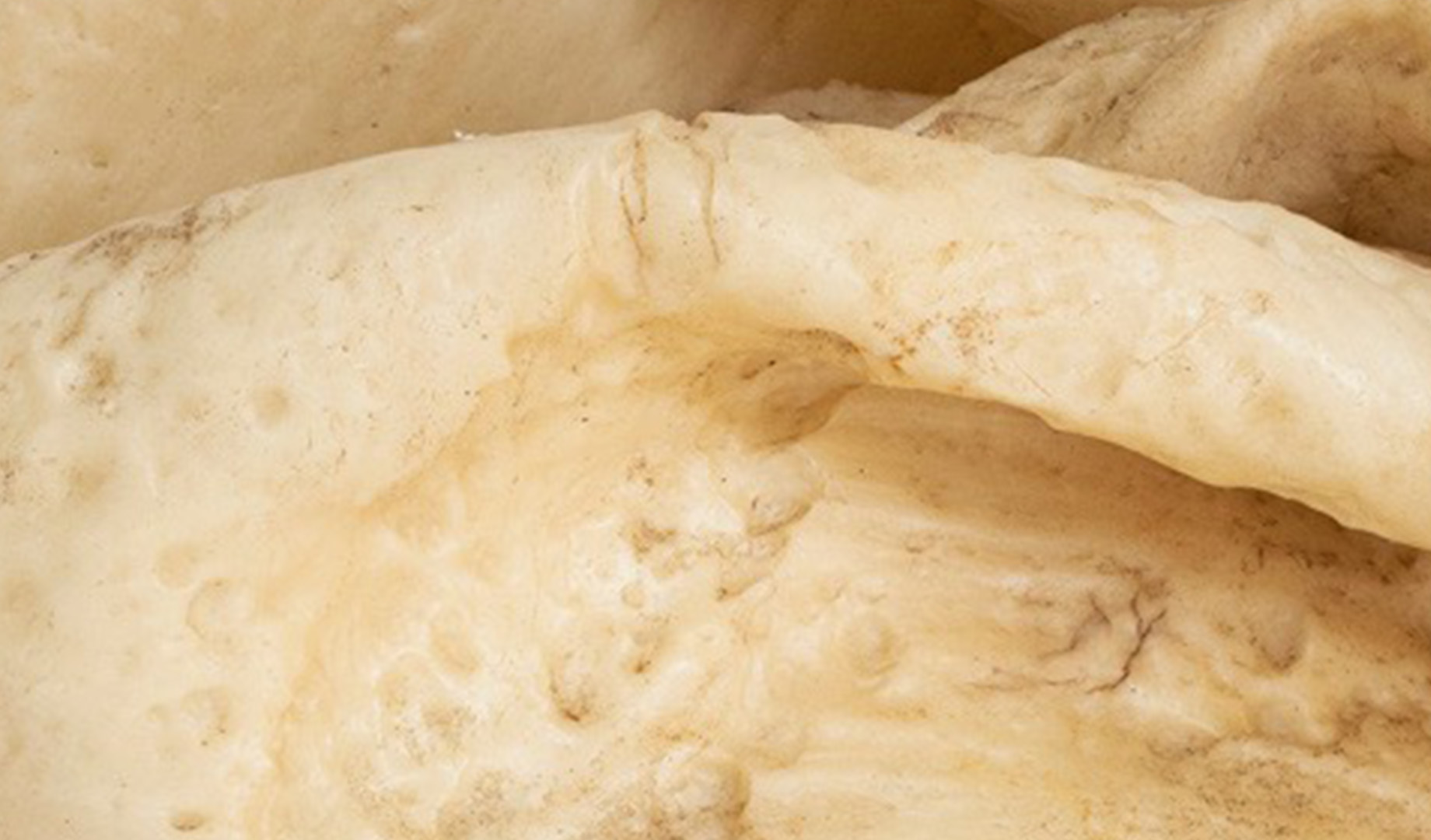
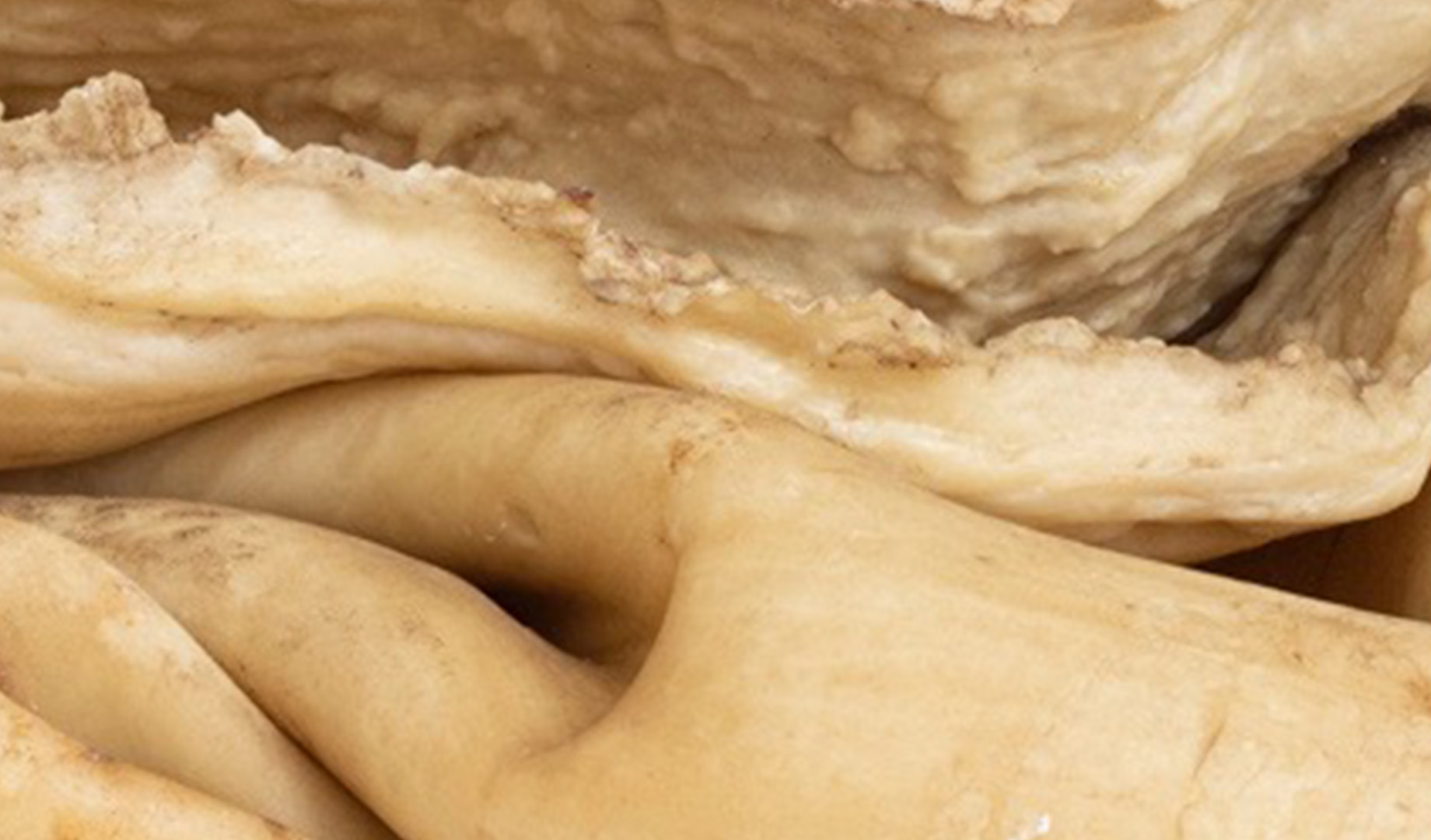
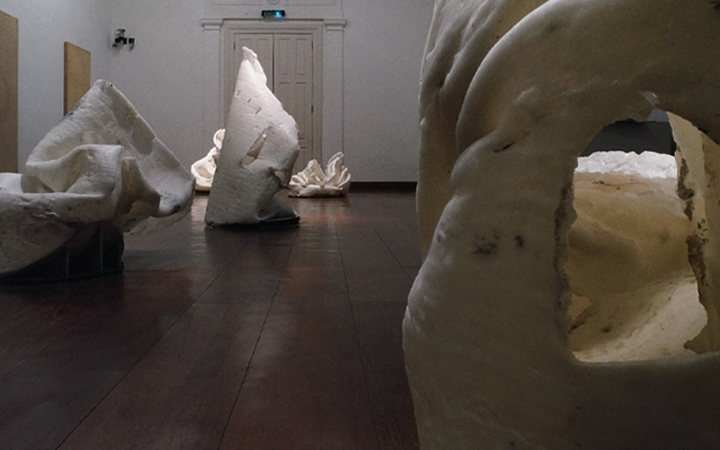
The porcelain sculptures have an undeniably organic aspect. The irregularity of their surfaces and contours indicates that certain metabolisms are occurring inside them, of which they are merely the expression. Through the orifices of the pieces we see that they have a hidden face that undoubtedly leads an active and mysterious life. In some way, the interior and exterior communicate with each other, although we do not know precisely how. But as soon as our gaze lingers on these surfaces, we see that none of this makes sense. The enamel that covers them has acquired a vitreous appearance upon heating, which prevents us from assuming any kind of permeability. In this way, those porous, vital areas reveal themselves as purely illusory, and the unequi-vocal rigidity of an aseptic, extremely artificial material comes to prevail. At this point, interior and exterior lose contact with each other, becoming autonomous regions that are indifferent to each other’s fate. A thing that had shown itself to be alive acquires the appearance of an industrial product: something half way between a sink and a toilet bowl. Perhaps a china curio that a more perverse Oldenburg had decided to deform. And those orifices that brought the inside and the outside into contact now seem more like the eyes of a dead fish. Dead, but still a fish – since we have failed to rid ourselves of those organic beings that floundered before us, despite their insistence on displaying an enamelled surface.
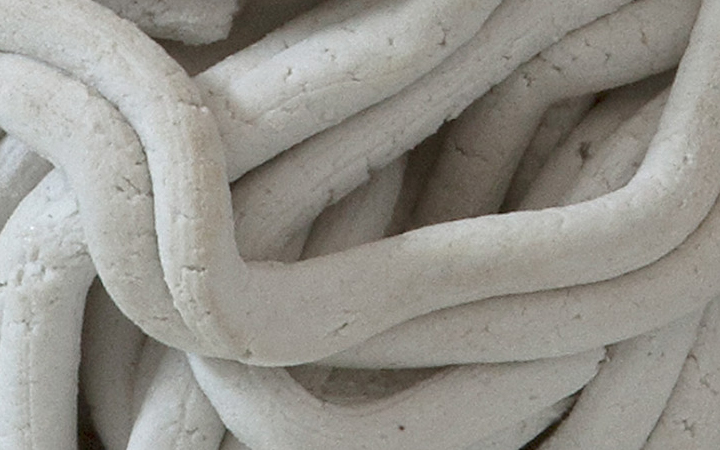
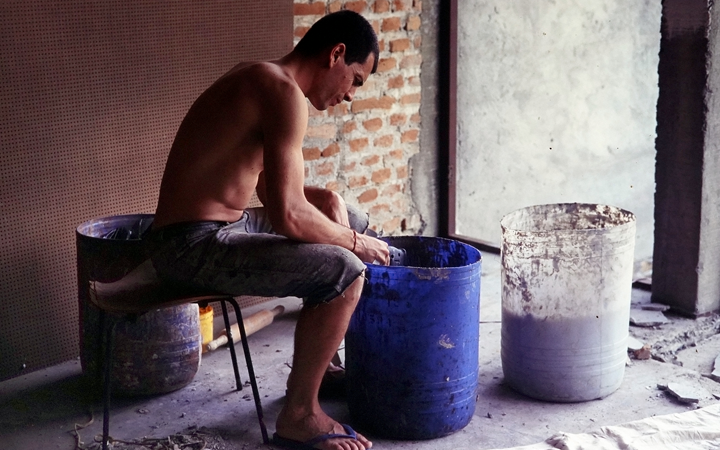
Such separation between inside and outside leads us to look at the sculptures as made things, and no longer as organisms that have developed by themselves. Directed in this way, perception halts before the expressiveness of the hand that worked the materials (clay, plaster or wax that served as a mould for the piece that is eventually to be modelled in ceramic), leaving certainties and vacillations engraved on it. Little by little, volumes gradually form themselves out of these gestures, with shapes that also reproduce the stubborn act of making that seeks to extract some expression from the materials. This is the source of the tortuous and indecisive aspects of the volumes, which refuse to lose sight of the original malleability of the materials from which they emerged, regardless of whether they are transformed into another substance.
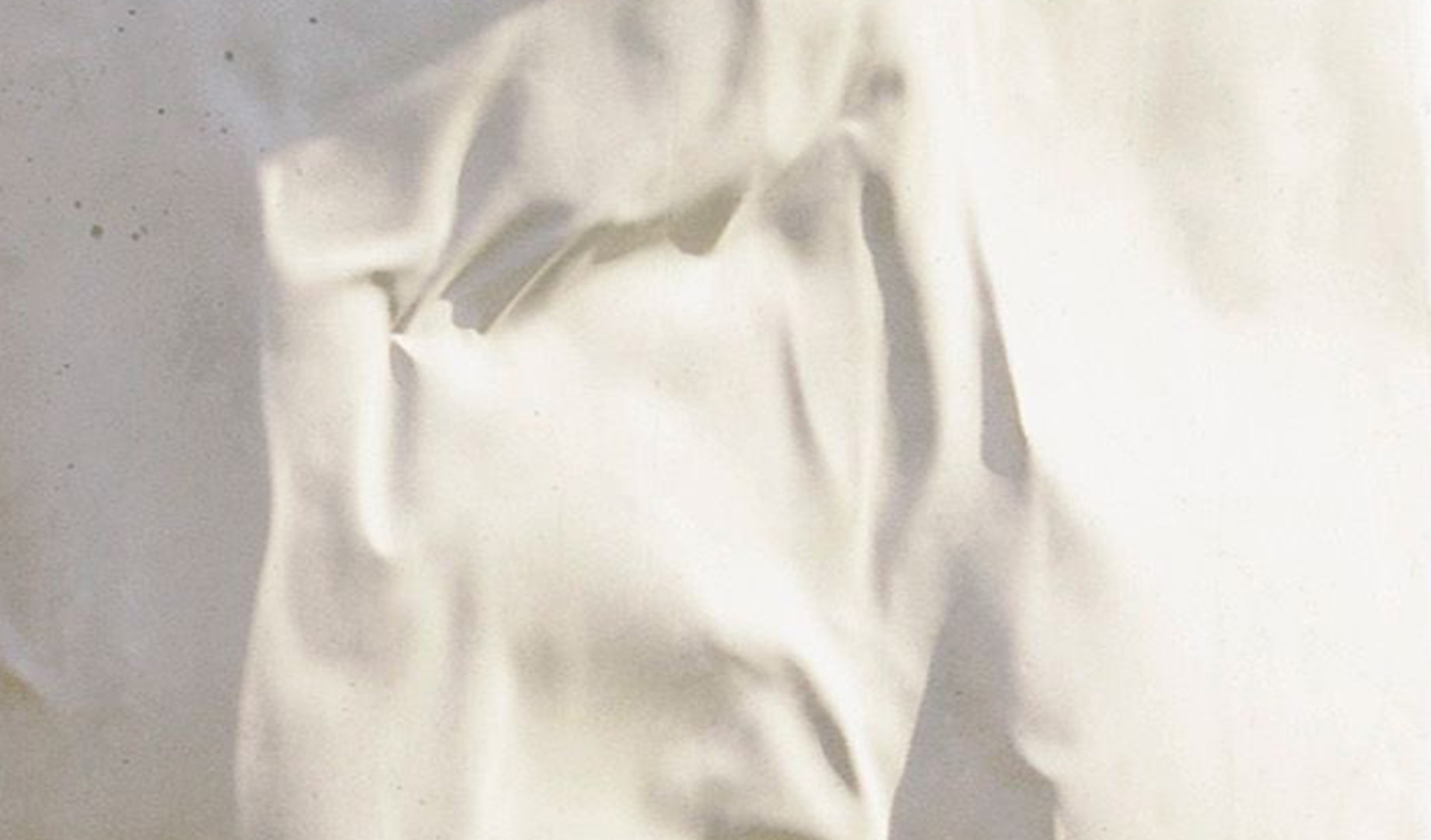
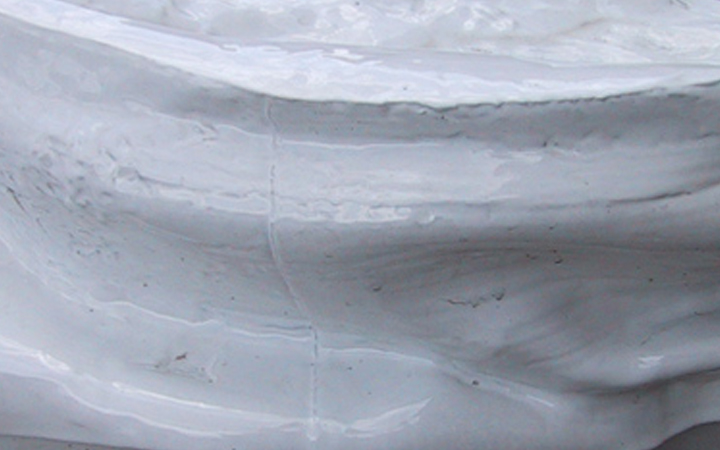
Once again, however, other elements begin to conspire against the affirmation of this expressive tendency. The white layer that covers the pieces in a uniform way inserts itself between the gestures and the determination of the volumes. Nothing is white and shining with impunity. The little touches, the limited manipulations, lose contact with the overall form of the bodies, since these are dominated by a stronger unity: the cold white of the porcelain, with its harsh, hospital light.
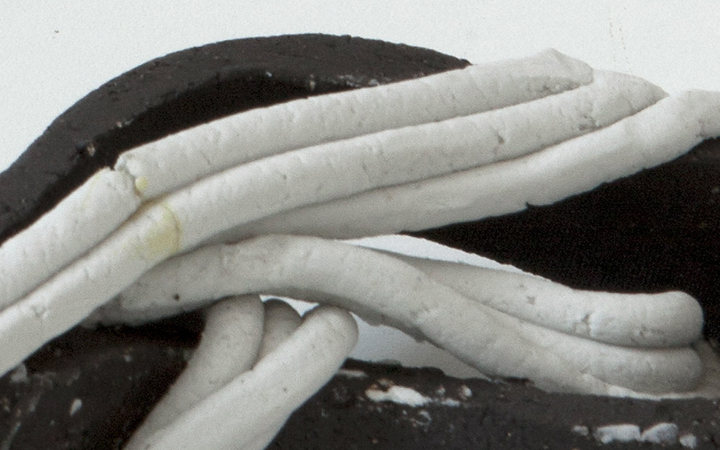
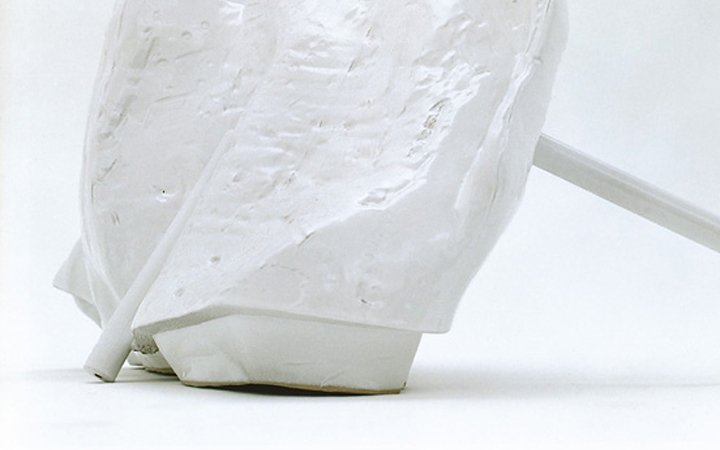
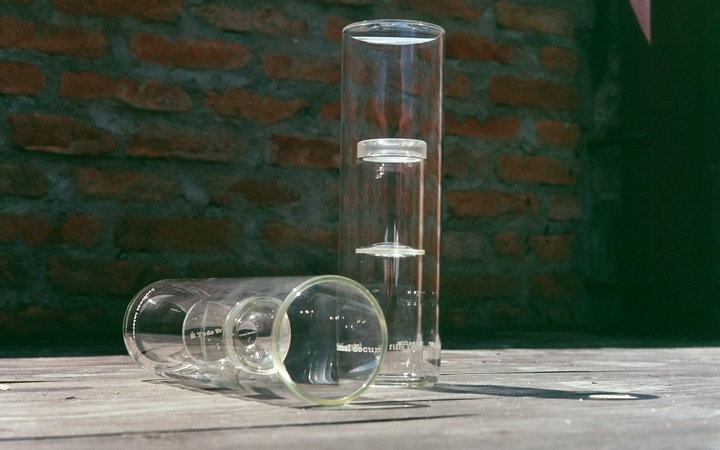
And the paradoxes do not stop there, since light immediately strikes the rigid surfaces, forms pools in their concavities and gives the works a look of wetness. Instead of flowing over the volumes and revealing their impenetrability – a characteristic that has, to a large degree, marked the whole of the sculptural tradition – this light is irregularly reflected by the enamelled layers, once again giving them a consistency that is more plastic, as if the sculptures had just been taken out of the water, and in this way, had lost part of their solidity. And what can be said of the regular tubes that juxtapose themselves with the works in an almost pathetic way, seeking to give direction to things that refuse to be oriented?
As can be seen, much of the interest – and why not admit it? – the discomfort of these sculptures by Carlito Carvalhosa lies in a kind of split coexistence between formal aspects that should present themselves as a unity. Interior and exterior, gesture and volume, light and consistency, direction and dispersion stand out alternately, without arriving at a relatively harmonious unity. It is this dissociation of the objects that differentiates them from the works of Paulo Monteiro, Laura Vinci and Marcia Pastore that, in their own way, deal with similar forms, while resolving them differently.
Faced with these incongruences, the observer is constantly forced to shift his or her attention in an attempt to find a more adequate mode of perception that brings the appropriate facets of the pieces closer together. Somewhere between animals and industrial trinkets, the works continuously move out of focus. And when we succeed in fixing a certain quality – say, rigidity – another element comes along to denature it, such as the light that softens surfaces, while revealing their artificial and stiffened texture. Unlike riddles, therefore, there is no possible solution to the problem of how to discriminate between the various formal aspects of the sculptures; they do not fit together. It would be like imagining a work with the vitalism of Arp, the brilliance of certain pieces by Brancusi, and the wandering gesture of Gia-cometti’s sculptures. All of this together, orchestrated by an even less minimalist Eva Hesse. Having said this, not a single vestige of postmodernism remains in the works of Carlito Carvalhosa. The individualised aspect of the different formal elements – volume, interior, light, solidity, etc. – is far removed from post-modern quotations, either as traces of other art works, or as the architectural aspects of disparate ages. Here, form itself has a divided nature, in contrast to what happens with the narratives in some parts of contemporary art.
Having said this, Carlito Carvalhosa has arrived only gradually at these configurations. His previous work sought a more direct bond between matter and form, with his main emphasis shifting from construction to the expressive aspects of matter itself. The pictures in wax, without pigment, that were completed between 1985 and 1987, took advantage in a constructivist sort of way, of the malleability and translucence of the material1. Some areas of the works, always regular areas, received more layers of wax than others. This produced regions that behaved differently towards the light, organising themselves according to their greater or lesser degree of transparency. But even in these works, the structuring of the space was not unequi-vocal. The wax surfaces were not constituted in a very homogeneous way. Here and there small lumps formed, the superposition of layers created zones of greater opacity, with these accidents diverting the eye of the viewer from more regular definitions, and holding it to the events on the surfaces. The softening of the contrasts emphasised the presence of the pictures as texture and fattura, forcing the perception of the observer to identify the constructive processes that produced them in minute detail, at the same time as it were necessary to avoid any more expressive movement. Given the need that no doubt arose from the influence of minimalism, to maintain the works within the limits of differentiation, the indefinition between construction and fattura nevertheless gave those works more of the appearance of a commentary on painting than an attempt to take it further. In my opinion, this reduced their aesthetic range.
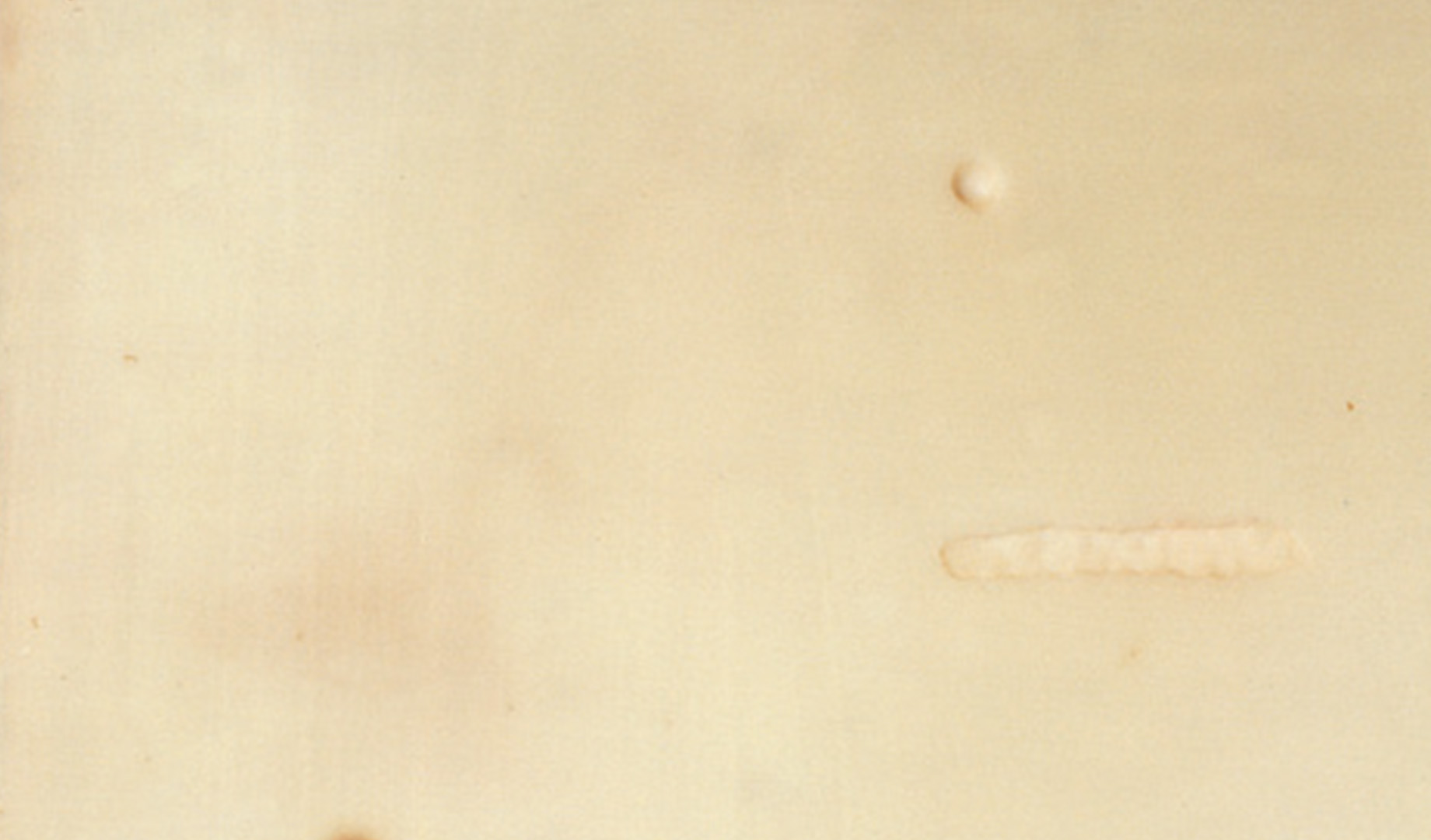
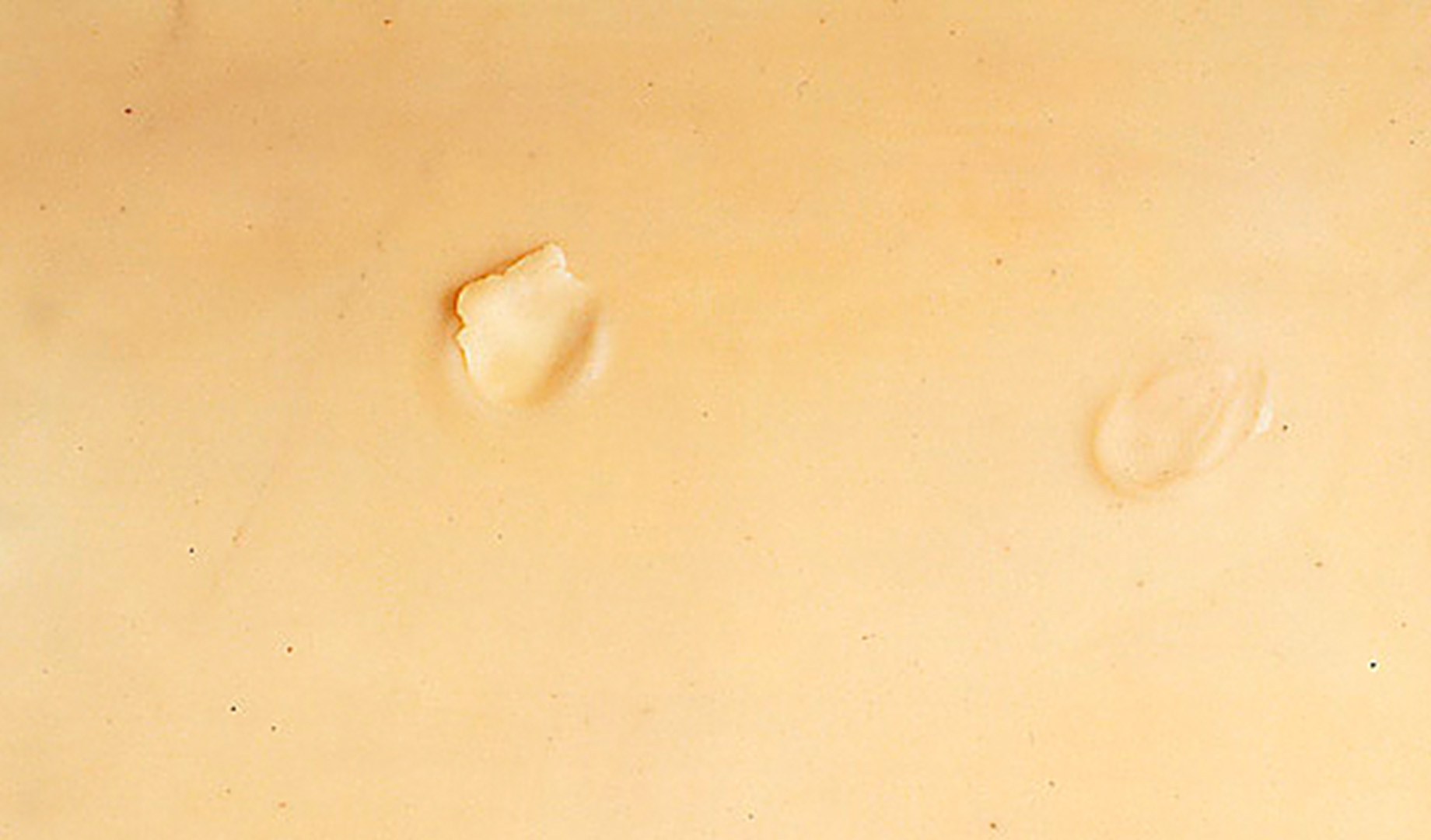
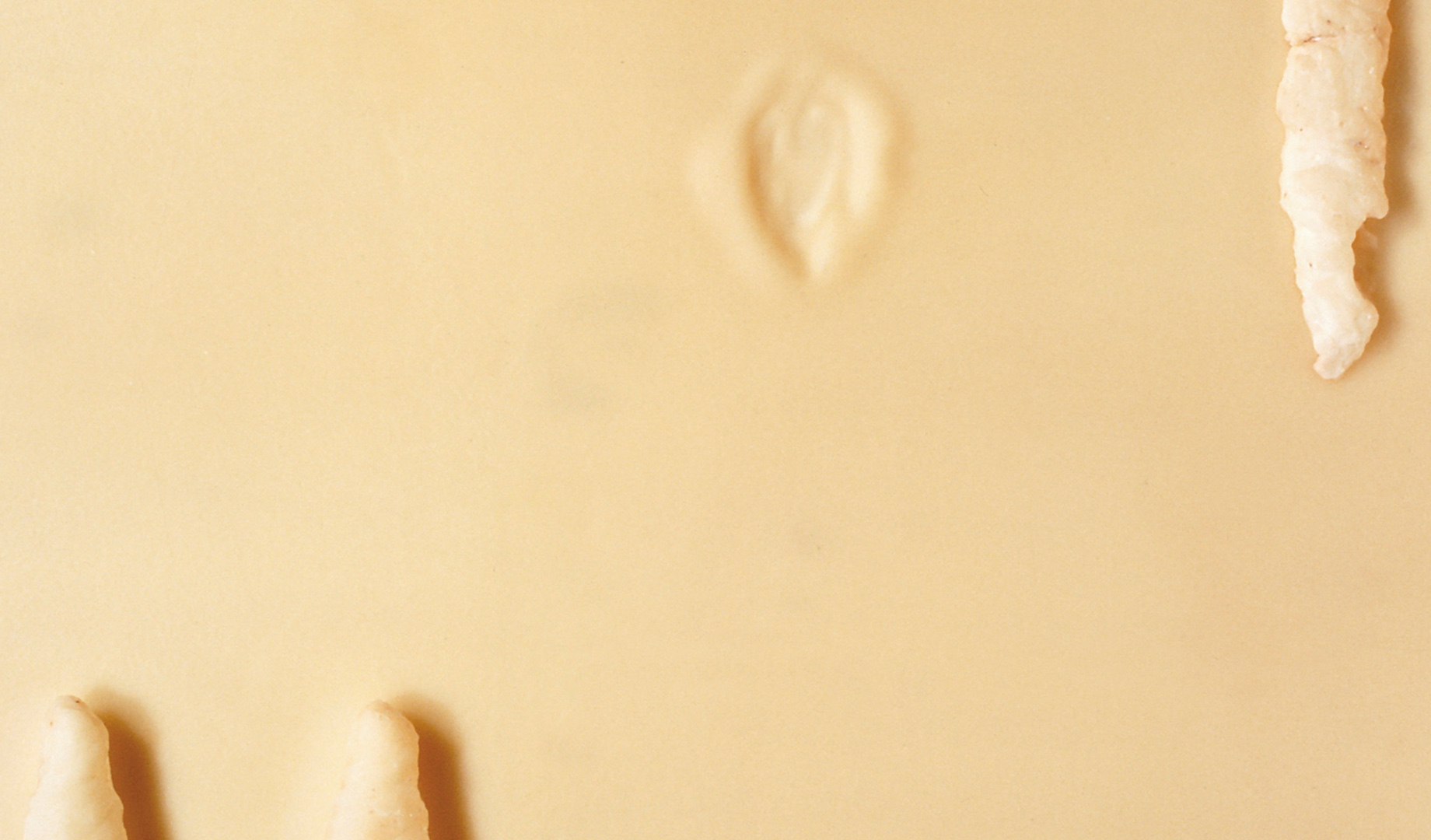
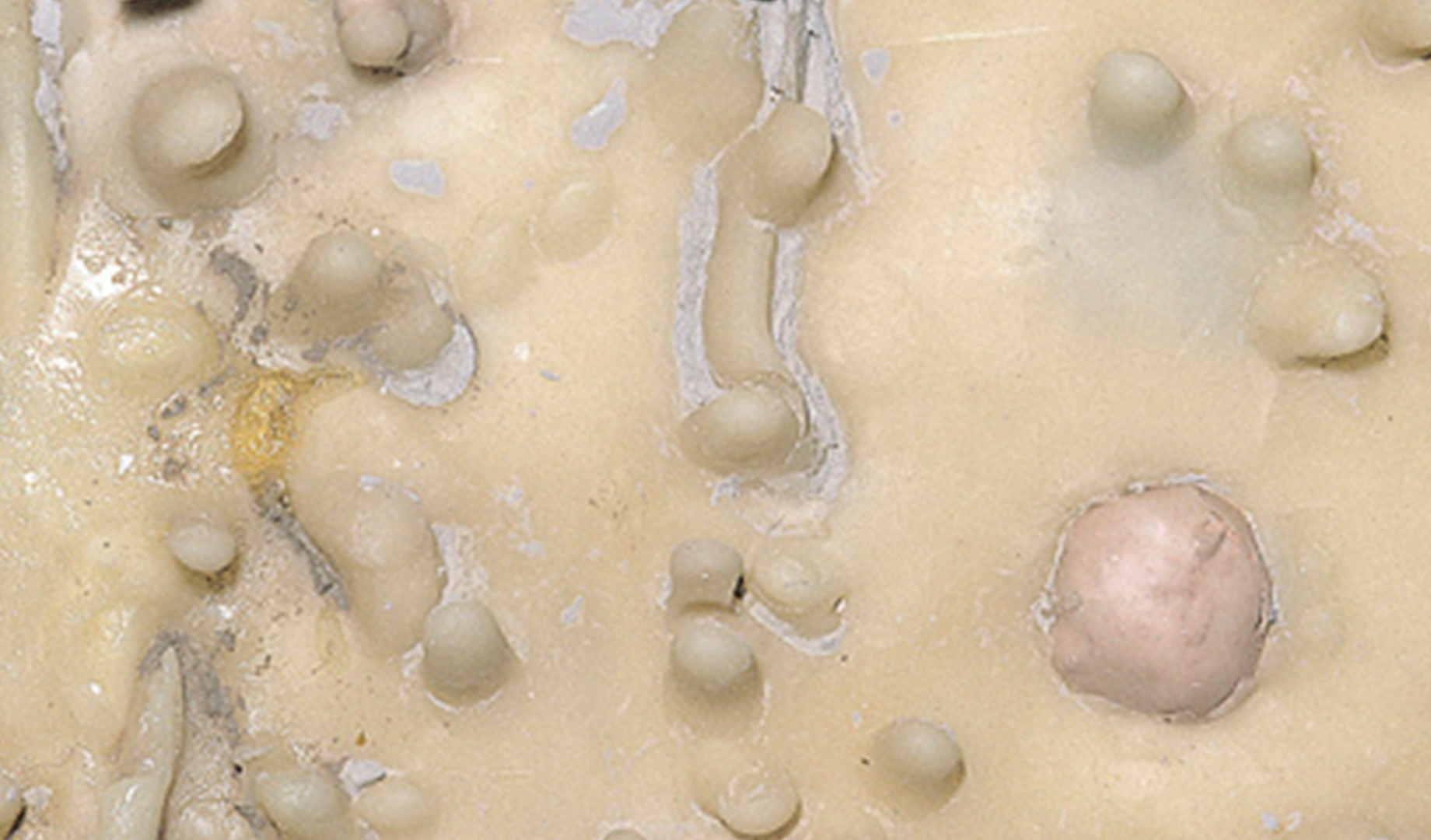
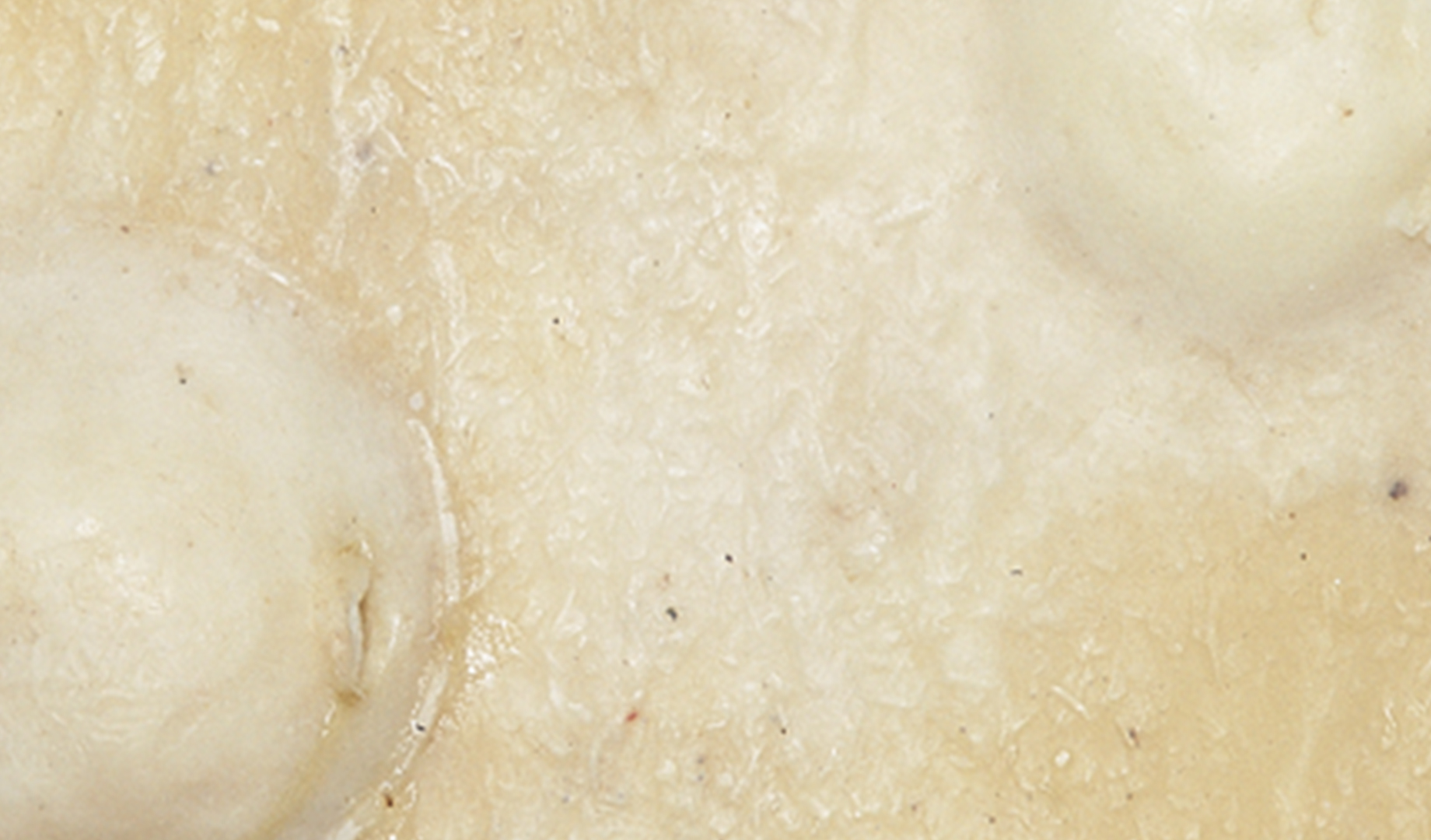
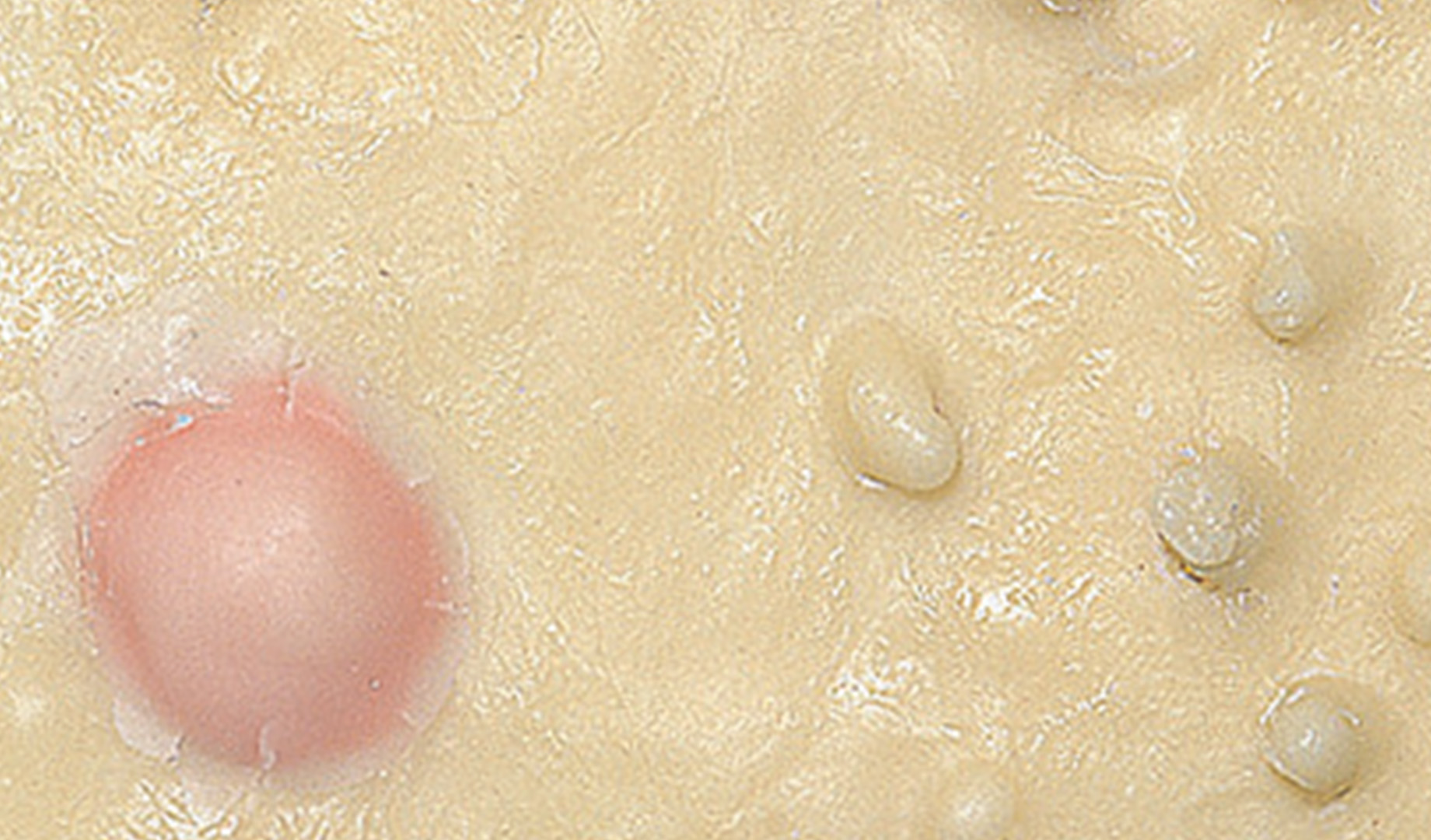
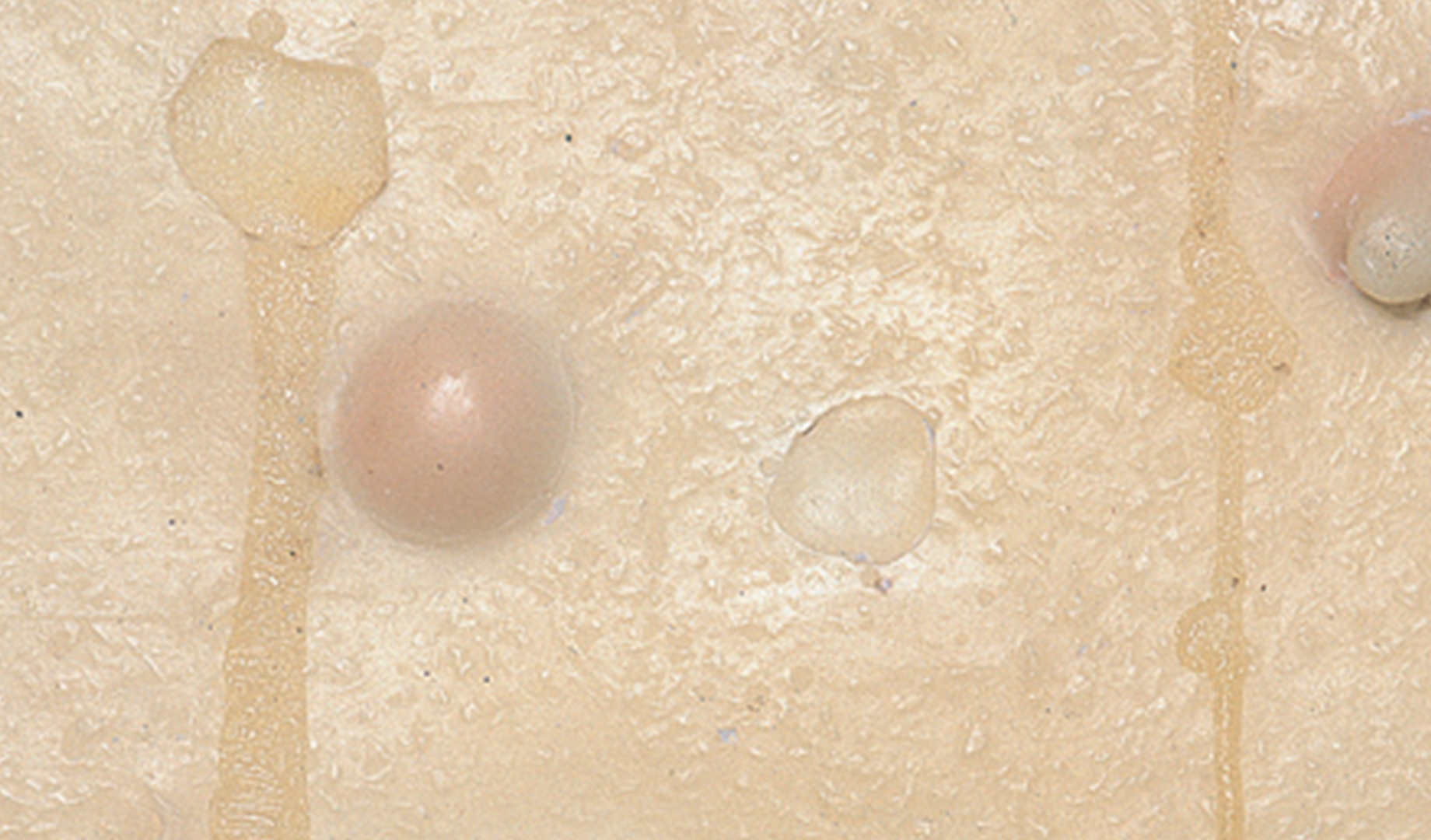
Carlito Carvalhosa subsequently decided to exploit the expressiveness of the wax and paraffin to a greater degree. Between 1990 and 1994, these materials took on a distinctly more organic aspect. A dubious body – moving between pleasure and pain, wantonness and guilt – insinuated itself at every moment between the layers of the picture. The soft, sensuous surfaces spoke of indefinite places, ready to surrender to shifts in temperature, and receptive to shaping by the touch of a hand. The thickness of the wax layers indicated the density of something that refused any kind of immediate identity, as it assumed a complex nature, in which appearance and concealment endlessly changed places. In this way, everything pointed towards a virtually limitless availability, open to every adventure. As soon as some definition emerged, as soon as certain areas began to stand out on the wax surfaces, everything would change: purplish blotches, furrows of pain could be seen here and there, as if every kind of particularisation of those bodies presupposed a violence that stained what had previously been pure density. Or else small protuberances would rise above the surfaces, in a vague movement that prevented them from changing into things that were better defined. Interrupted in this way, those volumes acquired a rather unhealthy look, of something that could not come fully into being, as its development had been truncated. In these works, the body revealed itself as useless passion, for whenever it limited itself – that is, whenever it shifted from a diffuse sensuality to a more defined sexuality – it became entangled in feelings of pain and deformation.
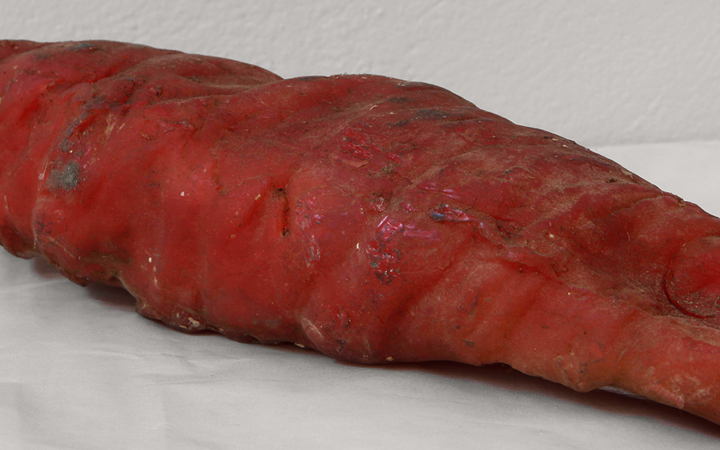
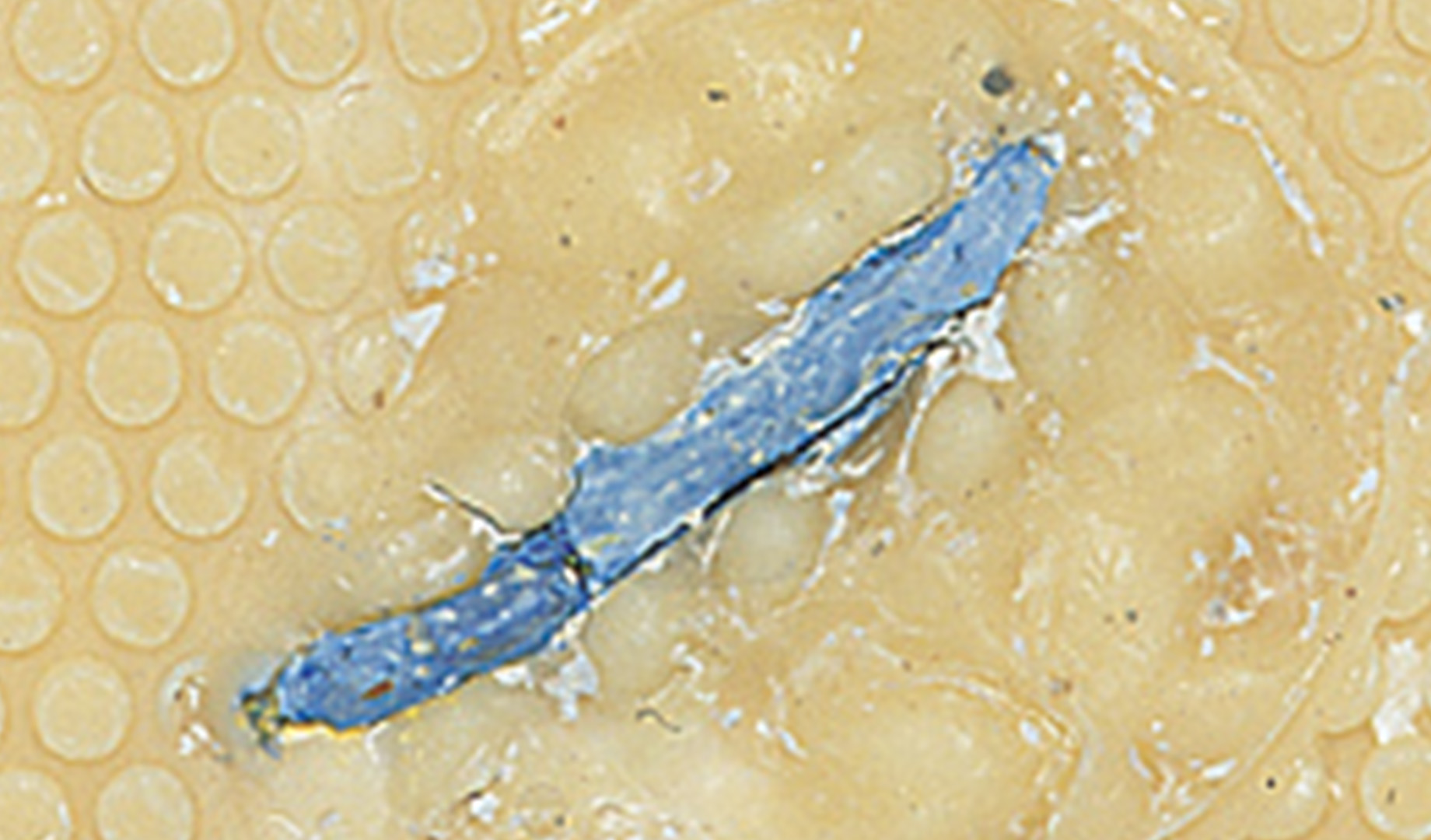
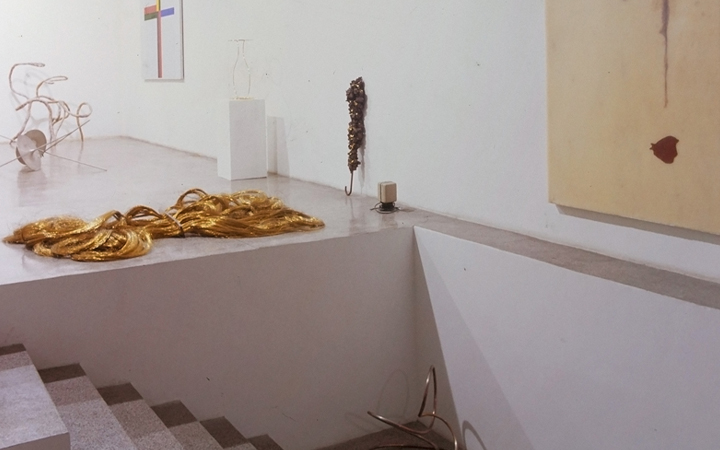
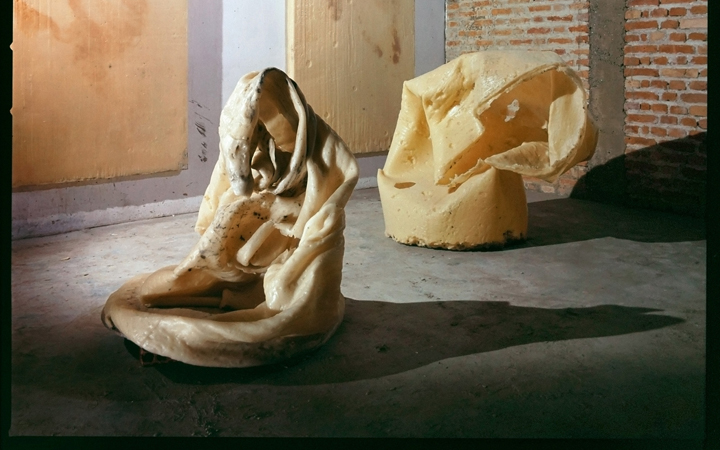
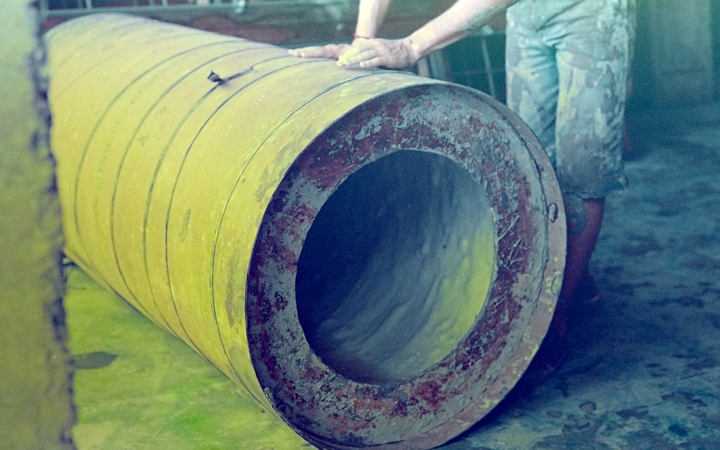
The Lost Waxes of 1994-95 sought to find a compromise between the constructive dimension of the early works in wax and the repellent nature of the works that followed them. Alberto Tassinari made the precise observation: “A certain vision of these sculptures may even cause disgust. Another vision of the same sculpture will confront us with something like a light and unexpected wing. And everything happens quietly, passing continuously from one thing to another. Ugly entrails start with a gracefully undulating line. Or a jagged tear takes us inside an involving luminosity. Composed of opposites that nevertheless coexist harmoniously, the sculptures of Carlito Carvalhosa are like the egg of Columbus”2. In these works, it was still possible for contrary aspects to stand together, and alternate without major problems. The plasticity of the wax at once guaranteed both the evidencing of the constructive process (through the memory of the cylinders that had moulded it), and its impossibility as a totalising process.
The more recent output of the artist, the work in porcelain and the pieces in plaster exhibited for the first time in 1998, at the V Semana de Arte de Londrina [5th Art Week of Londrina], nevertheless made that coexistence completely impossible. I am not claiming that Carlito Carvalhosa has carried out his artistic production with a clarity that might be suggested by the summarised description presented above. The movement that leads from a direct link between form and matter, whether this is more constructive or more expressive, to an irretrievable dissociation of one from the other, also incorporates many of the problems encountered by the contemporary form. And I believe that an observation of his path from the most recent and more successful works – rather than in chronological terms – is more helpful in understanding the difficulties that the artist has faced and the relevance he has achieved through his way of ordering things.
I find plausible the statement that the dominion of technology over nature originates in part from an ability to isolate and profit from certain qualities in materials, placing them at the service of product-ive objectives: producing square iron bars from the resistance of iron, creating all sorts of plastic from the fractionation of oil, or obtaining woodpulp from certain trees by extracting their fibres in a homogeneous manner. Iron ore, oil and trees may certainly have other uses, or be just what they are, and they will have different appearances. But through those processes they acquire homogeneous characteristics that show little relation to the original materials.
What Carlito Carvalhosa achieved in the most recent sculptures was the possibility of uniting the characteristics of a single material in a disjoint and tense way. This does not seem to me to be ecolo-gical protest alone, that is, a successful denunciation of the instrumentalisation of nature and the monstrosities this produces. Instead, his divided forms place in check the illusion of harmony and plasticity that derives from this supposed ability to transform everything into everything else, with this extended even to social relations themselves. As a result, his sculptures operate with highly discrete elements – qualities such as hardness, the capacity to reflect light, colour, etc. – albeit with the aim of turning these against each other and making them unsuitable for a harmonising treatment.
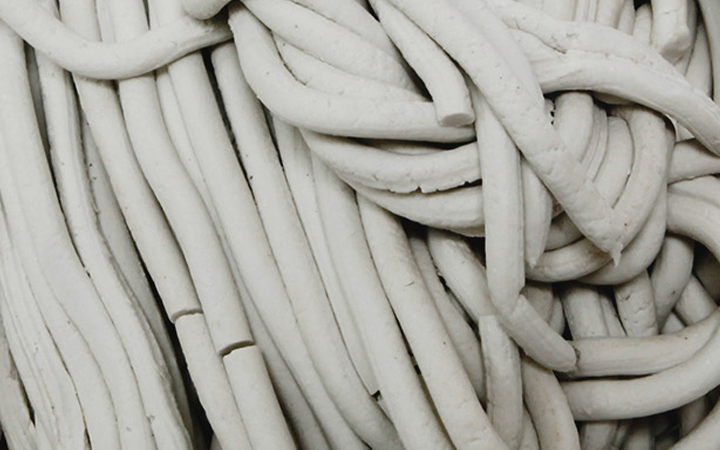
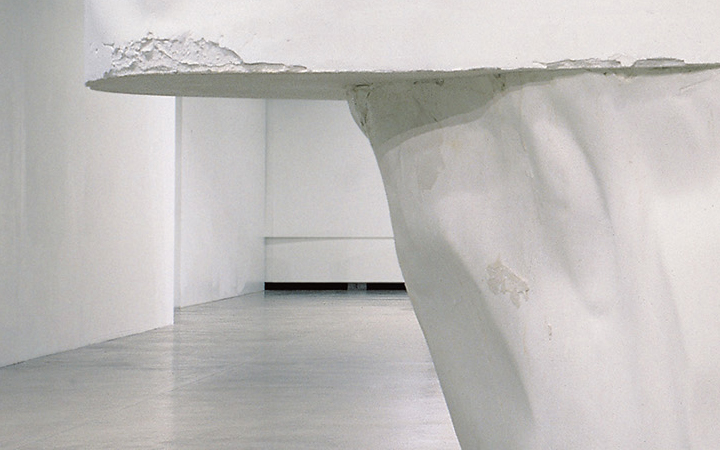
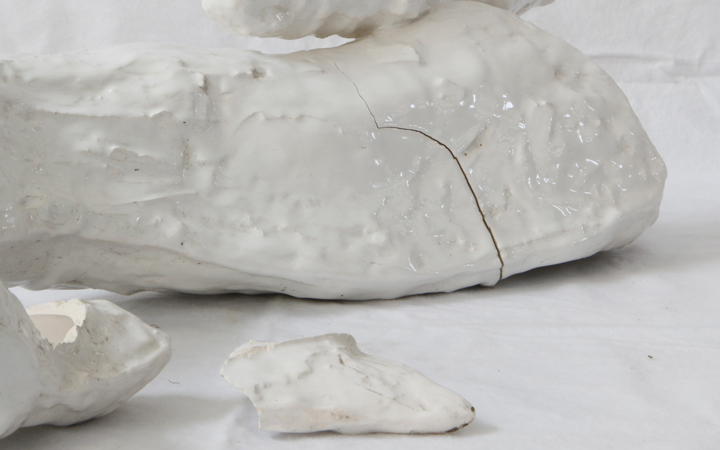
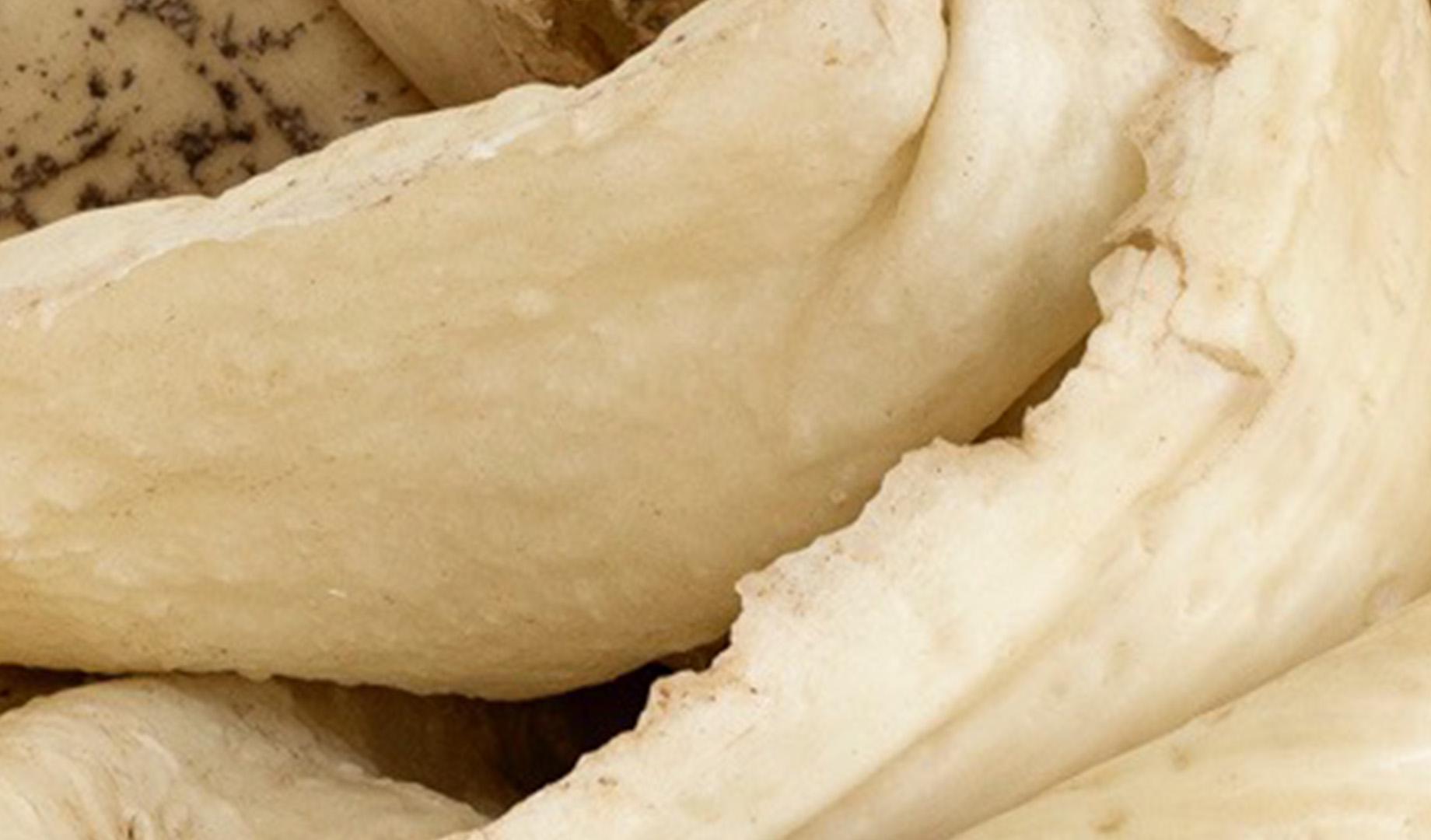
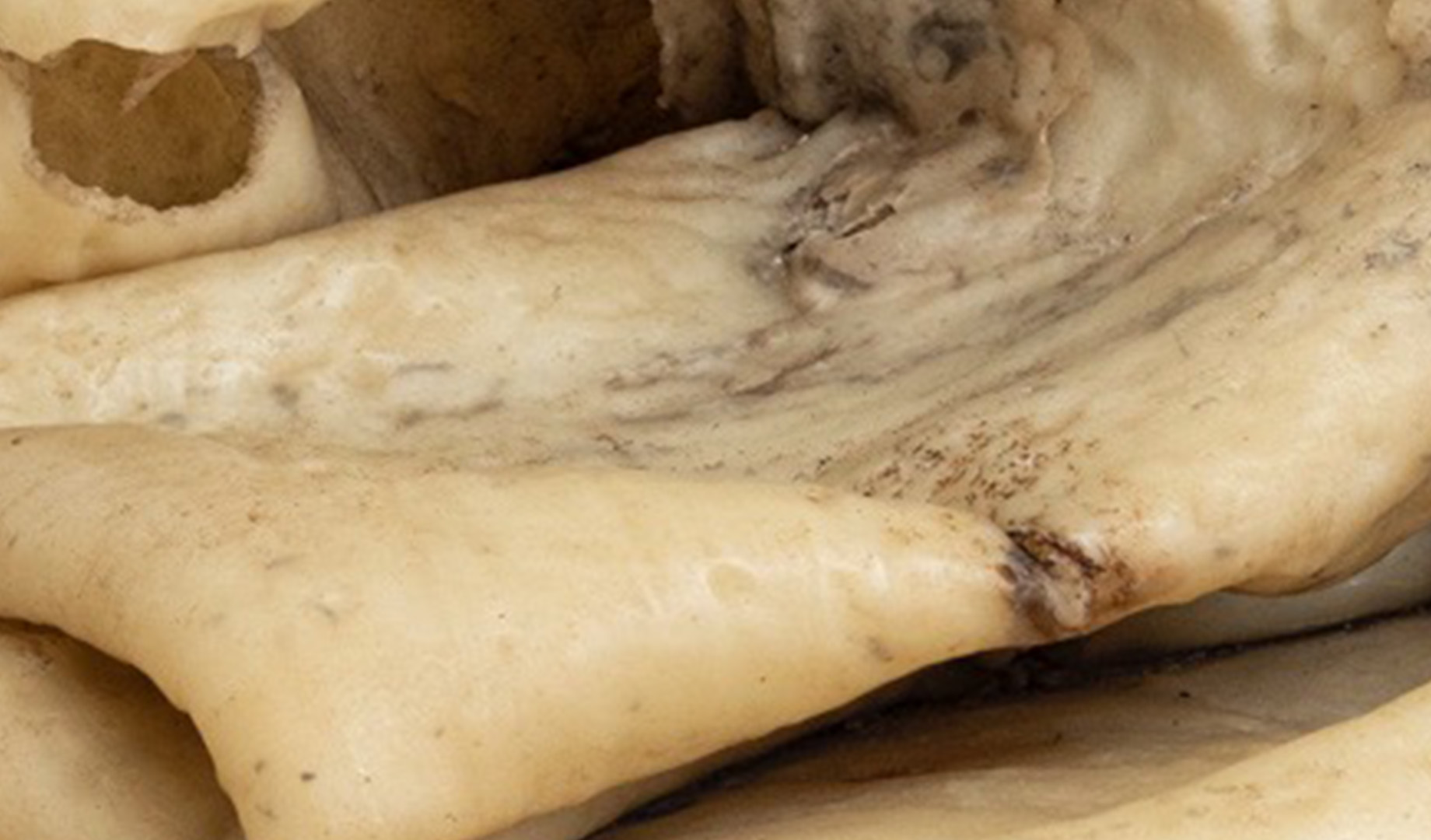
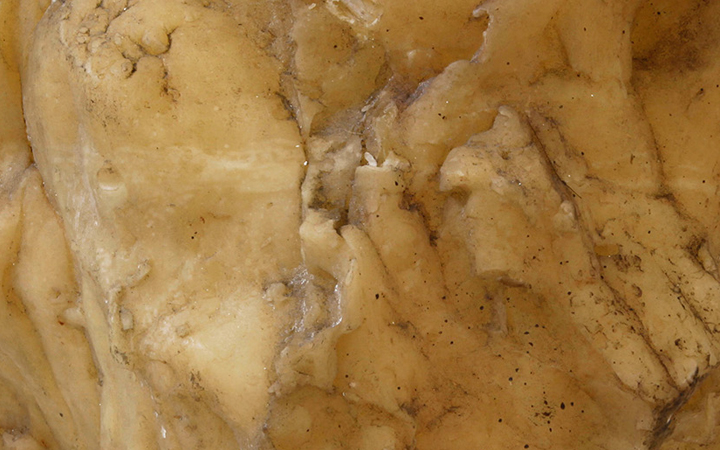
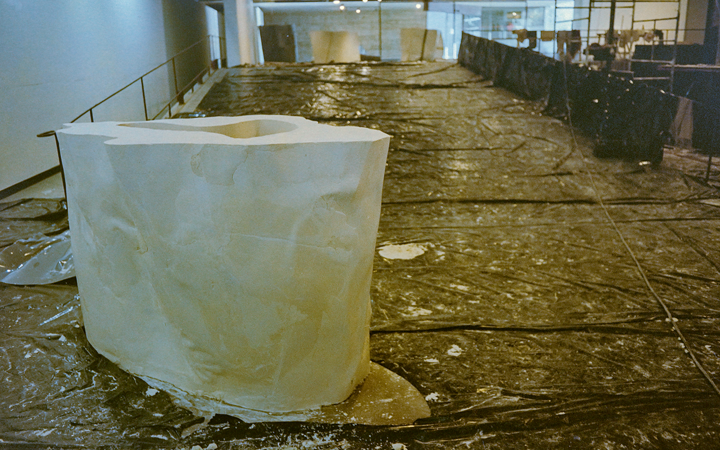
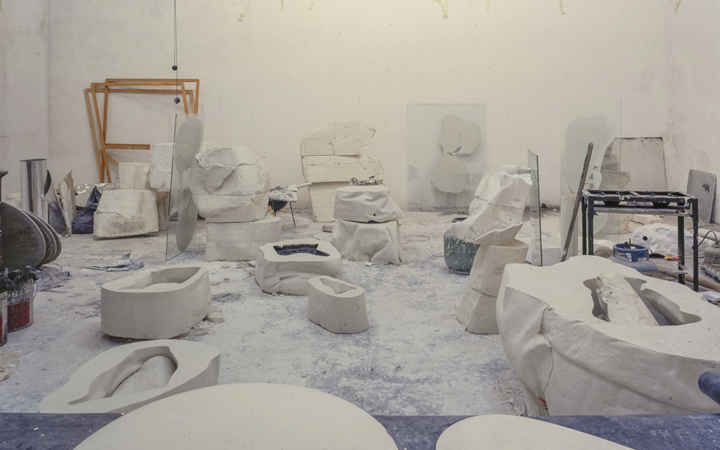
The success of this operation nevertheless required a Duchampian skill in dealing with the qualities acquired by the materials. This had already occurred with the porcelain works whose domestic and utilitarian aspects were reversed by the peculiar use that the artist made of them. With the plaster works, this procedure is even more accentuated. To our eyes, plaster has been converted into something malleable, preliminary or fake par excellence: Malleable, as it acquires any shape on mixing with water; Preliminary, since not only in art, but in almost all cases, plaster forms only an intermediary stage that serves as a mould for other pieces; Fake, as its plasticity allows the creation of all kinds of appearances – ceilings, ogees, capitals – not to mention the fact that its intermediate role also reinforces its fake character, since it is never what it shows itself to be.
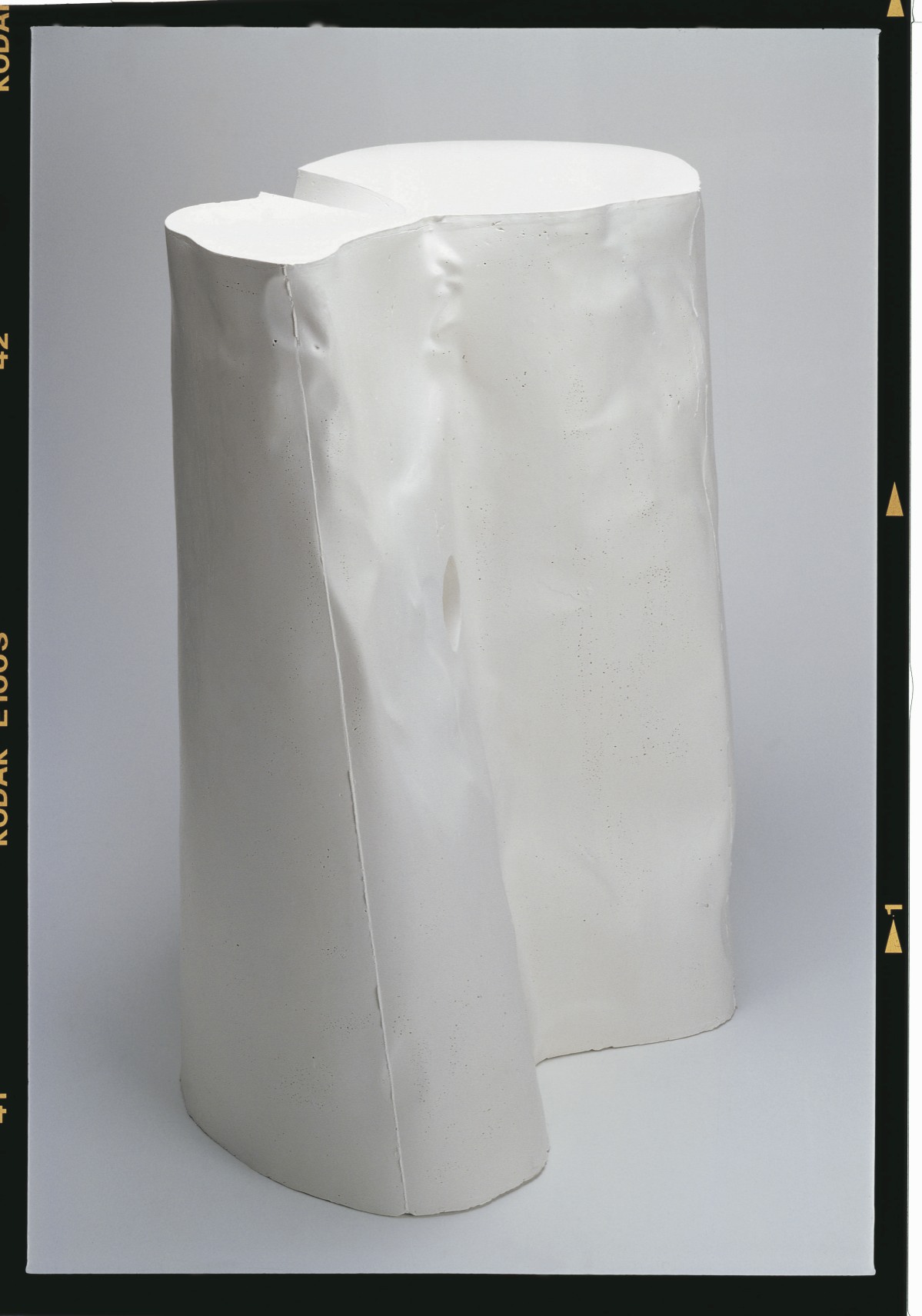
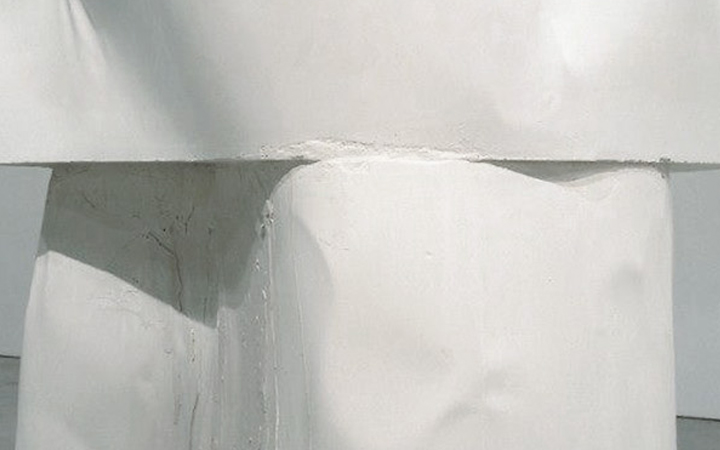
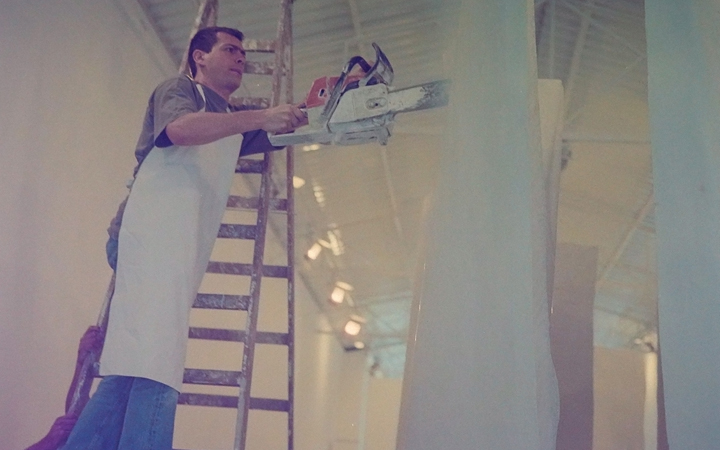
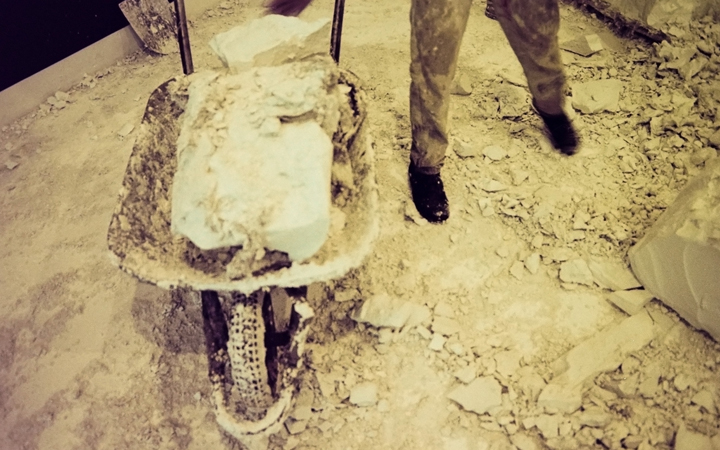
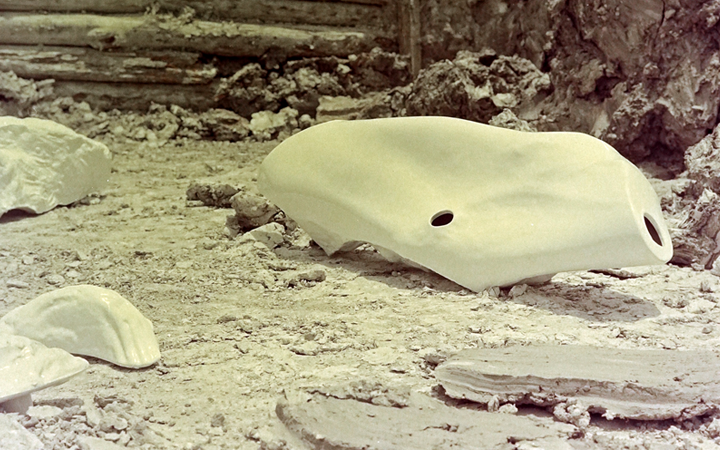
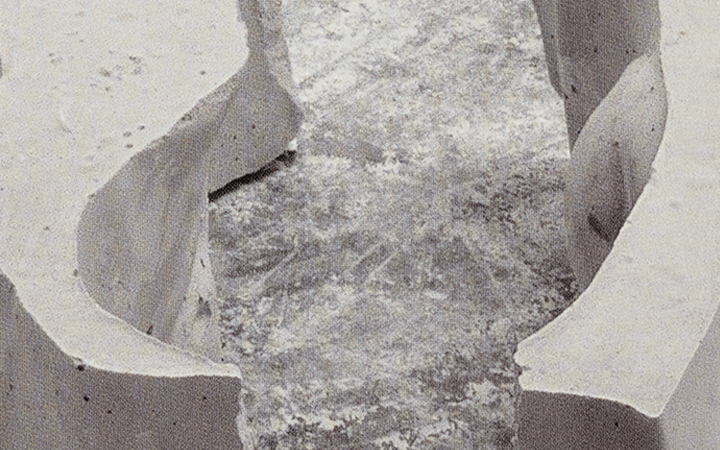
In fact, Carlito Carvalhosa’s work is interesting precisely because it makes these qualities problematic. The first operation is the simplest: to show plaster for what it is, and thus to extract it from its condition of mere mediator. The other operation, on the other hand, already demands far more complex motions. In order to undo the impression of malleability given by the plaster, it is necessary to make it fragile, and thus non-plastic. Hence the need to pile up the various blocks in an unstable way that leaves them on the verge of falling down and breaking apart. In addition, at moments when the passage between the different blocks takes place almost uninterruptedly, somewhat as it does in Ulrich Rückhiem’s work, the image arises of a mass of stone that was due to be cut and reunited. In order to take this second step, however, we need to reaffirm, rather than deny a third characteristic: falseness. For it is only by virtue of plaster’s ability to present itself as what it is not that it becomes possible to present this material as a solid element that cannot be moulded. As soon as we reaffirm the artificial quality of plaster, it becomes difficult to continue observing it as a non-intermediary thing, as displayed plaster, since a rock-like air rapidly insinuates itself into its appearance and vice-versa.
The dynamics of cleavage that Carlito Carva-lhosa obtained in a more formal way with the ceramics, are achieved here by means of a permanent displacement of the qualities acquired by a given material. These shifts in emphasis eventually contaminate all the formal relations, which in turn find themselves obliged yet again to display problematic dualities: the organic aspect and moulding; ‘making’ and growth; a tension between unity and the parts, etc., etc. This leads to the emergence of works that are aggressive on account of their precariousness and lack of balance, but that can nevertheless become tame because they were moulded; works that allow themselves to interweave with the space that traces their contours, only to shatter immediately afterwards in a revolt against any kind of conformation; works that are close to us, since they arose through the hand, and yet distant in their marked self-sufficiency.
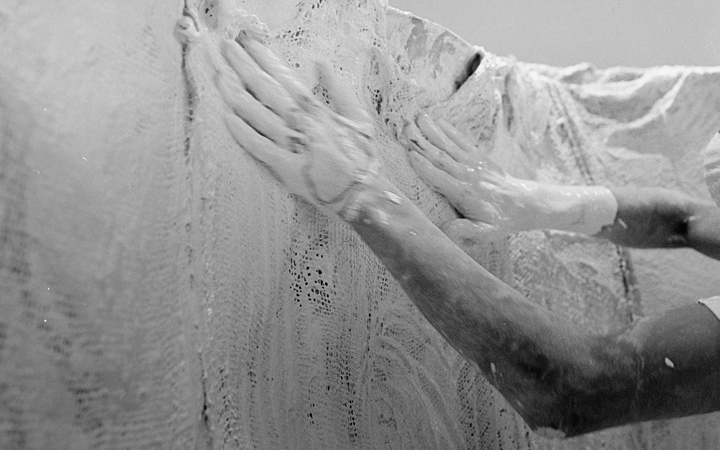
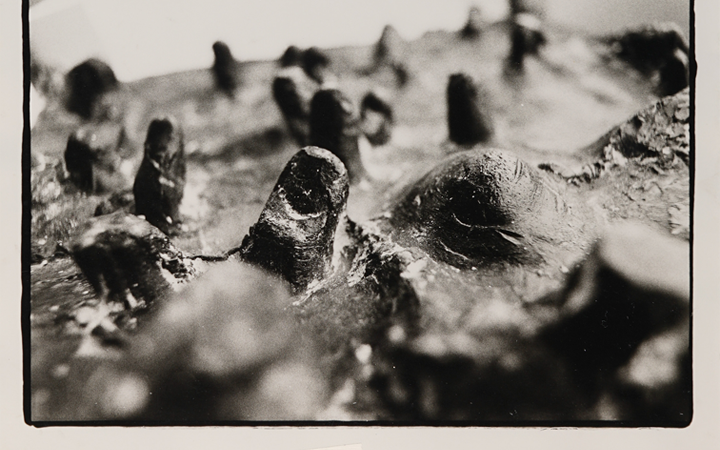
This kind of presence undoubtedly tends to reverse the harmonising movement that the dynamics of technology imposes on the contemporary world. The pieces are clean, hygienic (tiles are not enamelled by chance) unitary, made of just one material3…while separate like oil and water. And this makes the divisions that preside over the sculptures even more repugnant. If there were a disjunction or opposition between materials of different qualities – lead and wood, for example – the result achieved would be less bruising, since it would stand apart from the homogeneous and peaceful appearance of industrially produced objects and materials. As with the drawings obtained by pressing liquid plaster between two panes of glass, everything here is perfectly adjusted and without any greater interaction. The eagerness to intervene in the elements and convert them into something else is thus presented in its full aggressiveness: through highly unitary forms that are split from top to bottom.
However, if this dimension of the works give them a universal reach, through their own way of reversing a process of harmonisation and conformation that take place in almost all corners of the world, they also have a most particular dimension. It is undeniable that the more recent works of Car-lito Carvalhosa deal in a calculated way with a certain bad taste – even if they bear no traces of kitsch or mere effect. On the one hand, this bad taste results from the popular use of plaster and ceramics and all sort of products manufactured with these materials, both of which are fake, cheap and indiscreet. On the other hand, it stems from the incompatibility between the various aspects of the works, as may be said of someone who does not know how to match his or her clothes.
Indeed, there is nothing more Brazilian, although it is certainly not our exclusive preserve, than this joining of disparate things with apparently diverse natures that permeates all social classes: in the ostentatious and picturesque decoration of the homes of the rich, in food, in song lyrics, in children’s names, in the interiors of bars and bakeries, in the way people dress, marry, die etc., etc., etc. And this characteristic that is both zealous and faddish, still invites sympathy in the way that it brings together mirrors, aluminium, formica and flagtiles in a single space, in the way that parents name their children (witness Ednilton, Lucimara, Ednéia, etc.), in pathetic linguistic registers (“e hoje em homenagem ao meu fim / não fale dessa mulher perto de mim”)[“and today in homage to my passing / don’t mention that woman when I’m around”], pasta with beans and rice, Louis XV furniture and Bauhaus chairs, or what produces those ‘light skinned mulatas with cute little tits and nice big bums that are the death of us.’4 And they are agreeable, precisely because they evoke the lack of hierarchy and the approximation, whether of cultures, races or tastes, and because they presuppose freedom and an absence of prejudice.
But everything is reconstructed from one moment to another, and what was proximity and zeal is transformed into custody and imperiousness, both of which are characteristics of a society that is flexible but extremely hierarchical. In turning problematic the harmonious dominion of man over nature, the works of Carlito Carvalhosa also render problematic an ostensible social harmony. It is enough for us to want to pat the heads of these hybrid beings for them to bear their teeth defiantly. What was malleable becomes rigid, what was close at hand recedes. And we do well to remember that this too is a part of national life.
1 Some works in wax and pigments were also produced during this period, but I find them less relevant.
2 Alberto Tassinari. “Ceras perdidas” [Lost Waxes]. Rio de Janeiro, Centro Cultural Banco do Brasil, March 1995.
3 The porcelain pieces are in fact covered with white enamel. This relation is so traditional, however, that I find it plausible to see it as a single thing.
4 Gilberto Freyre, in article for the newspaper Folha de S.Paulo, stated that Vera Fischer was a ‘mulata’
Prefácio de Carlito Carvalhosa
Extract from the text published in Carlito Carvalhosa, Cosac & Naify, São Paulo, 2000
Carlito Carvalhosa seeks the essential without believing in essences. Substance has become an attribute like any other, since on the horizon of any process of simplification there is no longer any universal idea, but merely the reduction to nothingness. For this reason, the closer forms come to their foundations, the more they evade any definition or an unequivocal meaning that includes them. Today, every act of refining necessarily entails an emptying, to which the artist reacts by creating new accidents that are in turn obliged to undergo a new process of shrinkage that once more leaves them empty.
Carlito Carvalhosa’s work embodies this method in an exemplary way. It is not by chance that his materials tend to be docile, mimetic, without a definite character and hence sensitive to the least occurrence. White and the translucent prevail among his colours, causing a chromatic annihilation that generates an ever-changing spectrum of luminous variations. The forms always refer to something without imitating anything. The final result reveals the process of constructing the work, while at the same time falsifying it, altering the information on the consistency of its materials, their weight or the effort required for its manipulation. The truth of the work thus lies in an undefined territory between nothingness and the anecdotal, the unimportant singularity and the hollow generality.
There is no other way out: if the work refuses to be either idea or a mere commentary on an existing universe of signs, what remains for it is a non-place, a twilight between different dominions. The artist attempts to define this indefinite space in the most rigorous way possible, but is unable to transform it into pure, unattainable negation that would be just one more place, one more position among others. On the contrary, it is obliged to leave space to tumblings, to collusion with kitsch, with the obvious. Even today, the challenge is to leave things open.
Ceras Perdidas
Originally published in the catalog of Carlito Carvalhosa’s exhibition at the Centro Cultural Banco do Brasil, Rio de Janeiro, 1995 and in “Carlito Carvalhosa”, CosacNaify, São Paulo, 2000 pp 19-20.
Translated by John Manuel Monteiro
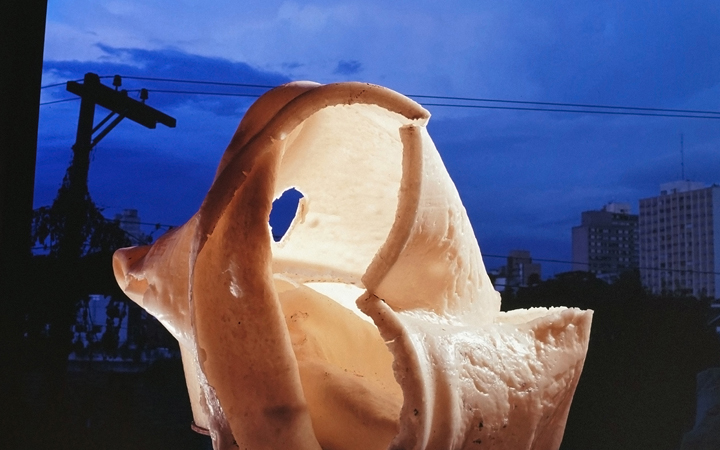
From a certain vantage point, these sculptures may even bring out a feeling of disgust. Another view of the same sculpture will reveal something like a light and unexpected wing to us. And all of this happens without much hubbub. One moves continuously between one thing and the other. Hideous entrails emerge from the curve of a graciously contoured line. Or then a rude gash can lead us into a luminous space. Composed of opposites – which comfortably share the same environment – Carlito Carvalhosa’s sculptures are like Columbus’ egg. The principle that keeps them standing can be observed in all its simplicity: the wax that has slid down the sides of a cylinder towards the ground. If it were cooled down too fast, the wax would remain intact in a cylinder. If it were to be removed from the mold too soon, all would be lost. But when the wax is just the right temperature, the artist can control its dripping. Like candles approaching their end, while there is still a trace of their original form, what remains performs the small miracle of keeping the flame solid. For it is something in the incessant change of appearance that is captivating as we observe the fire they produce. Solid, yet empty; opaque, yet translucent; abstract, yet suggesting the shape of animals; the play between opposites does not stop. Fatigued, almost clumsy, they slide towards the ground much more awkwardly than adroitly. What really matters is not the catastrophy or the ill success to which they may lead. They defy failure, they disfigure forms, however without erasing altogether the memory of an earlier order. Within this we find a way of expressing the world. Something of “living dangerously”, of the “impurity of white”, and of so many other figures of speech we must use to describe a world where life and survival are confused, where lives and works that capsize remain, even so, lives and works. But it is in the way conflict is conjugated here that a feeling for the world is best apprehended individually. Softly, without any sign of creative fury, there is the quiet play between form and deformity. These works do not speak of conflict ostentatiously, but rather as something both inevitable and to be avoided. This is why they are cold and distant. Serene moments thus prevail. If these works allow themselves to be ruined, they do so in order to save fragments of tranquil beauty which resist falling or burning out, or perhaps more precisely, which are products of these very actions. These fragments are not at all commensurate to the works, rather they stray around them. They break away as if they belonged to other places. And if that which is incommensurate generally aspires to greatness, this does not occur in Carlito Carvalhosa’s wax works. In both his sculptures and paintings, what is immoderate is so in relation to what is small, not to what is large. They are strategic points in the struggle against total disaster. Therefore these are works where there is nothing sublime, epic, baroque or in any way grandiose. No matter how many folds and spots they possess, they emphasize and preserve a small, lyrical moment. Excess, then, is not in praise of tragedy or conflict, rather it represents a means of defusing them, extracting from the ruins that which can be saved. They are parts without a fixed place – spots and surfaces adrift – but which are not at all missing, if we allow ourselves to break away with them